



Samurai Katana Bishū-jū Fujiwara Katsushige
Muramasa Lineage Sengo School
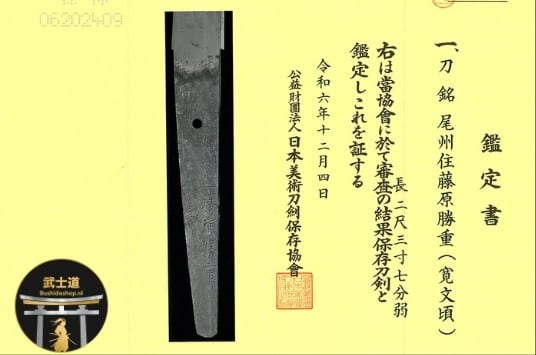
NBTHK Hozon Tōken
Edo Period Kanbun Era (1661–1673)
This impressive katana was forged by Bishū-jū Fujiwara Katsushige (備州住藤原勝重), a swordsmith of the Sengo tradition, one of the most powerful and historically revered lineages in Japanese swordmaking. Katsushige was active during the Kanbun era of the Edo period, working in Kuwana in Ise Province and later in Nagoya in Owari Province, regions historically associated with the Muramasa tradition.
Katsushige is recorded as a disciple within the Muramasa lineage through Sengo Masashige, who is traditionally regarded as a direct descendant and successor of the legendary master Muramasa. The Sengo school, founded in the late Muromachi period in Kuwana, became famous for producing blades of exceptional sharpness and powerful character. Muramasa swords were both admired and feared, gaining a reputation for extraordinary cutting ability and a spirited temperament that later inspired many legends.
Within this lineage Katsushige represents a strong Edo-period continuation of the Sengo tradition. His blades preserve the dynamic character and martial spirit associated with Muramasa school swords, combining practical cutting geometry with vivid steel activity.
The smith also bore the honorary title Mikawa no Kami (三河守), reflecting recognition and prestige within the swordsmith community. His name itself carries martial symbolism. The character 勝 (Katsu) signifies victory, while 重 (Shige) suggests continuation or repetition. Together the name conveys the idea of “victory upon victory,” an auspicious association that made such blades especially valued among samurai of rank and status.
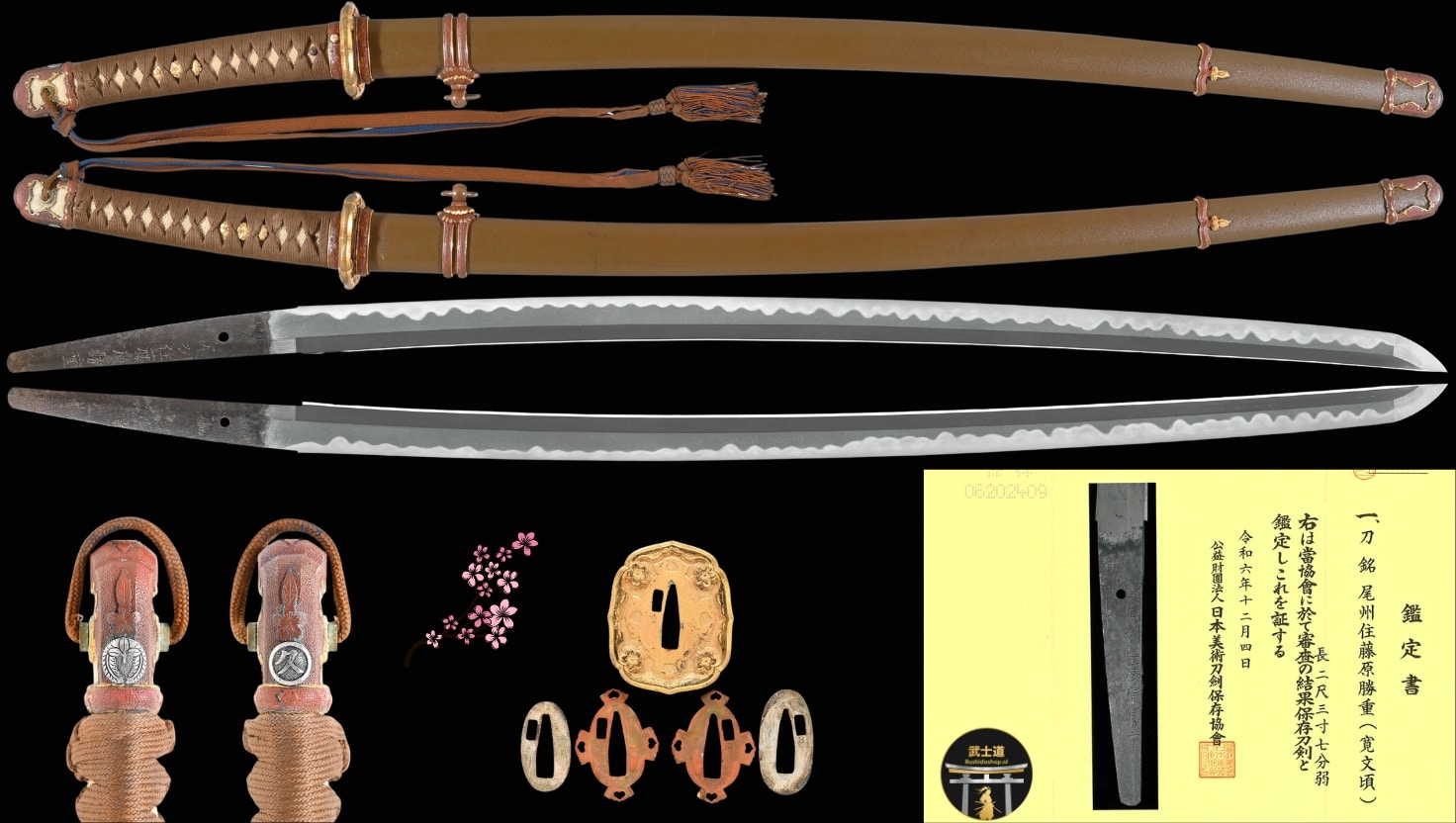
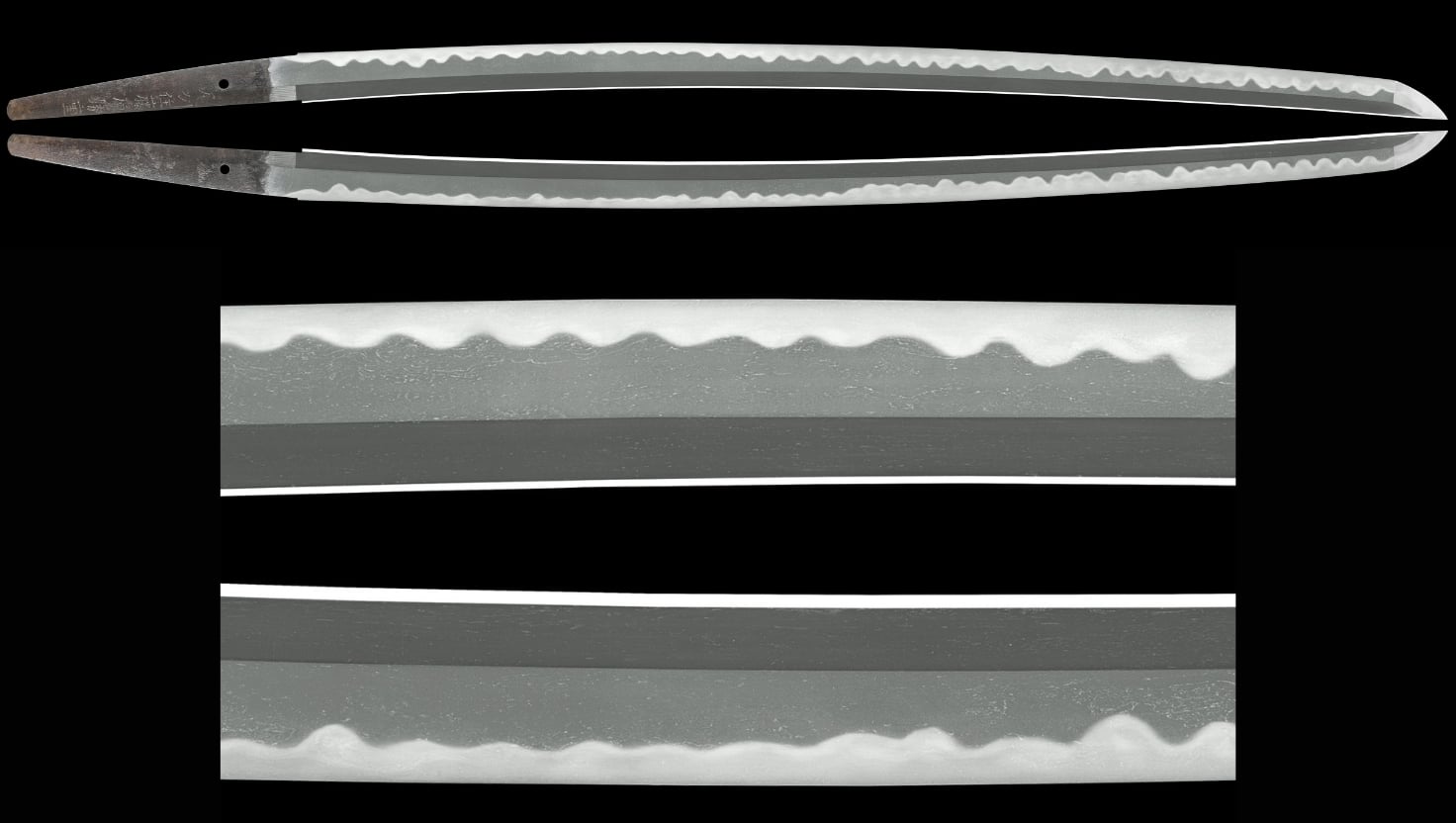
The blade is preserved in excellent polish and presents a bright and healthy appearance, allowing the steel activity and hamon to be clearly appreciated. The sugata reflects the powerful style associated with Edo-period Sengo tradition swords. The proportions are balanced and practical, with strong width at the base and an elegant curvature, giving the sword both visual presence and excellent cutting geometry.
The steel displays a lively jihada with refined forging activity typical of well-made Edo period blades, while the hamon shows vibrant hardening patterns that reflect the energetic character traditionally associated with Muramasa-lineage work. In hand the sword conveys both strength and harmony, embodying the martial spirit of the Sengo tradition.
The tang remains original with one mekugi-ana and preserves the historic integrity of the blade. The sword is accompanied by NBTHK Hozon Tōken certification, confirming its authenticity and recognizing it as a preserved Japanese sword of historical importance.
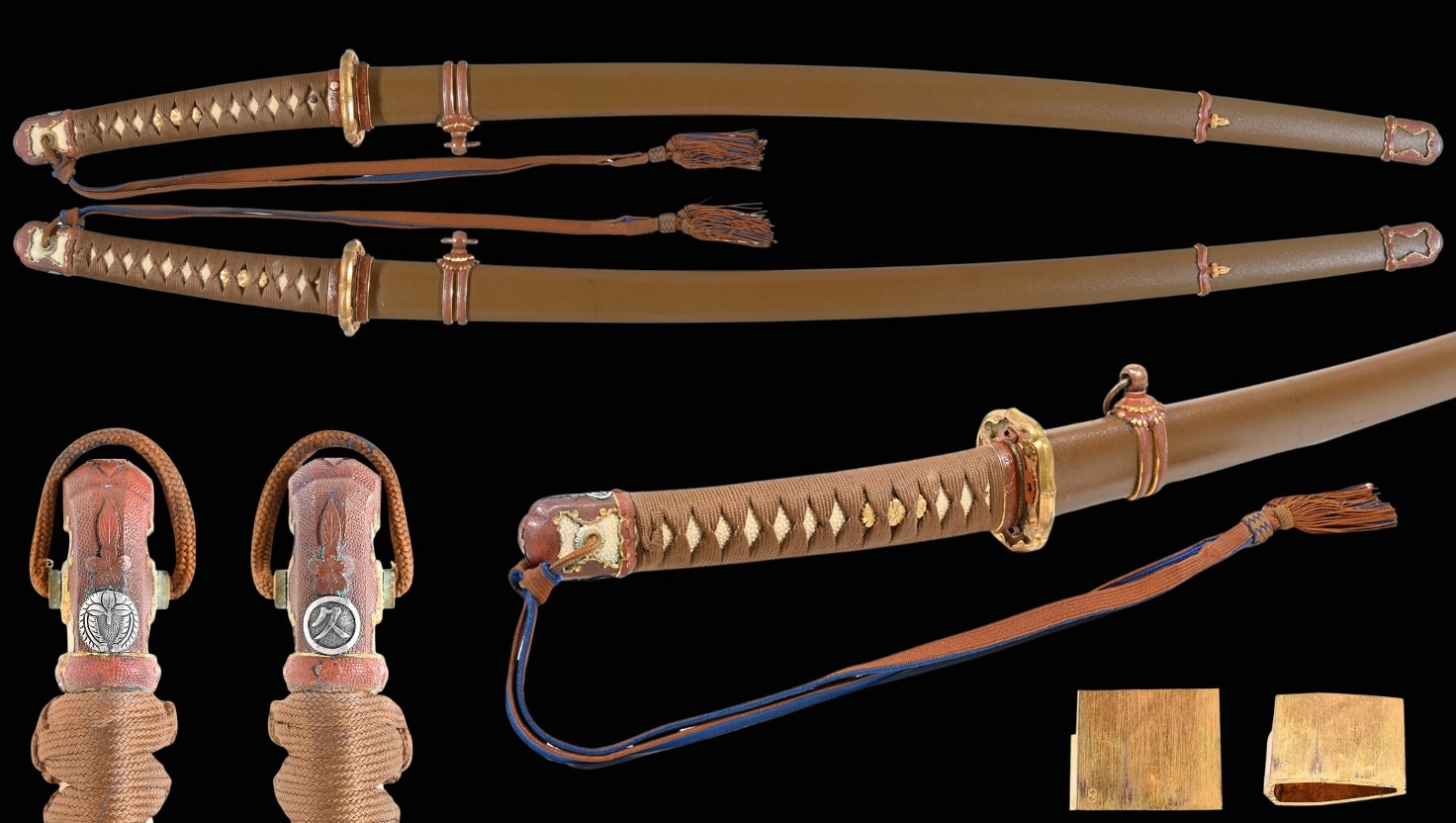
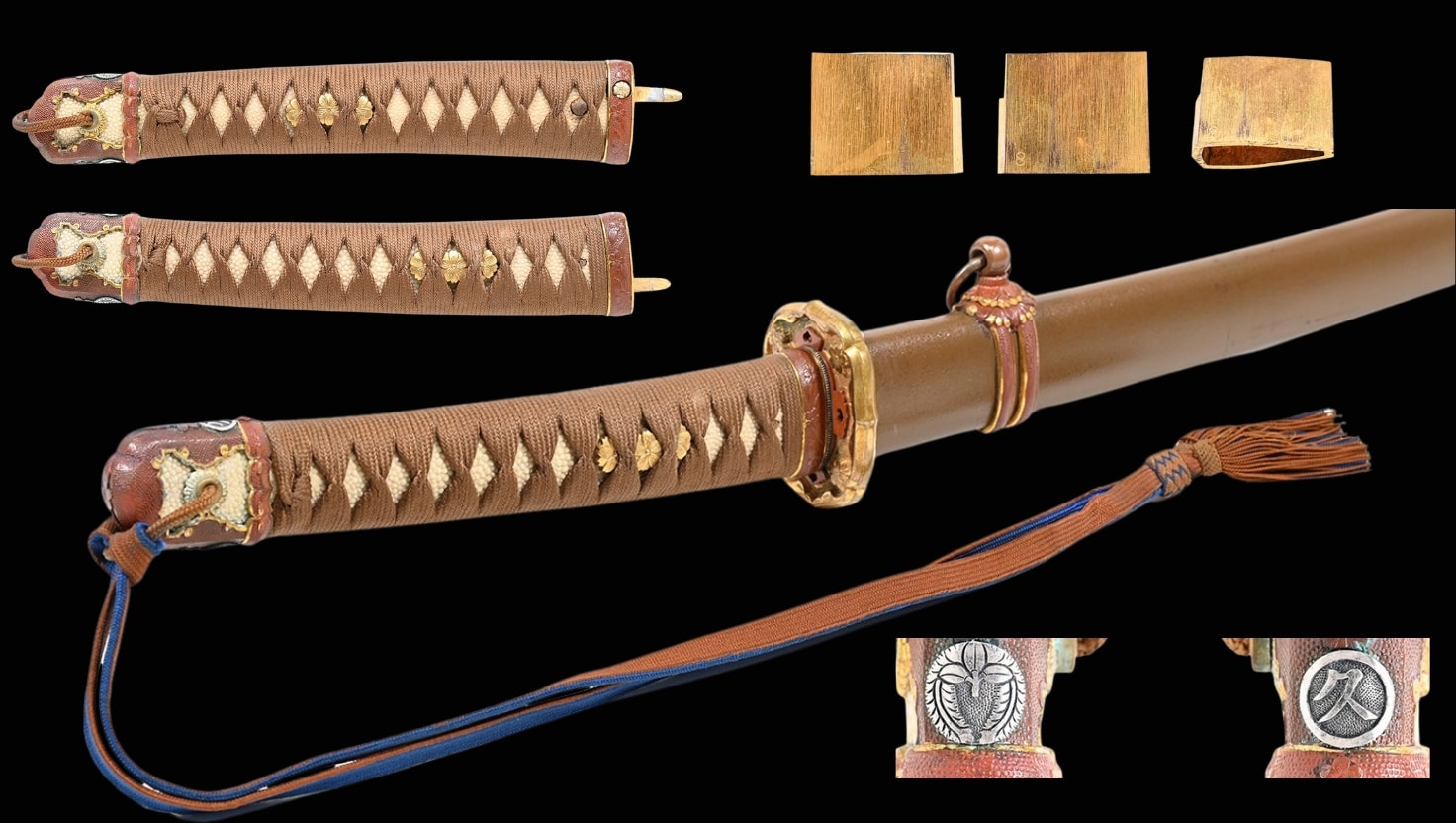
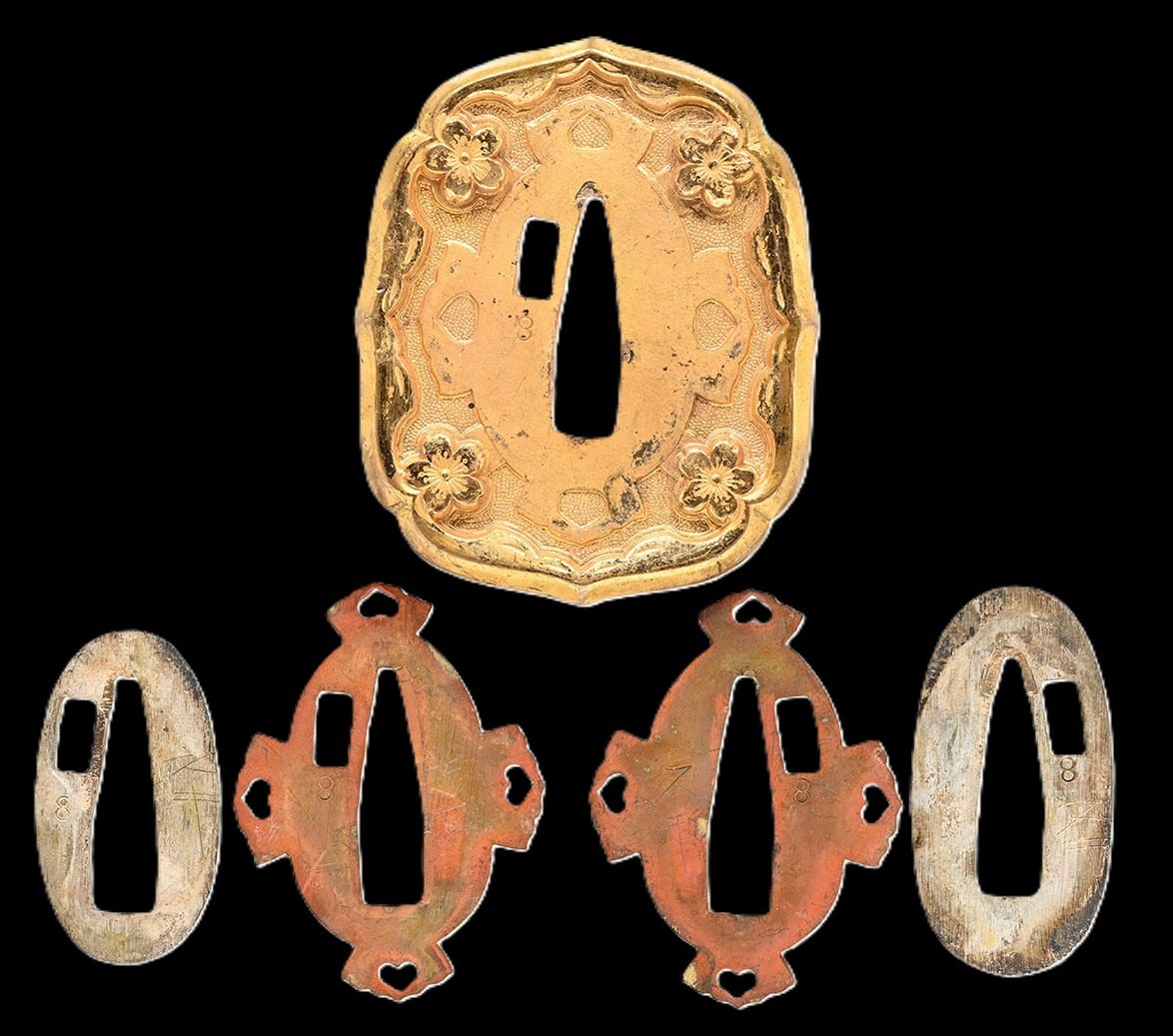
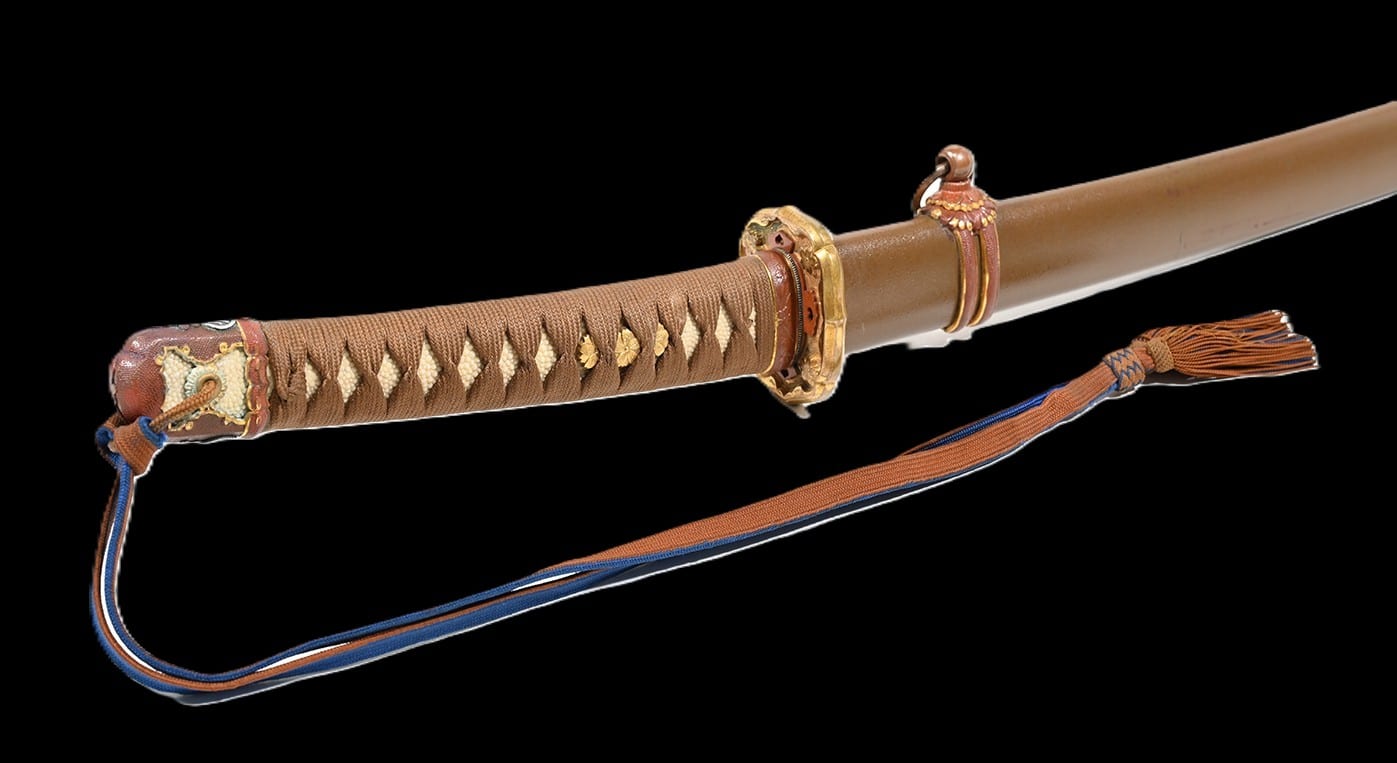
The blade is mounted in a striking Type 98 Japanese Army officer’s guntō koshirae the regulation mounting carried by Imperial Japanese Army officers during the Second World War. Such mountings often housed older family blades that had been carried by generations of samurai before being remounted for military service during the Shōwa era.
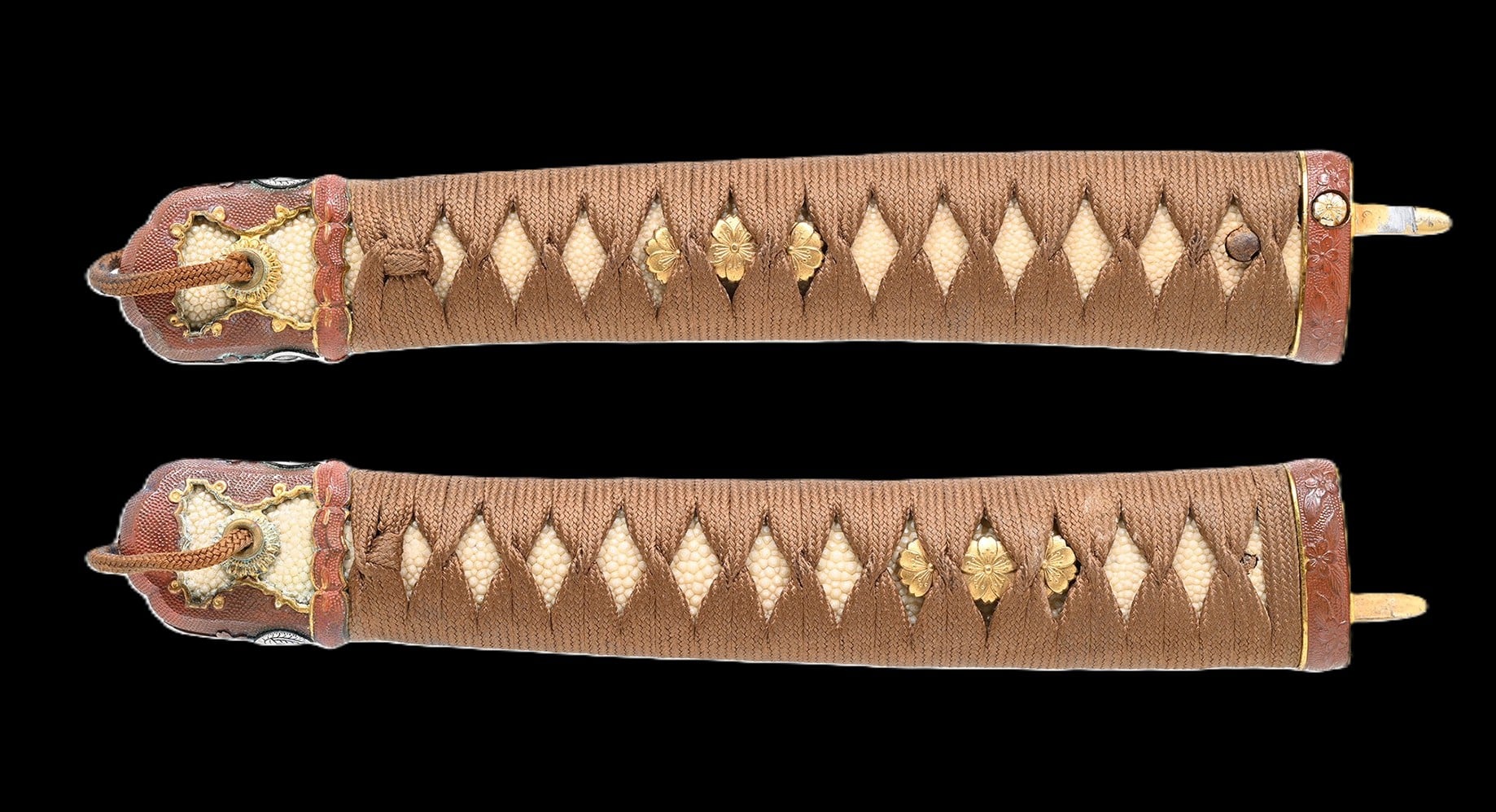
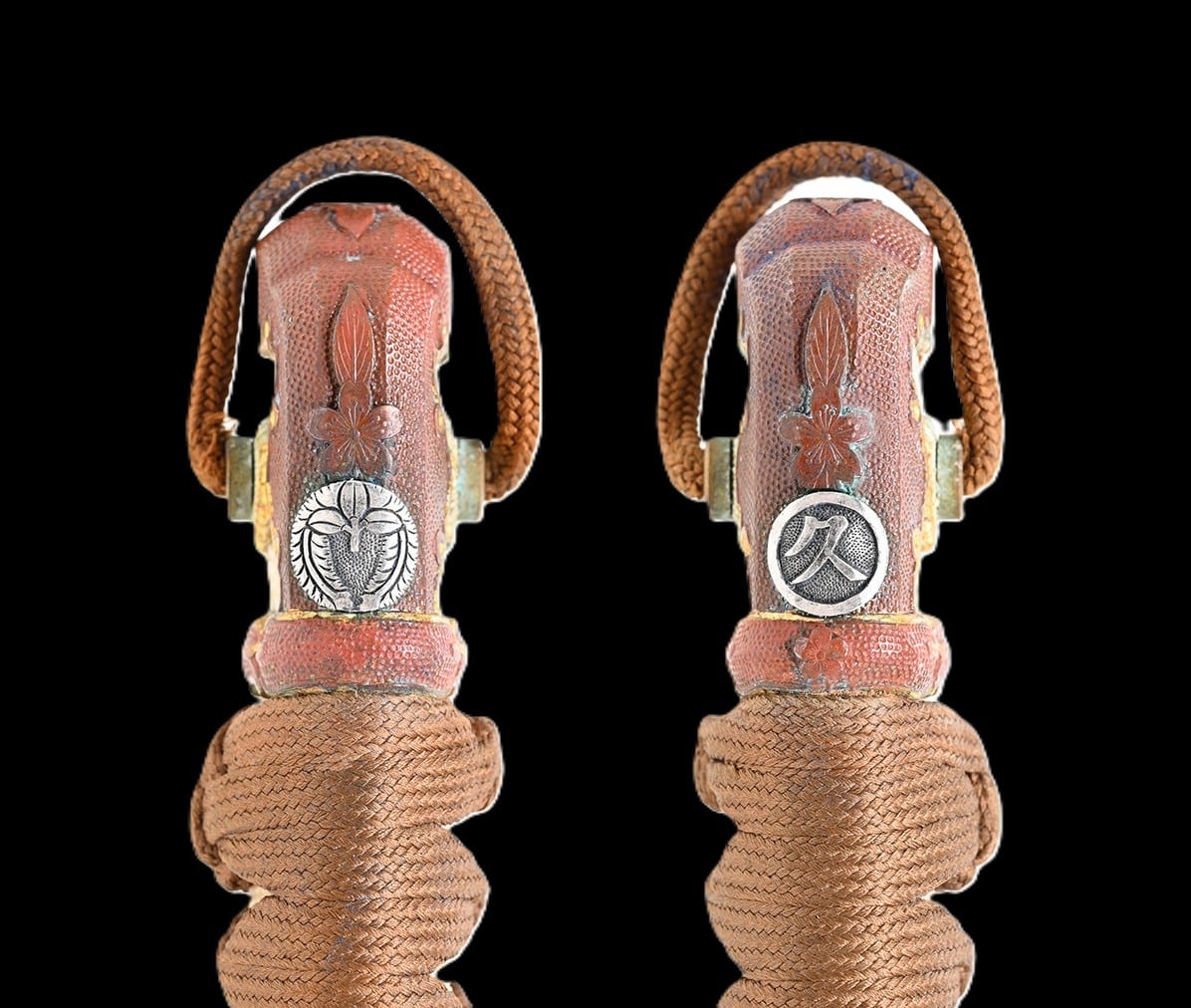
This example remains in excellent condition and retains its field officer tassel, traditional ray skin grip and original wartime bindings. Particularly notable are the two family crests (mon) inlaid on the tsuka, an uncommon and historically intriguing feature.
One crest is the classical Kiri mon (Paulownia crest). The kiri emblem has long been associated with imperial authority and high-ranking government officials. Historically it was used by Toyotomi Hideyoshi, by important samurai houses and later by the Japanese state itself. The presence of the kiri crest suggests a lineage connected to status and official recognition.
The second crest features the kanji 久, read as Hisa, Hisashi or Kyū, meaning enduring, eternal or long-lasting. Single-character mon such as this were often used by specific samurai families, frequently associated with names incorporating the character 久, such as Hisamatsu, Hisatsune or Hisayoshi. The use of such a personal crest typically identifies a particular family lineage, making the koshirae an object worthy of further historical research.
The combination of these two mon strongly suggests that the officer who carried this sword descended from a notable samurai family and chose to preserve his family identity and heritage even while serving in the modern Imperial Japanese Army.
The Sengo school, founded by the legendary Muramasa in Ise Province, remains one of the most famous traditions in Japanese sword history. Muramasa blades were renowned for their exceptional sharpness and dynamic forging. Stories often described them as possessing a living spirit within the steel, influencing the temperament of the warrior who wielded them. Whether legend or reality, this reputation helped establish the Sengo tradition as one of the most formidable schools of swordmaking.
Katsushige stands within this powerful lineage as an Edo-period successor who preserved the strength, vitality and battlefield spirit associated with the Muramasa tradition.
Nagasa 71.8 cm
Sori 1.3 cm
Motohaba 3.3 cm
Kasane 7 mm
Sakihaba 2.35 cm
Saki-kasane 4.8 mm
Mekugi-ana one
Era Edo period Kanbun era (1661–1673)
Mounting Type 98 Imperial Japanese Army officer guntō
Certification NBTHK Hozon Tōken
This sword presents a rare and compelling combination of Edo-period craftsmanship, Muramasa lineage heritage and Imperial-era military history. Blades of the Sengo tradition already hold an important place in Japanese sword scholarship, and examples preserved within original wartime officer mountings provide an additional historical dimension linking the samurai past to the modern era.
A remarkable katana that unites the spirit of the Muramasa school, the legacy of the samurai and the history of Imperial Japan, making it a highly desirable piece for advanced collectors of Japanese swords.