
Japanese Katana Gassan Sadatoshi
Mukansa Master Swordsmith
Shōwa 52 /1977
SOLD
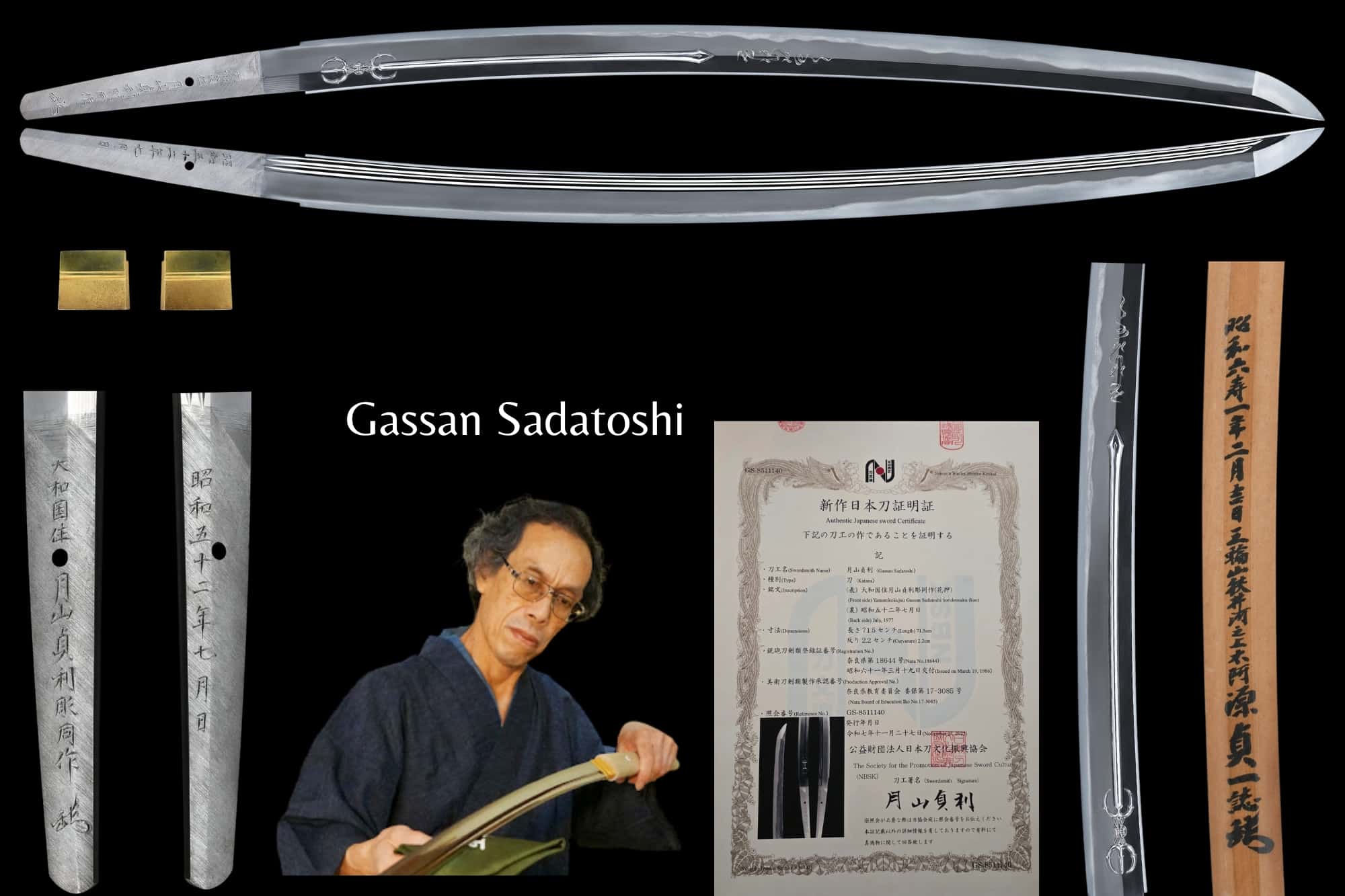
This outstanding katana was forged in 1977 by Gassan Sadatoshi (月山貞利), born Tsukiyama Kiyoshi in 1946, the fifth generation master of the renowned Osaka Gassan lineage and today widely regarded as one of the most important living Japanese swordsmiths. Blades by Sadatoshi represent the highest level of modern Japanese swordmaking and are highly sought after by collectors and museums worldwide.
The Gassan school is among the most historically significant traditions in Japanese sword history. Its origins trace back to the medieval Yamato province, where the school became famous for its distinctive forging style known as ayasugi-hada, a flowing wood-grain steel pattern unique to the Gassan tradition. In the modern era the school was revived through the extraordinary efforts of Sadatoshi’s grandfather, Gassan Sadakazu, one of the greatest swordsmiths of the Meiji period.
Sadakazu mastered and revived the ancient techniques of the Gassan school and elevated them to an exceptional artistic level. In recognition of his unparalleled skill and cultural importance he was appointed Teishitsu Gigeiin (Imperial Court Artist), an honor granted only to the most distinguished craftsmen of Japan.
Sadatoshi’s father, Gassan Sadaichi II, continued this remarkable lineage and was later designated Living National Treasure (Ningen Kokuhō). Under his guidance the Osaka Gassan tradition achieved extraordinary technical refinement. His work combined flawless forging, rich jihada and a dignified classical aesthetic that reflected the highest ideals of Japanese swordmaking. Sadaichi II was also known as a strict and influential teacher, ensuring that the deepest principles of the craft were transmitted faithfully to the next generation.
Trained directly within this extraordinary lineage, Gassan Sadatoshi represents the culmination of three generations of supreme mastery. In 1982, at the remarkably young age of thirty-six, he was awarded Mukansa status, placing him beyond competition and acknowledging that his work had reached the highest artistic level recognized within the modern Japanese sword world. Throughout his career he has received the most prestigious awards in the field, including the Commissioner for Cultural Affairs Award, the Takamatsunomiya Prize and the Kanzan Prize. His works are represented in leading international collections, including the Metropolitan Museum of Art in New York.
Sadatoshi is widely regarded as the natural successor to the Gassan tradition and is often considered a future Living National Treasure. For this reason his swords are valued not only as masterworks of craftsmanship but also as cultural objects of enduring historical significance and strong long-term collector value.
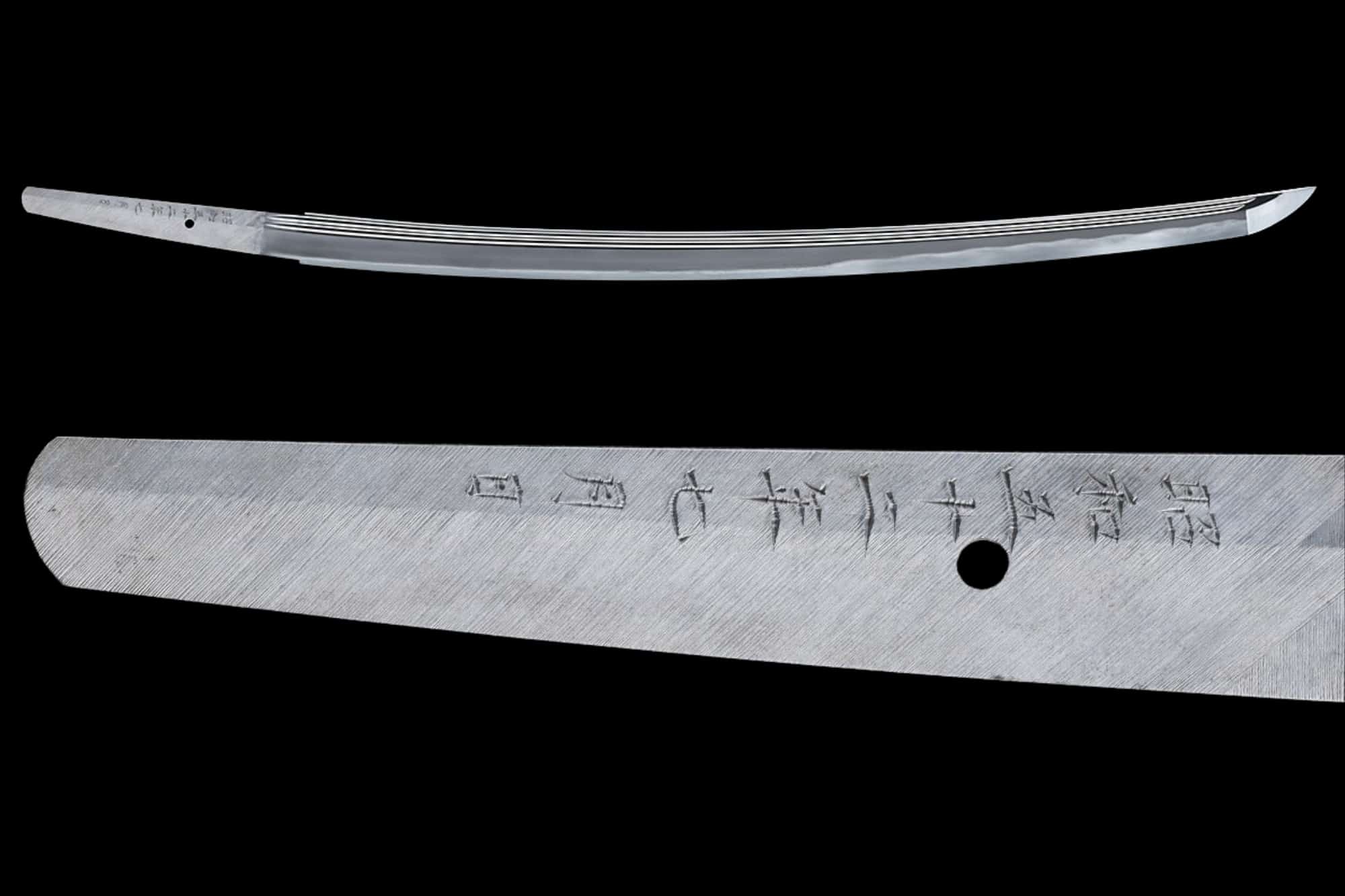
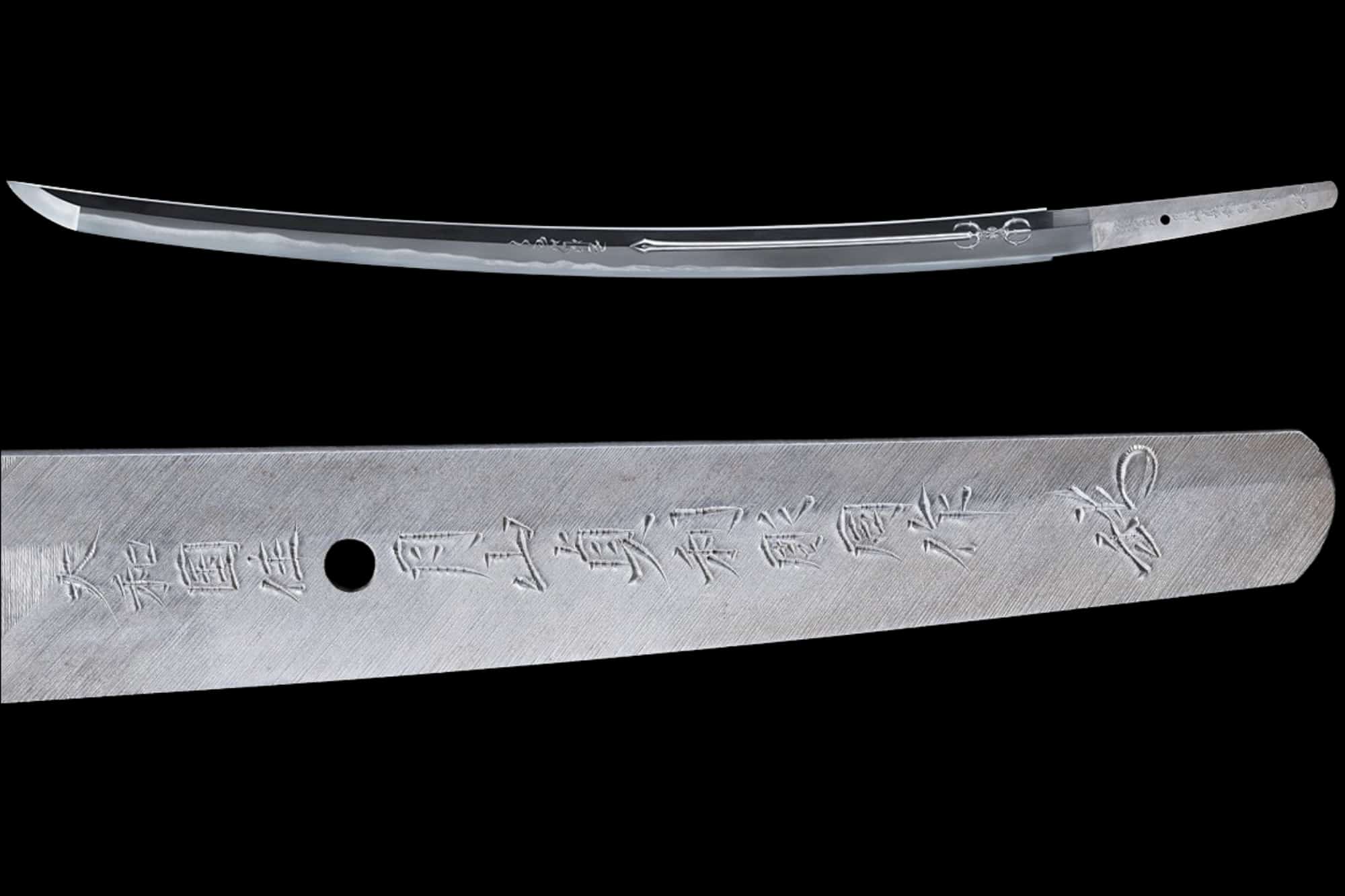
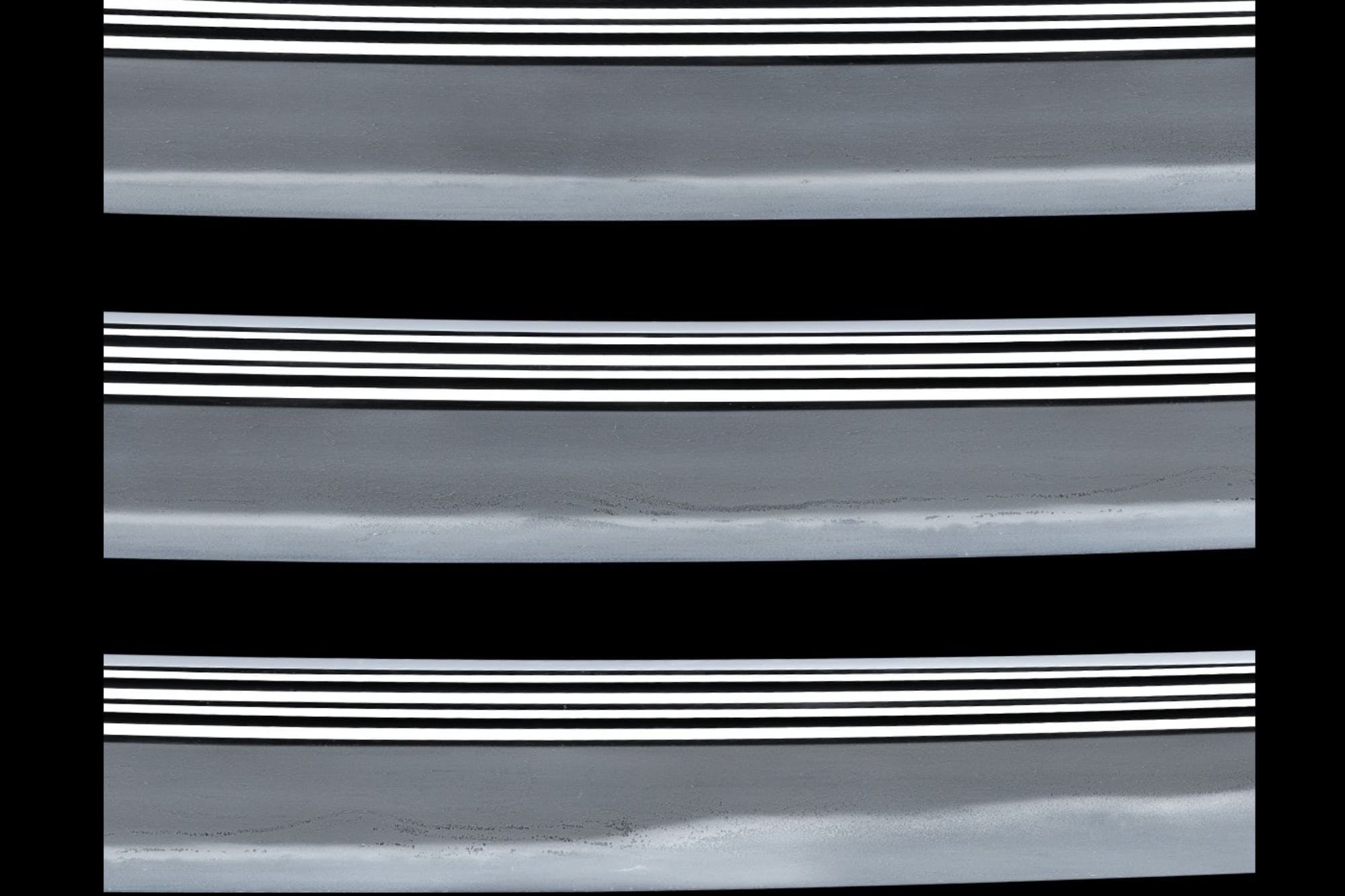
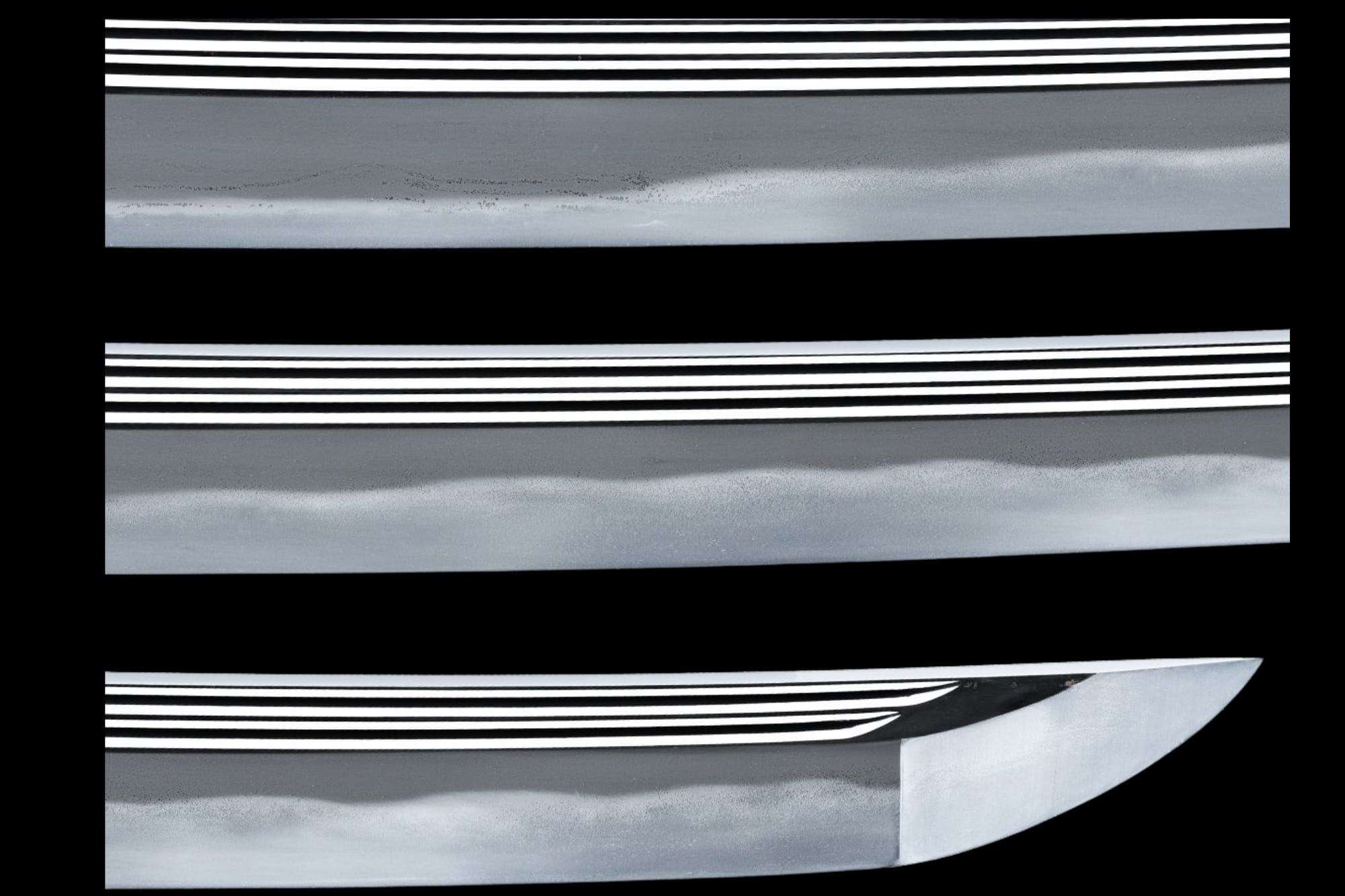
This katana is a powerful and elegant example of Sadatoshi’s work from the late Shōwa period. The blade displays a dignified and well balanced sugata with a wide and commanding presence. The steel shows a finely forged ko-itame jigane, refined and consistent with delicate ji-nie, reflecting the extraordinary forging control characteristic of the Osaka Gassan tradition.
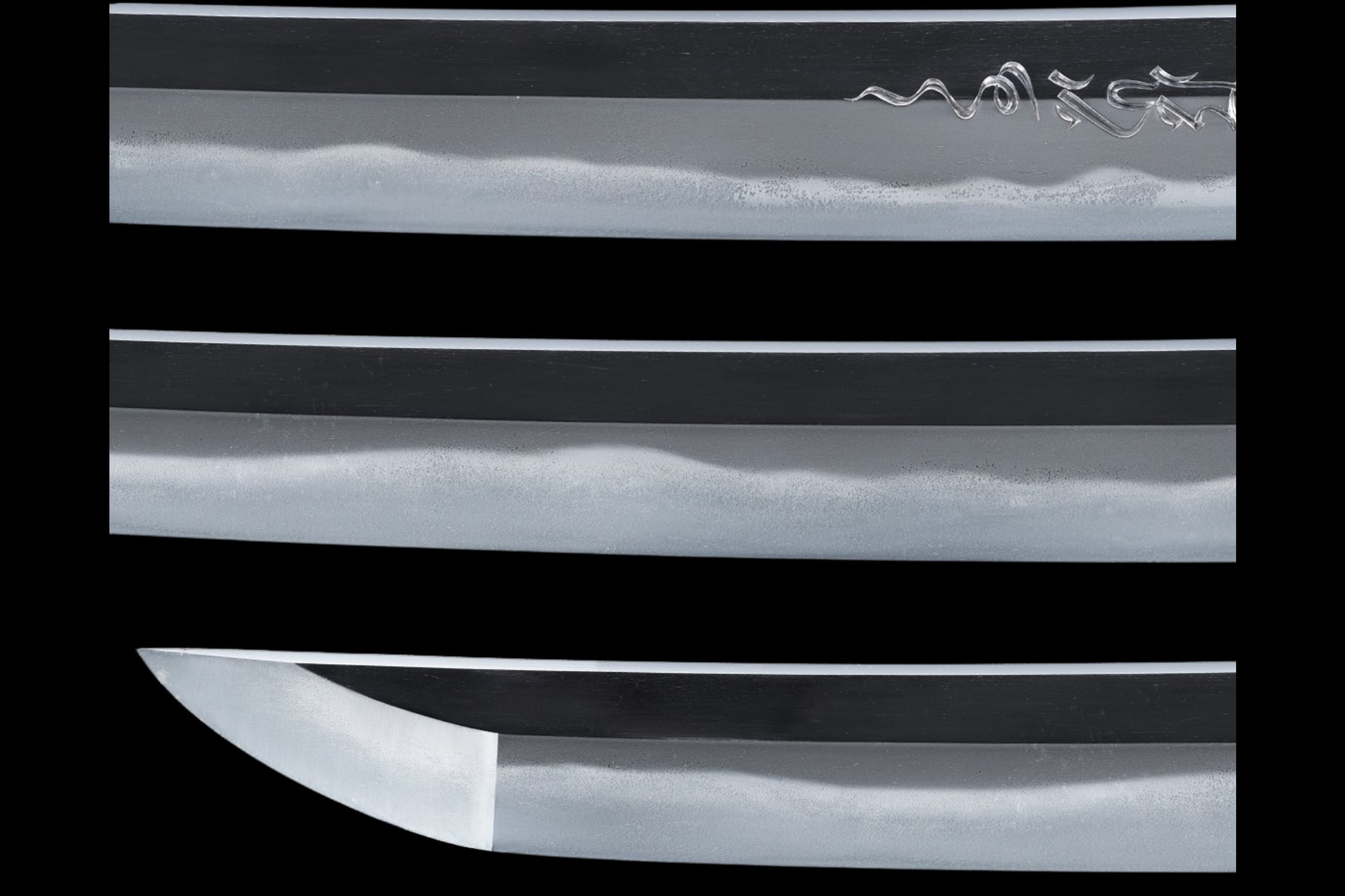
The hamon is formed in a refined suguha with subtle activity including nijuba, sunagashi and uchiyoke, producing a calm yet vibrant hardened edge. The bōshi turns back in a gentle notare with a rounded tip, executed with great precision.
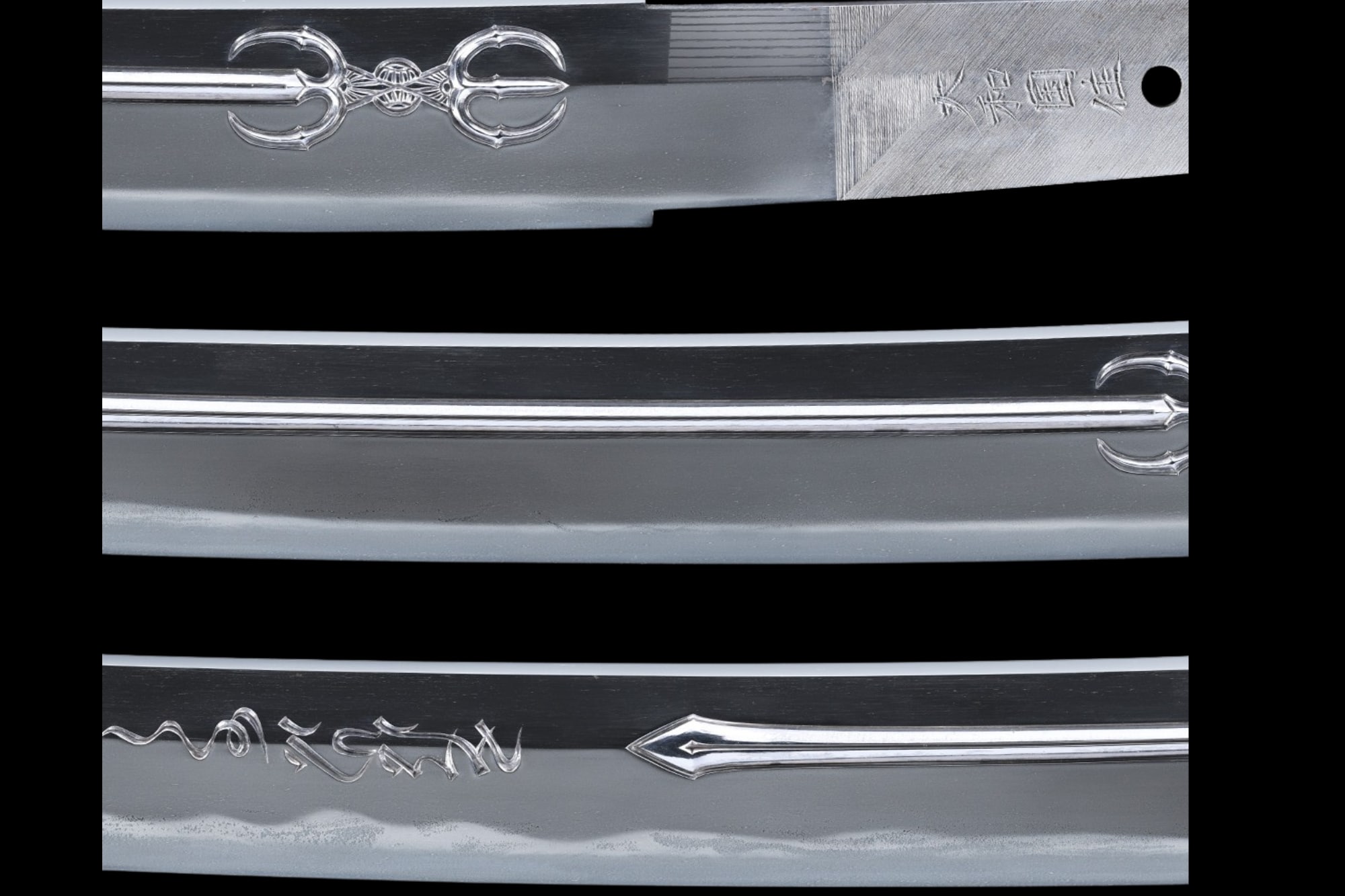
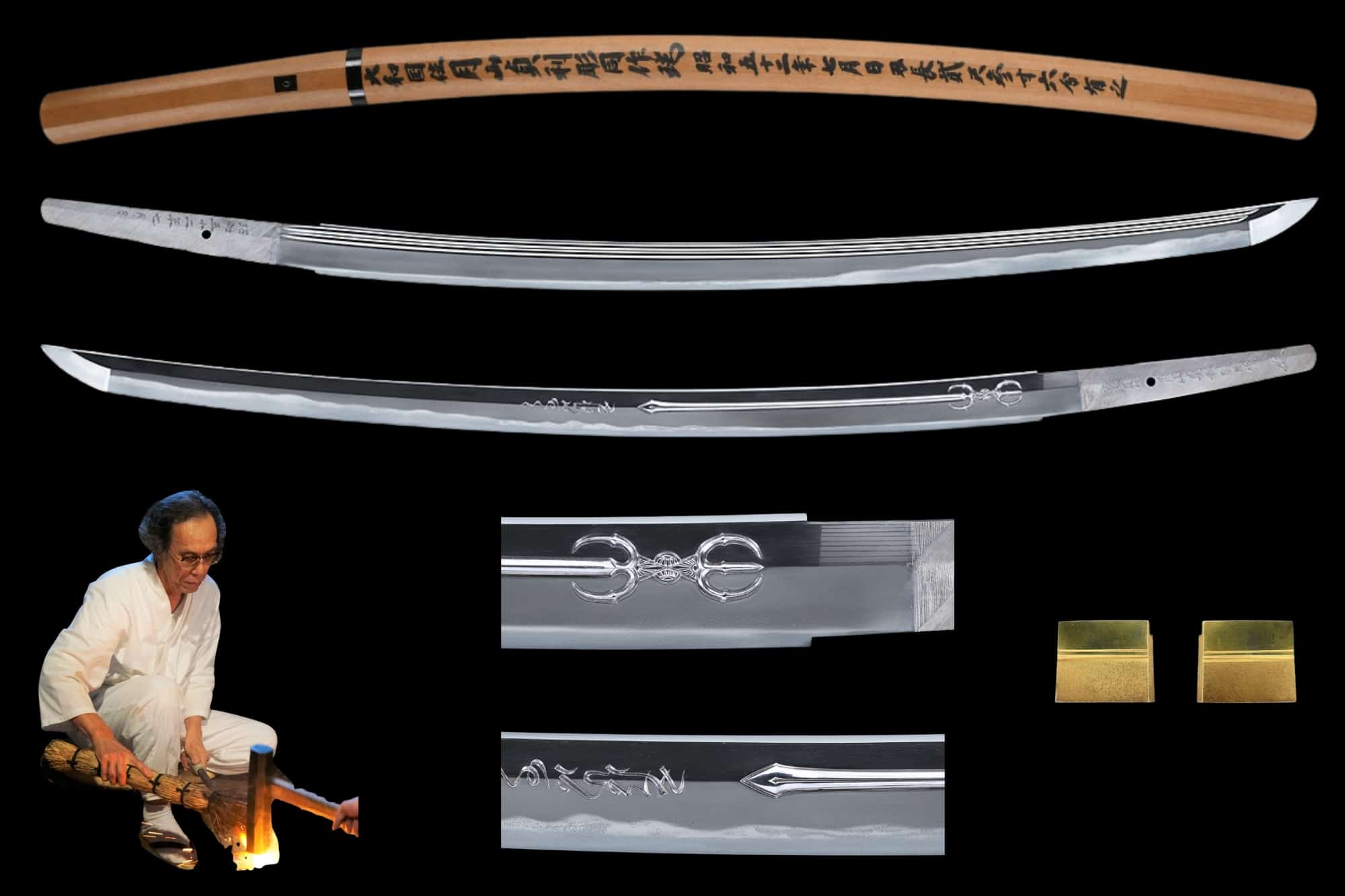
Particularly impressive is the presence of deeply carved horimono executed with exceptional clarity and confidence. These carvings are not merely decorative but carry spiritual meaning closely connected with esoteric Buddhist symbolism.
On one side appears a Bonji, the sacred Sanskrit seed syllable associated with the deity Fudō Myōō, representing spiritual strength and the destruction of ignorance. The carving is executed near the mune with depth and authority, reinforcing the ritual significance of the blade.
The opposite side features a classical Ken motif, representing the sacred Buddhist sword of wisdom often associated with the Kurikara-ken. With its sharply defined kissaki and central ridge, the carving symbolizes the cutting away of illusion and the triumph of wisdom over ignorance. The horimono is executed as an integral part of the blade’s conception, demonstrating the master’s complete command of both forging and carving.
The blade also features a long bo-hi running along the ura, enhancing both elegance and balance.
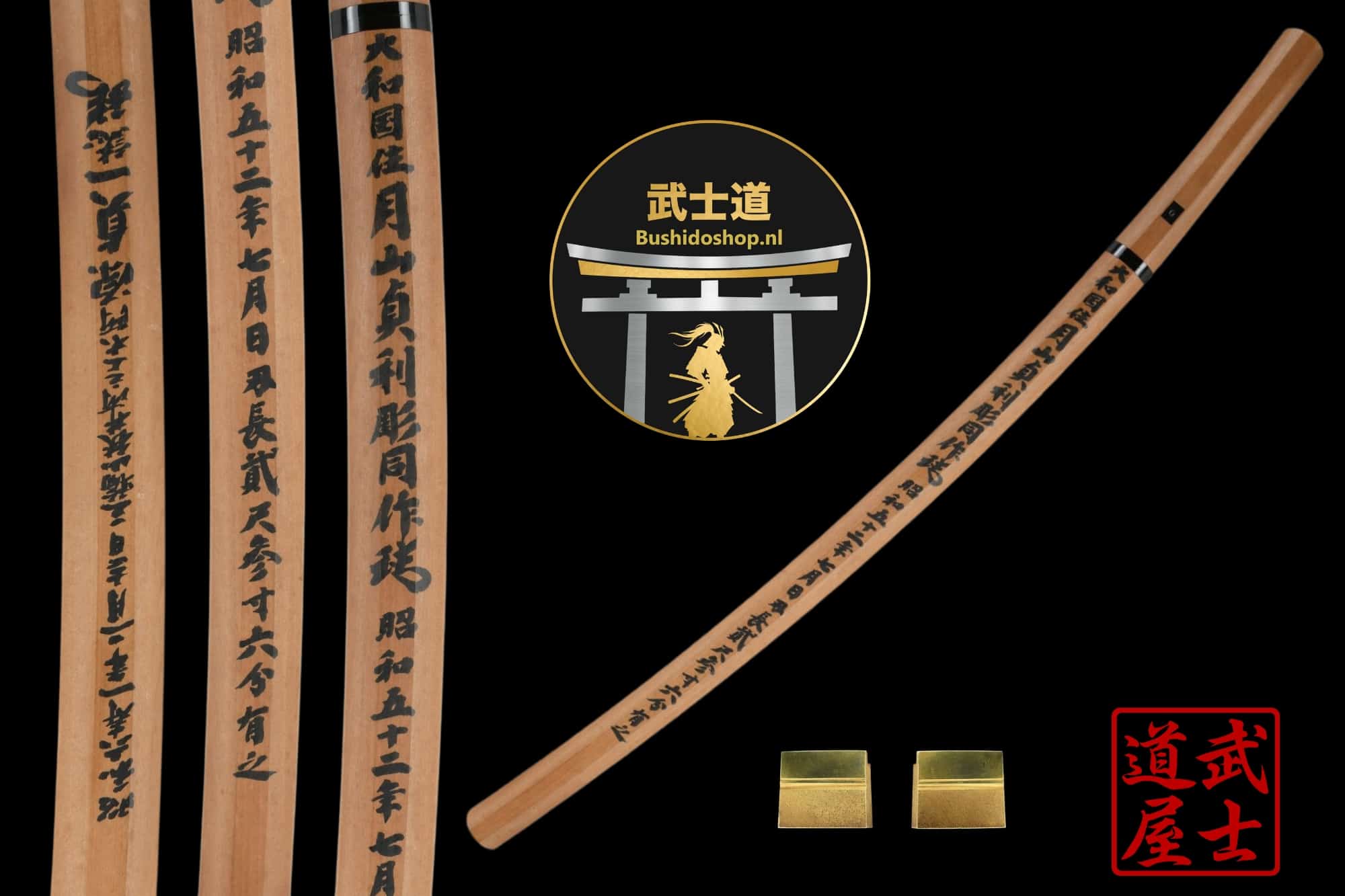
The tang remains ubu, preserving its original form with kesho-yasurime and a single mekugi-ana. The blade is signed and dated and accompanied by an elegant sayagaki by Tsukiyama, carved in July 1977 by the same artist.
Blade Specifications
Nagasa 71.5 cm
Sori 2.2 cm
Motohaba 3.76 cm
Moto-kasane 0.77 cm
Sakihaba 3.10 cm
Saki-kasane 0.65 cm
Sugata shinogi-zukuri with iori-mune and chū-kissaki, wide and powerful form
Nakago ubu with kesho-yasurime, signed and dated, one mekugi-ana
Habaki single piece with gold foil
Forging and Style
Jigane refined ko-itame with ji-nie
Hamon suguha with activity including nijuba, sunagashi and uchiyoke
Bōshi notare with rounded return
Horimono
Omote Bonji and Sankō-ken motif
Ura long bo-hi groove
Sayagaki
Tsukiyama sayagaki carved July 1977
Certificates and Registration
Japanese registration card issued in Nara Prefecture
Certificate issued by the Nihon Bijutsu Tōken Shinkōkai (NBSK), one of Japan’s officially recognized organizations dedicated to the preservation and evaluation of Japanese art swords. The NBSK operates alongside institutions such as the NBTHK and plays an important role in the authentication and study of modern swordsmithing.
Together, the official Japanese registration and NBSK certification confirm both the authenticity of the smith and the cultural and artistic significance of the blade, providing collectors with full confidence in its provenance.
This katana represents a rare opportunity to acquire a work by Gassan Sadatoshi, Mukansa master and heir to one of the most distinguished lineages in Japanese sword history. Combining spiritual symbolism, technical perfection and the legacy of the legendary Gassan school, the blade stands among the finest examples of modern Japanese swordmaking and is fully worthy of inclusion in the most advanced private or institutional collections.