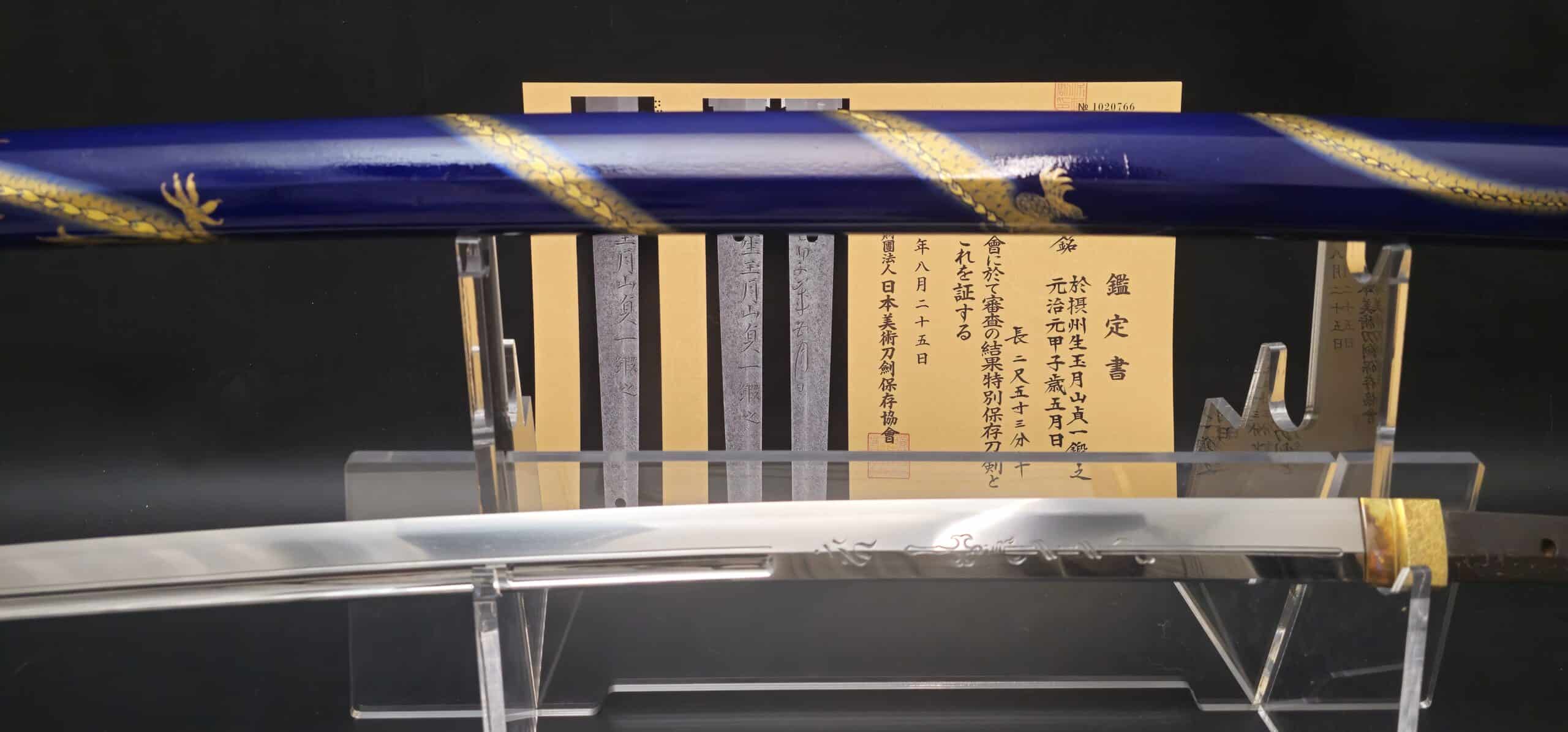

Japanese Katana Gassan Sadakazu
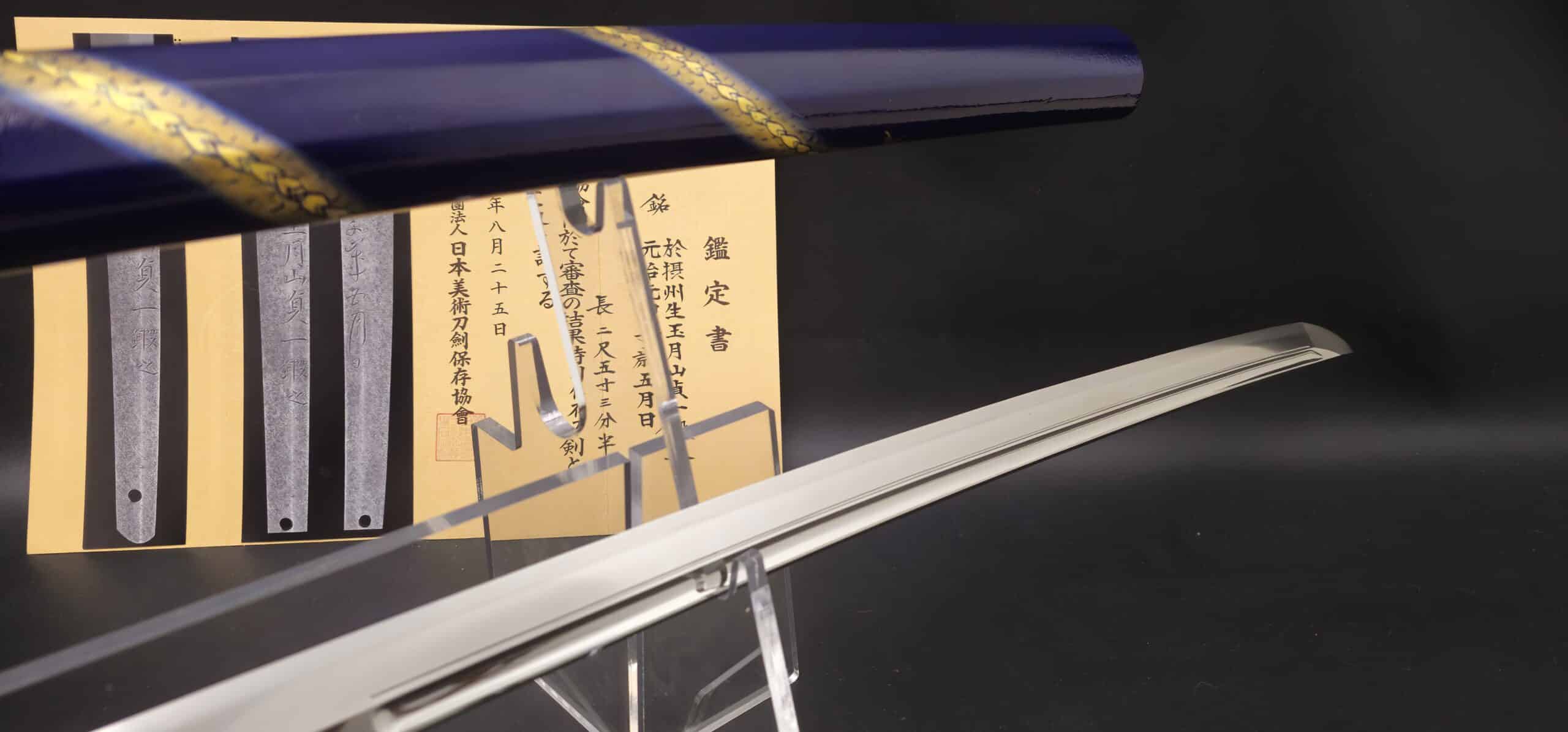
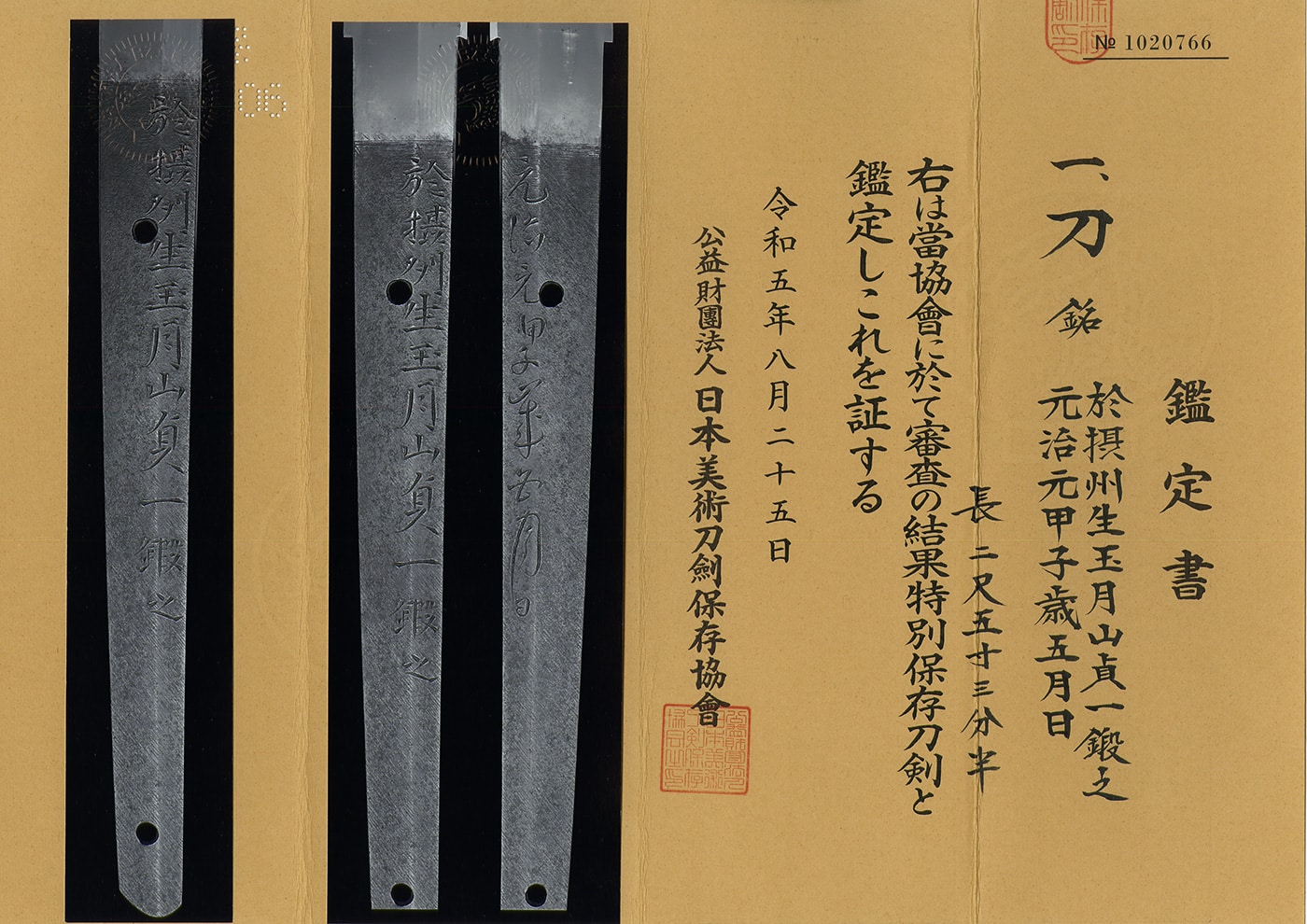
NBTHK Tokubetsu Hozon Tōken
Documented in Shin Shintō Taikan
This exceptional katana is a major work by Gassan Sadakazu (1836–1918), one of the most celebrated swordsmiths of the late Edo and Meiji periods and a central figure in the revival of traditional Japanese swordmaking. Sadakazu was the first swordsmith to be appointed Teishitsu Gigeiin (Imperial Household Artist) in 1906, a distinction reserved for the most outstanding craftsmen in Japan and often compared to the status later known as Living National Treasure.
Blades by Sadakazu represent the pinnacle of the Gassan tradition, a lineage whose origins trace back centuries to the Yamato province. During the nineteenth century Sadakazu played a decisive role in preserving and elevating this tradition at a time when the samurai class was disappearing and the future of swordmaking itself was uncertain. His mastery of complex forging techniques, particularly the distinctive ayasugi-hada associated with the Gassan school, established him as one of the greatest swordsmiths of the modern era.
Even after the Haitōrei sword prohibition of 1876, which ended the wearing of swords in public, Sadakazu continued to produce blades of extraordinary artistic quality. His work was widely exhibited both within Japan and internationally. At the 1893 Chicago World’s Fair, one of the most important cultural exhibitions of the Meiji period, Sadakazu’s swords attracted significant attention, and one of his blades was purchased directly by Emperor Meiji, further confirming his status as a master craftsman of national importance.
This particular sword is recorded in the important reference work Shin Shintō Taikan (page 109), an authoritative publication documenting the leading swordsmiths and masterpieces of the Shin-Shintō tradition. Inclusion in this work places the blade among the most historically significant examples associated with the Gassan school.
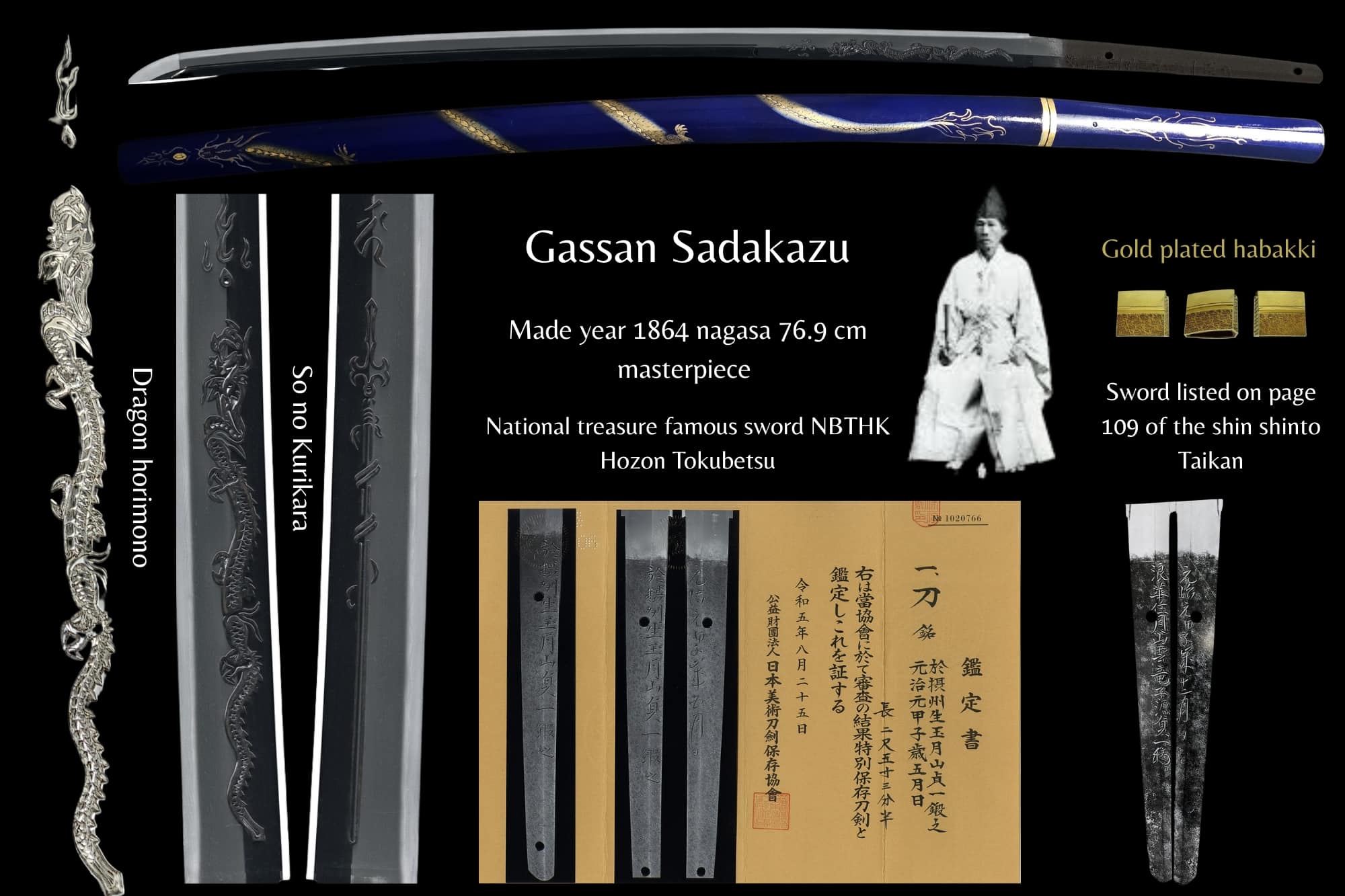
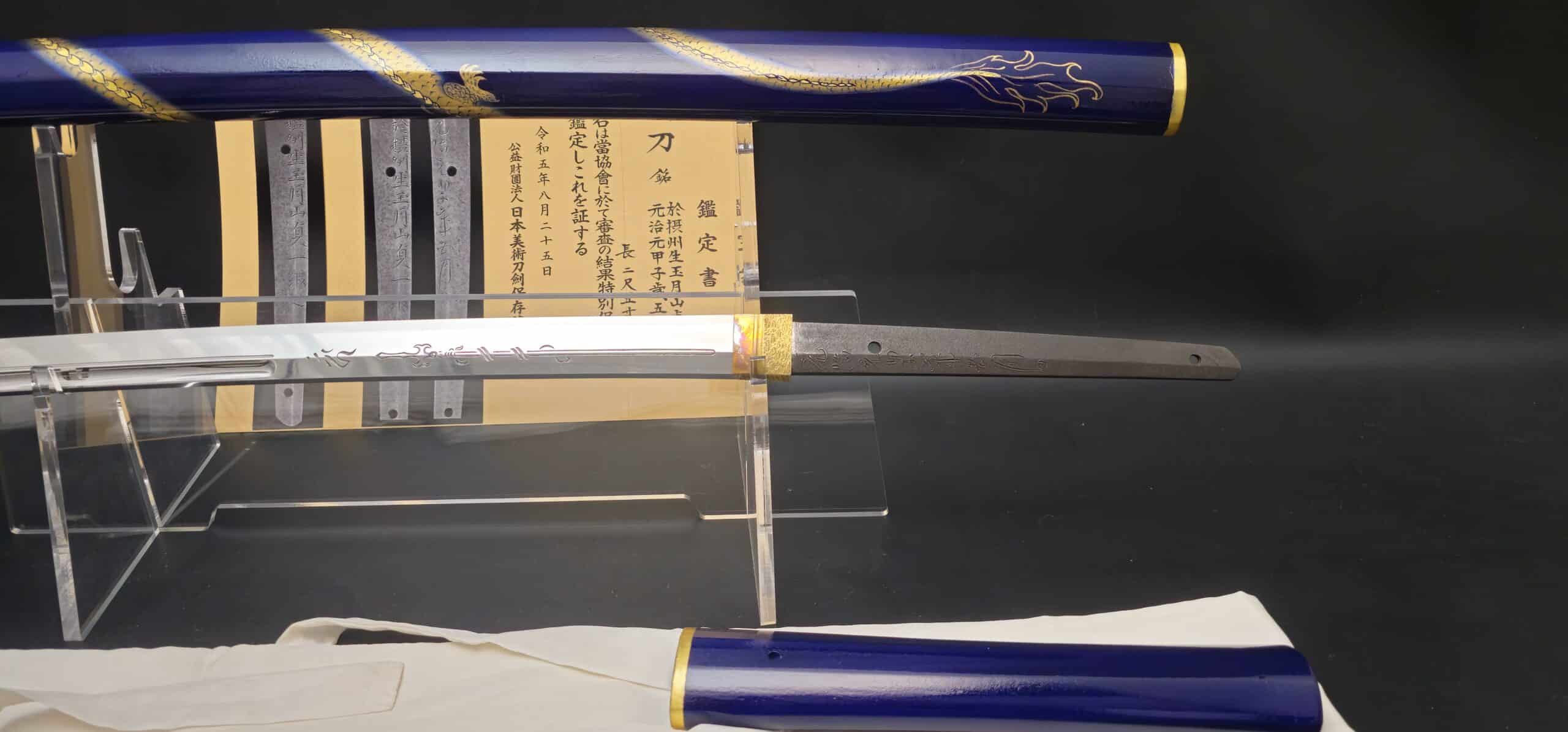
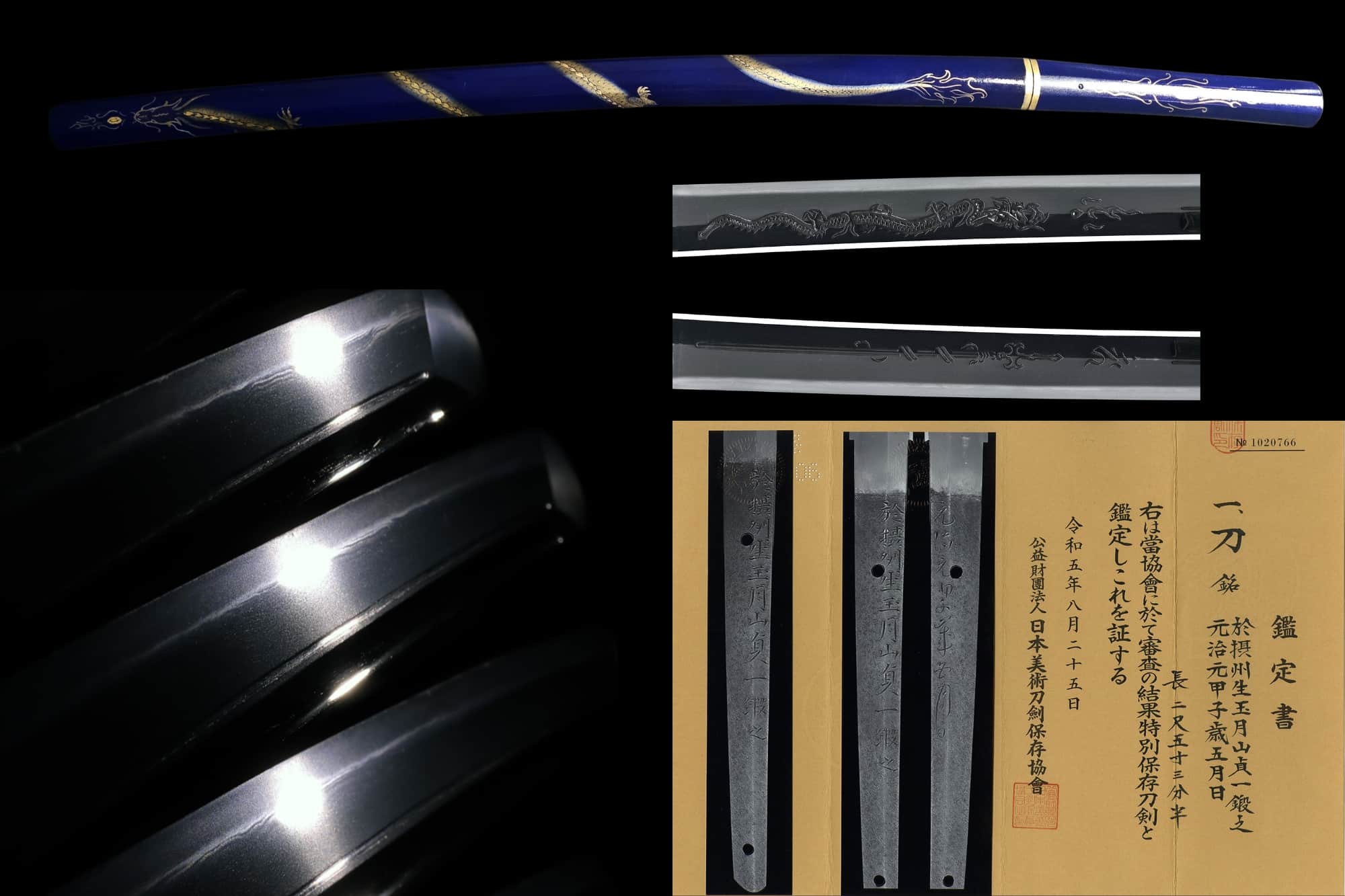
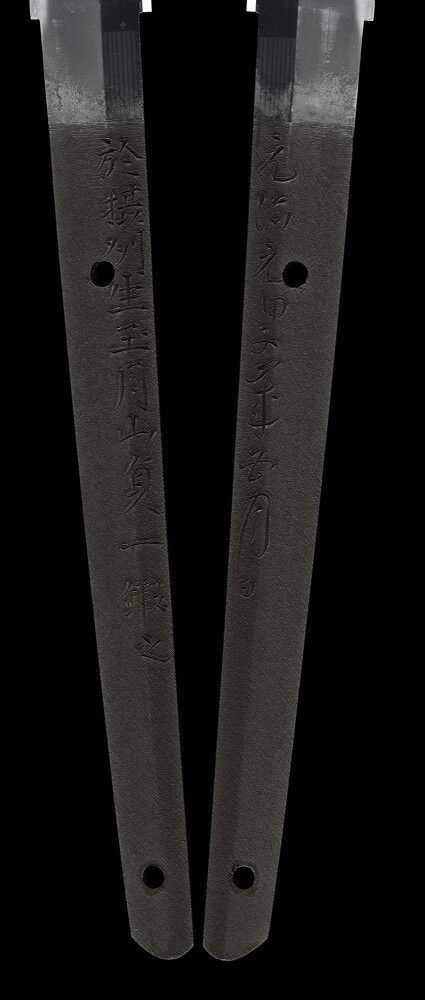
The tang bears an inscription dated Genji first year, May 1864, placing the sword in the final years of the Edo period, a time when Japanese swordmaking had reached an extraordinary level of refinement. The inscription reads:
Sesshū Ikutama Tsukiyama Teiichi Kajiyuki
Genji Gannen Gogatsu Tsuitachi
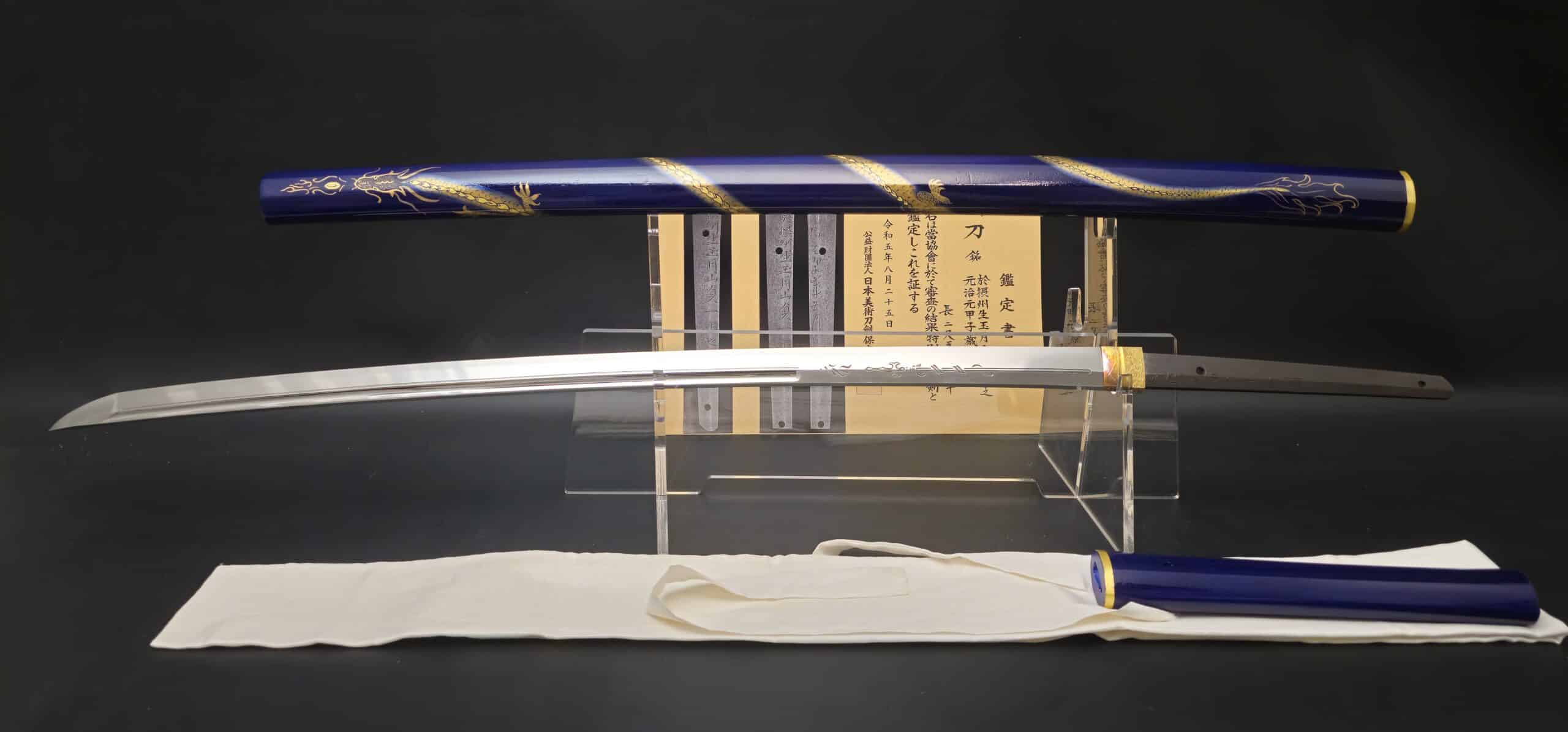
The blade itself represents the height of Sadakazu’s artistry. The overall sugata is powerful and dignified, with a commanding presence typical of high-level Shin-Shintō work. The nagasa measures 76.9 cm, giving the sword impressive length and authority, while the gentle curvature contributes to both elegance and cutting efficiency.
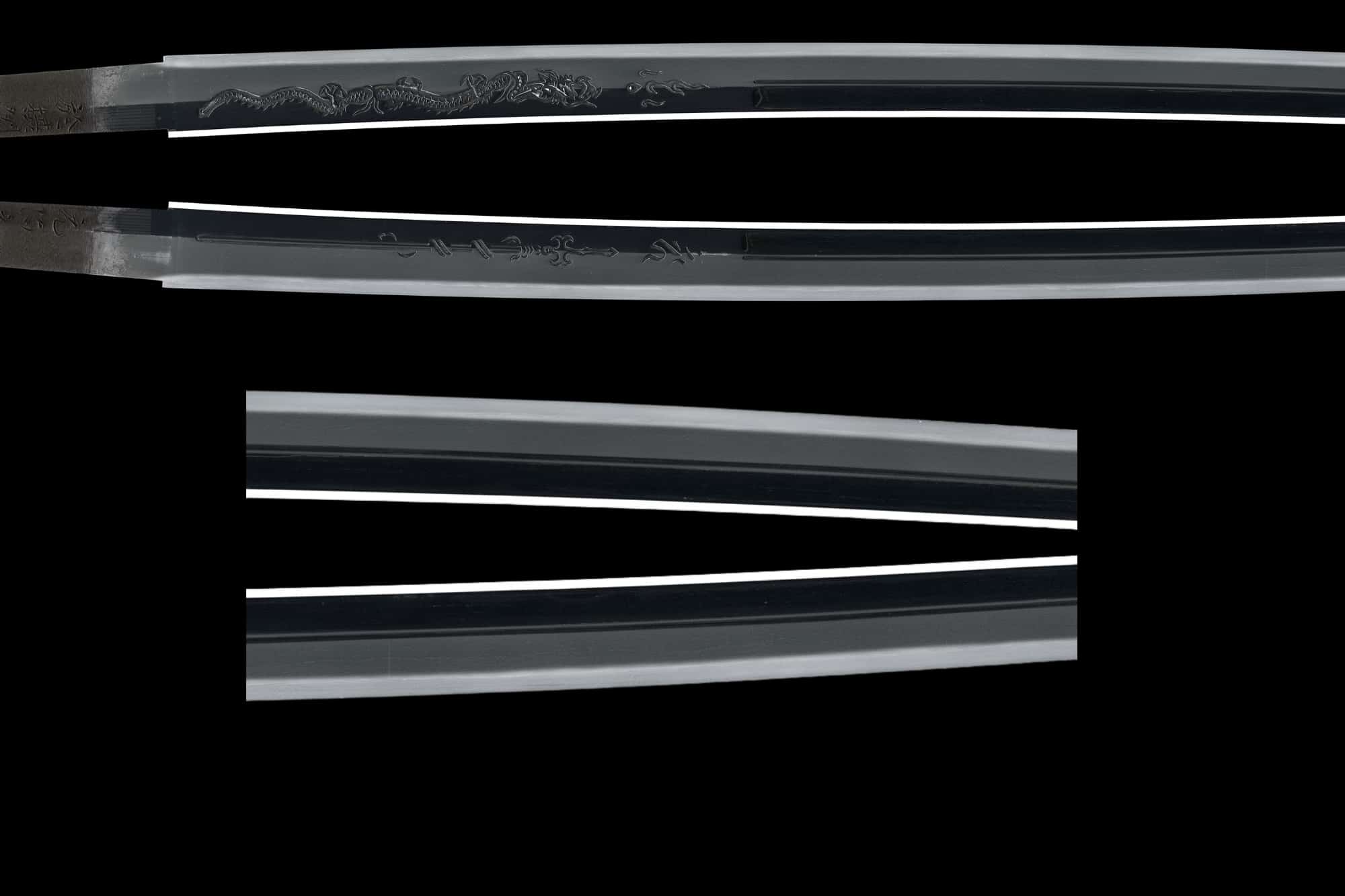
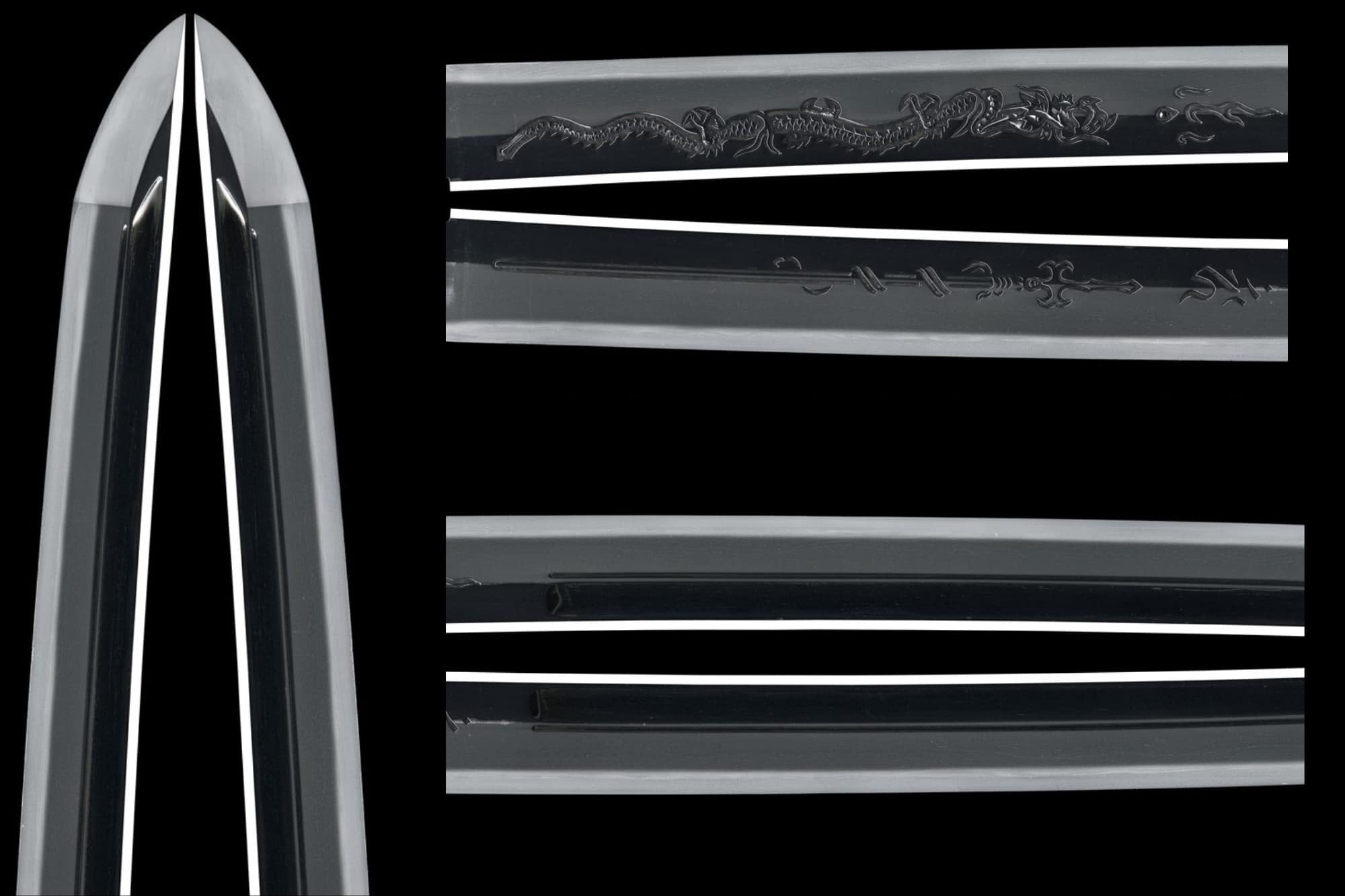
The steel displays a vivid and well-polished jihada, revealing the refined forging characteristic of the Gassan tradition. The hamon is executed in a sophisticated nukedake suguha with visible uchiyake, producing a bright and refined hardened edge. Activity within the hamon includes delicate kinsuji and sunagare, creating subtle movement within the hardened steel. Toward the tip the pattern transitions into saki-suki-gake, further demonstrating the complex and controlled heat treatment achieved by the master smith.
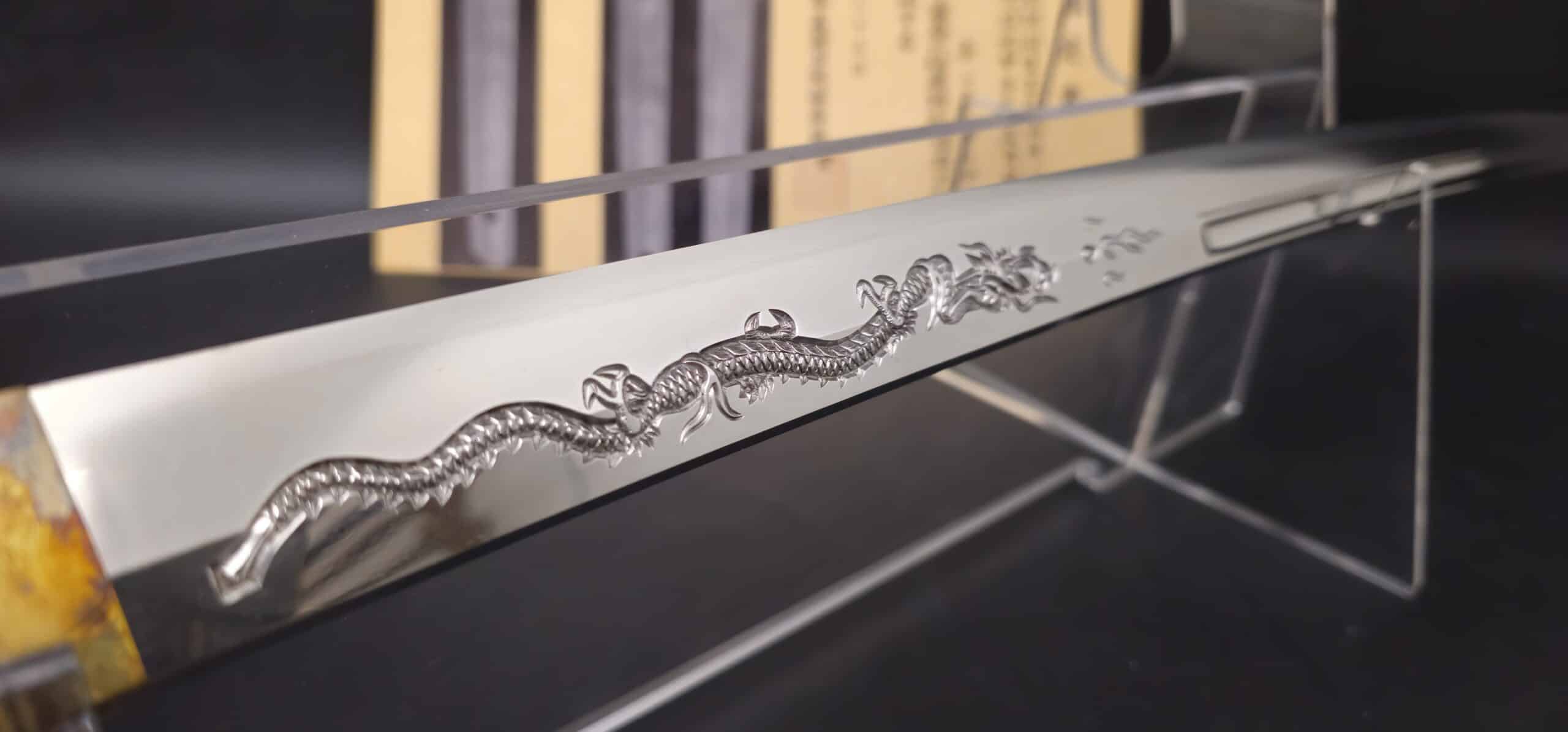
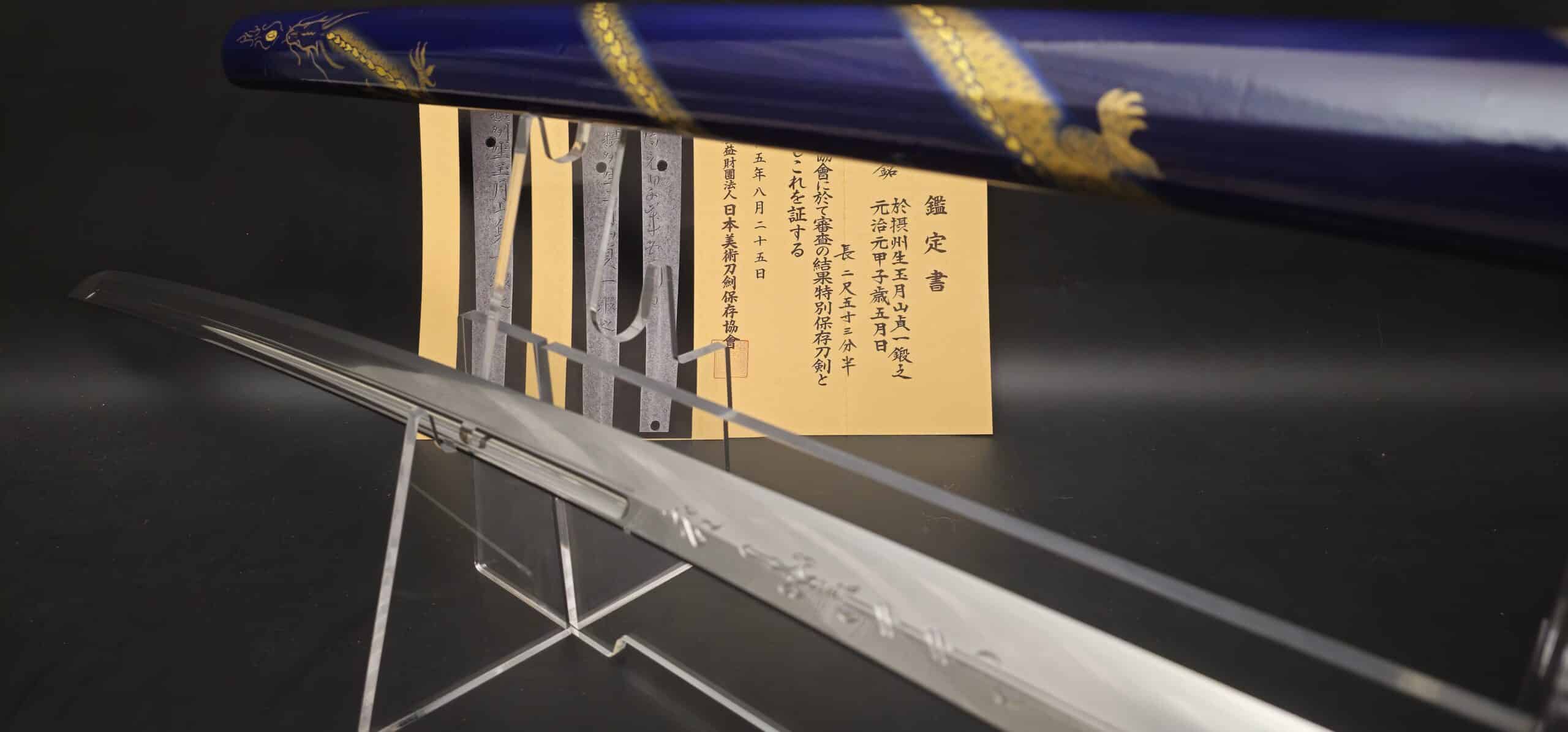
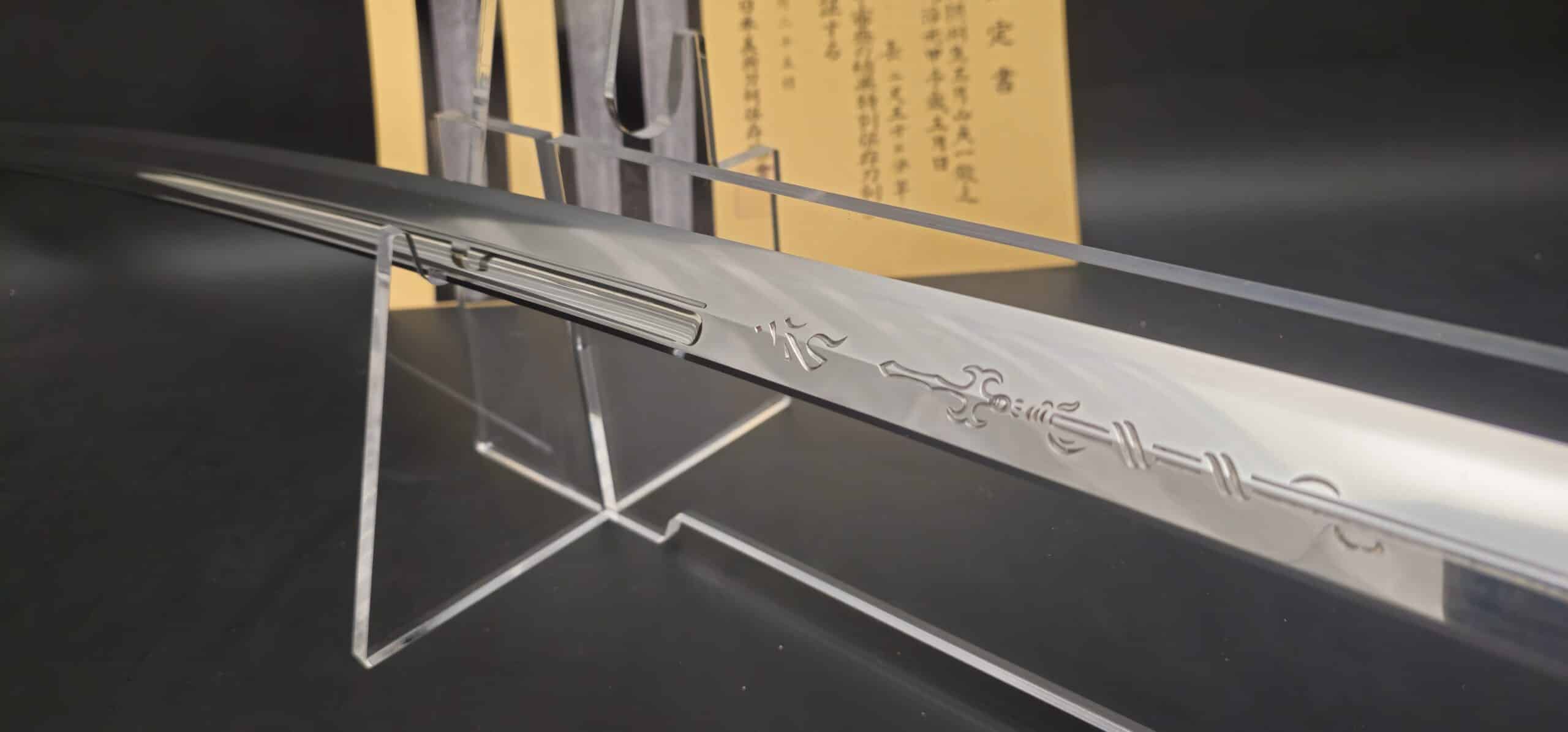
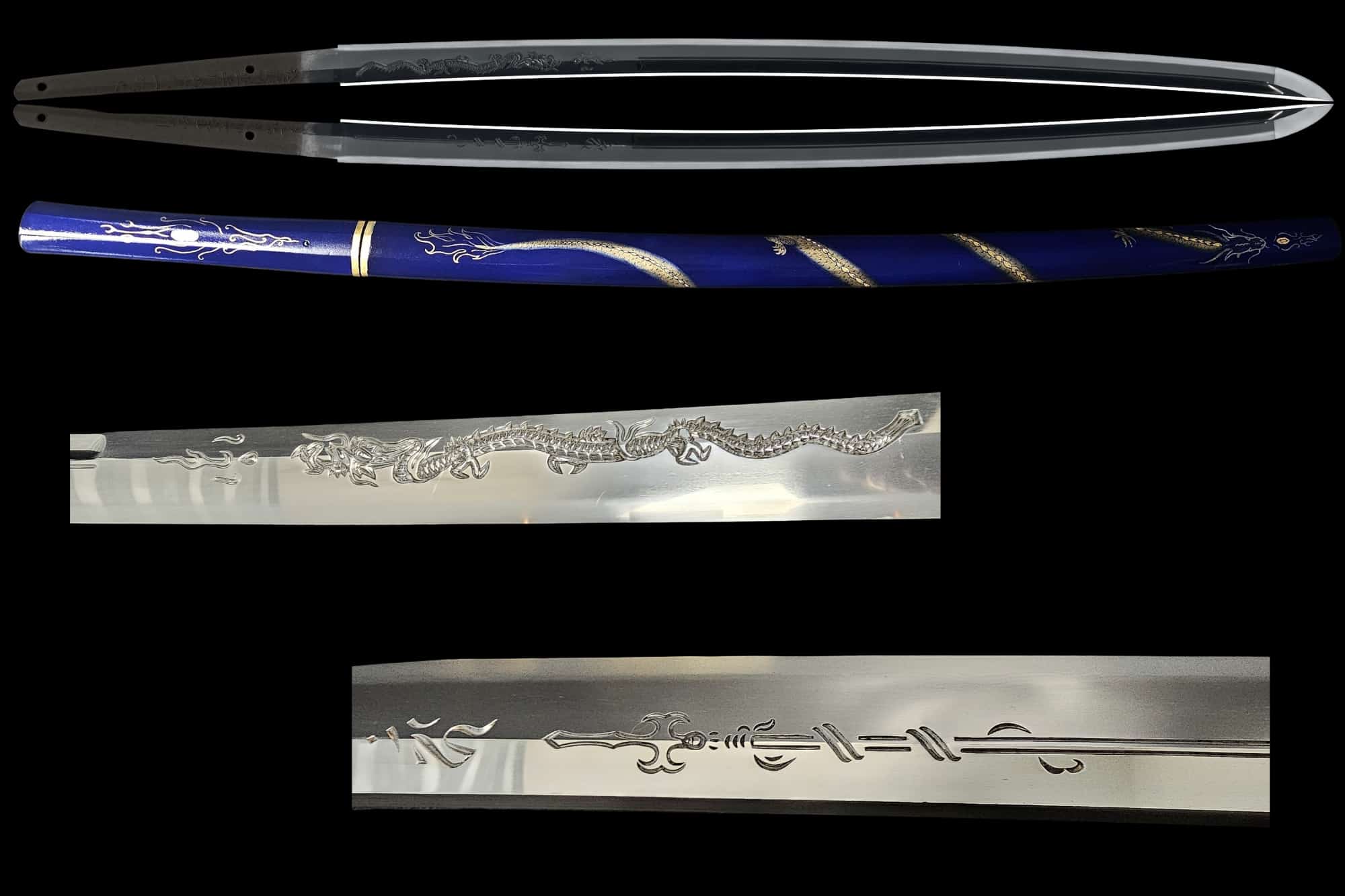
One of the most striking features of the blade is its extraordinary horimono carving, a discipline in which Sadakazu was particularly renowned. Unlike many swords where engraving was performed by a specialist carver, Sadakazu himself was known for executing intricate carvings directly on his blades.
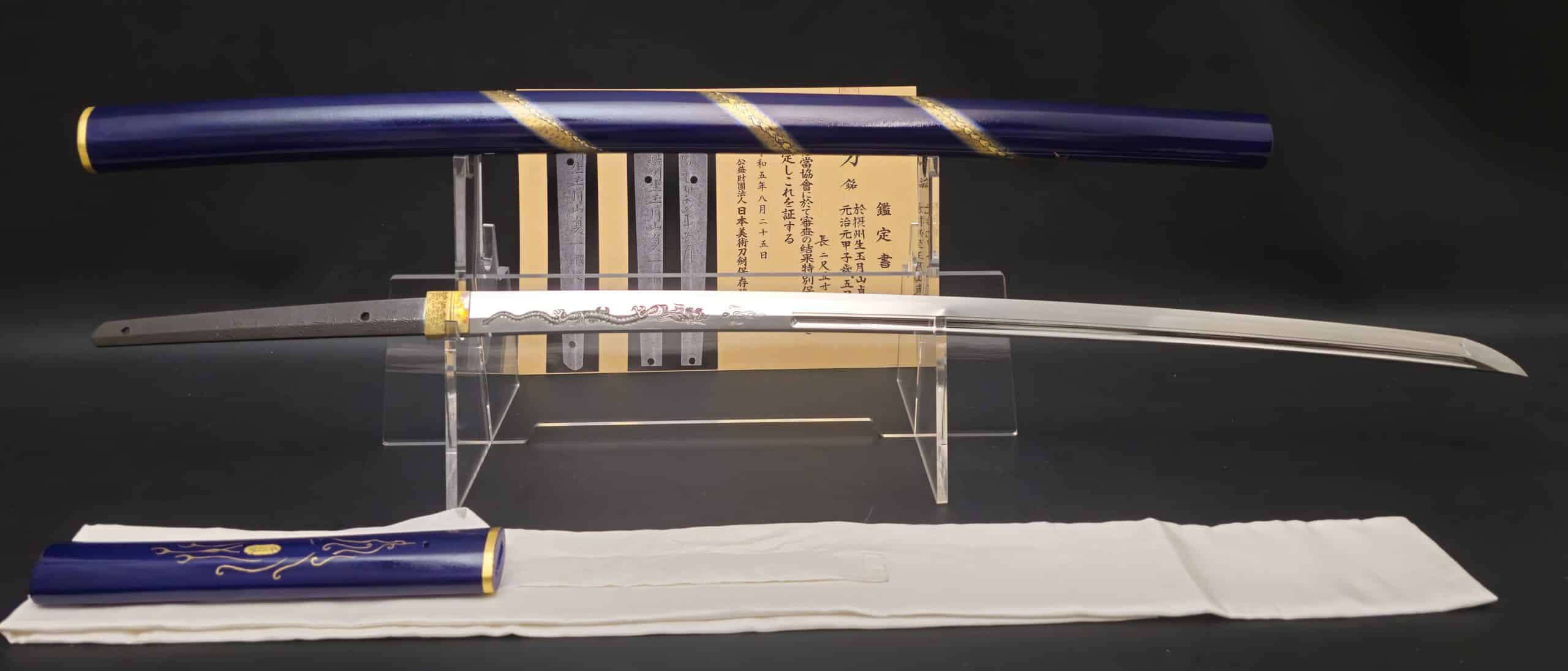
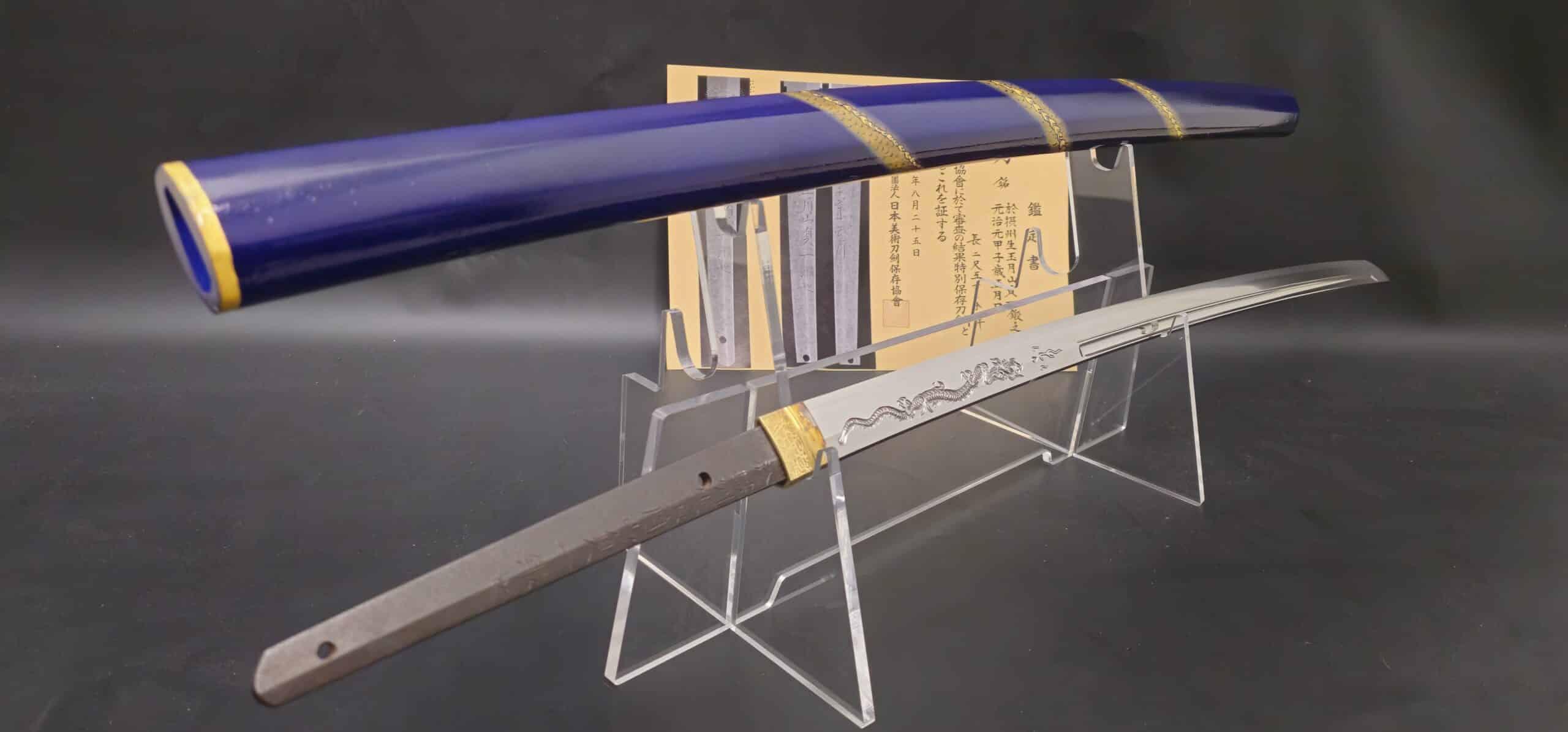
On the omote side appears a powerful dragon, accompanied by Sanskrit characters and the image of the sun. The dragon is a deeply symbolic figure in Japanese mythology, representing strength, wisdom and divine authority. The presence of Sanskrit characters reflects the influence of esoteric Buddhist symbolism often associated with protective or spiritual themes in sword iconography.
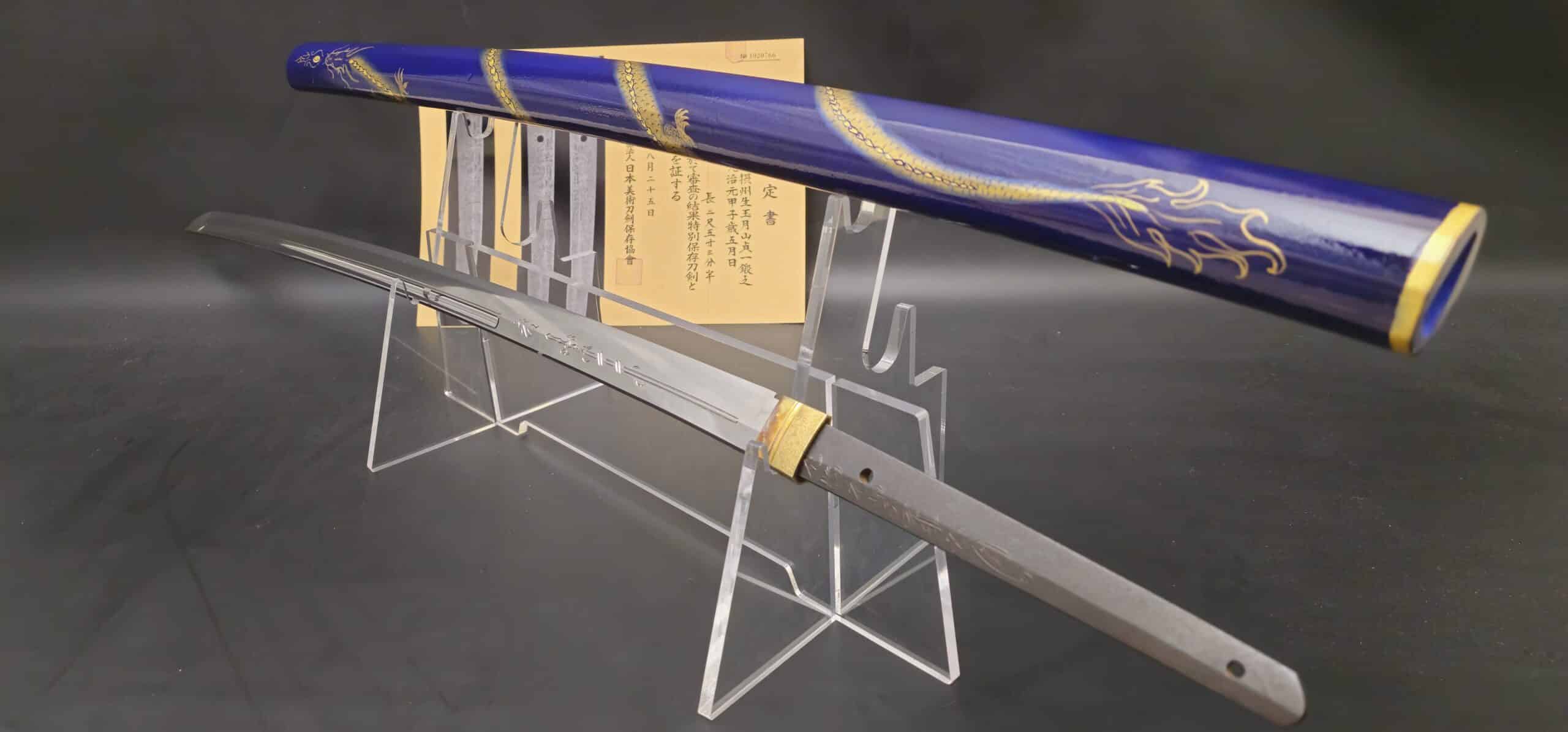
On the ura side are carved a spear motif, additional Sanskrit characters, a tassel groove and a sube groove, all executed with exceptional precision and depth. The carved sun motif is traditionally interpreted as an homage to the legendary master Masamune, further emphasizing the historical awareness and artistic intention behind the blade.
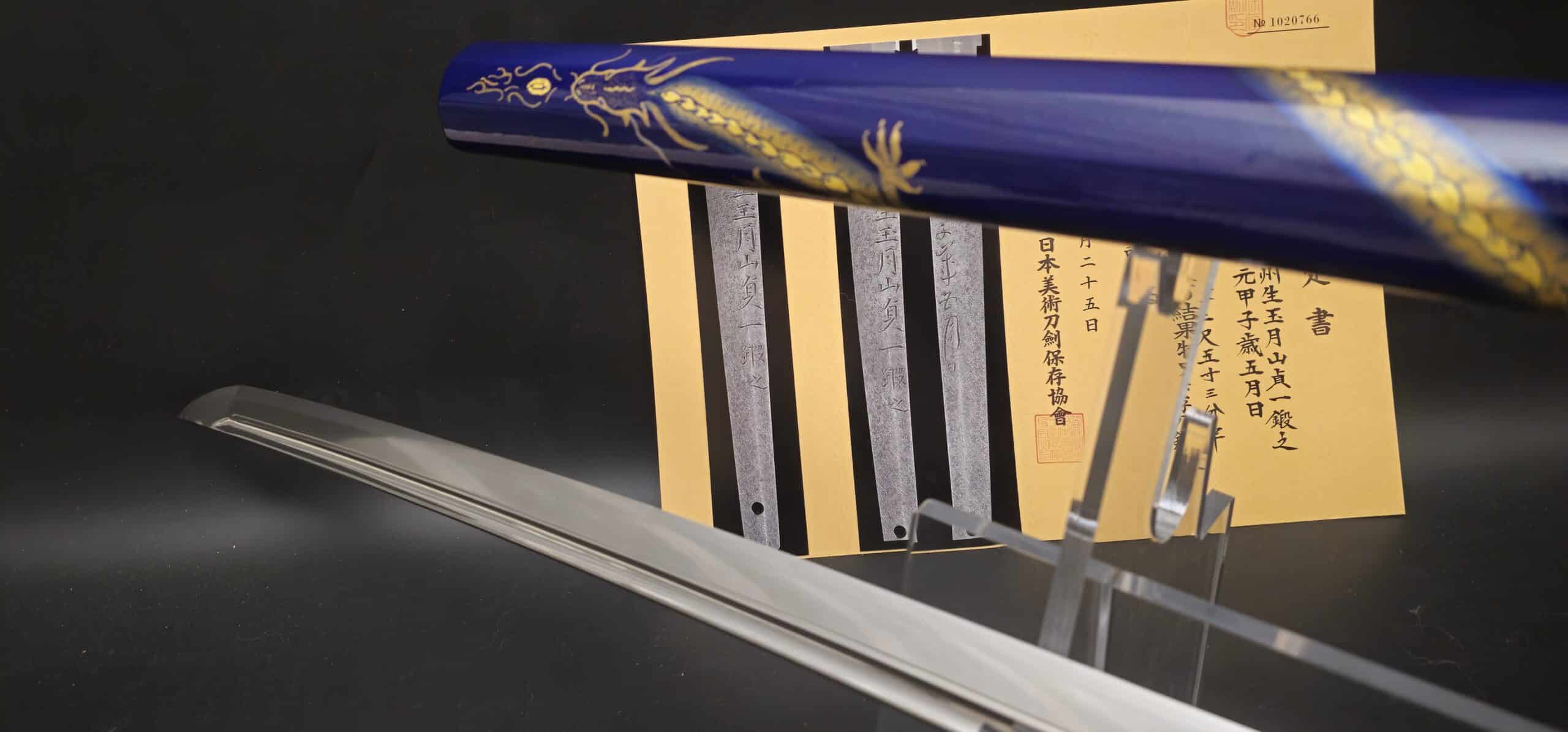
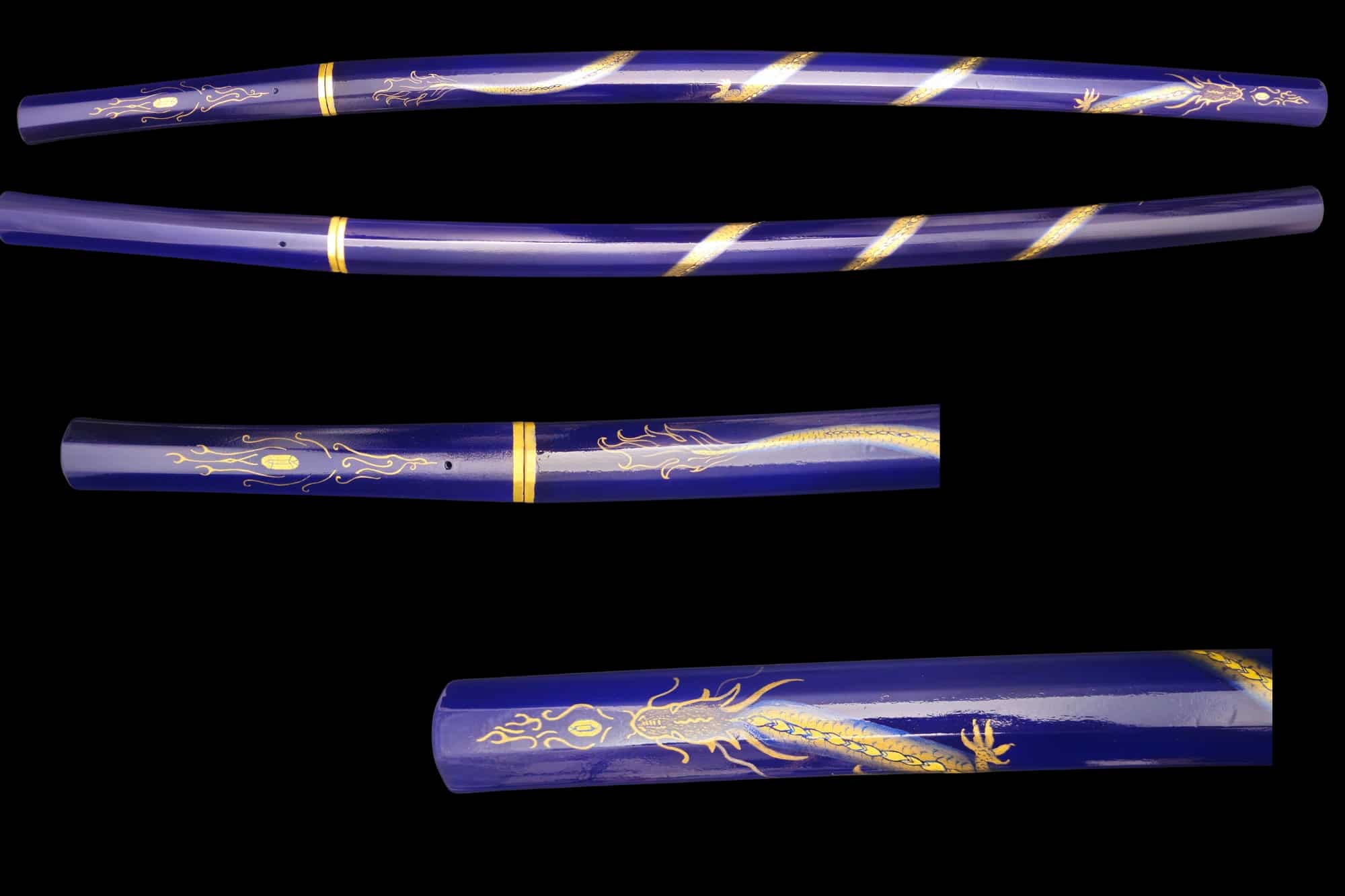
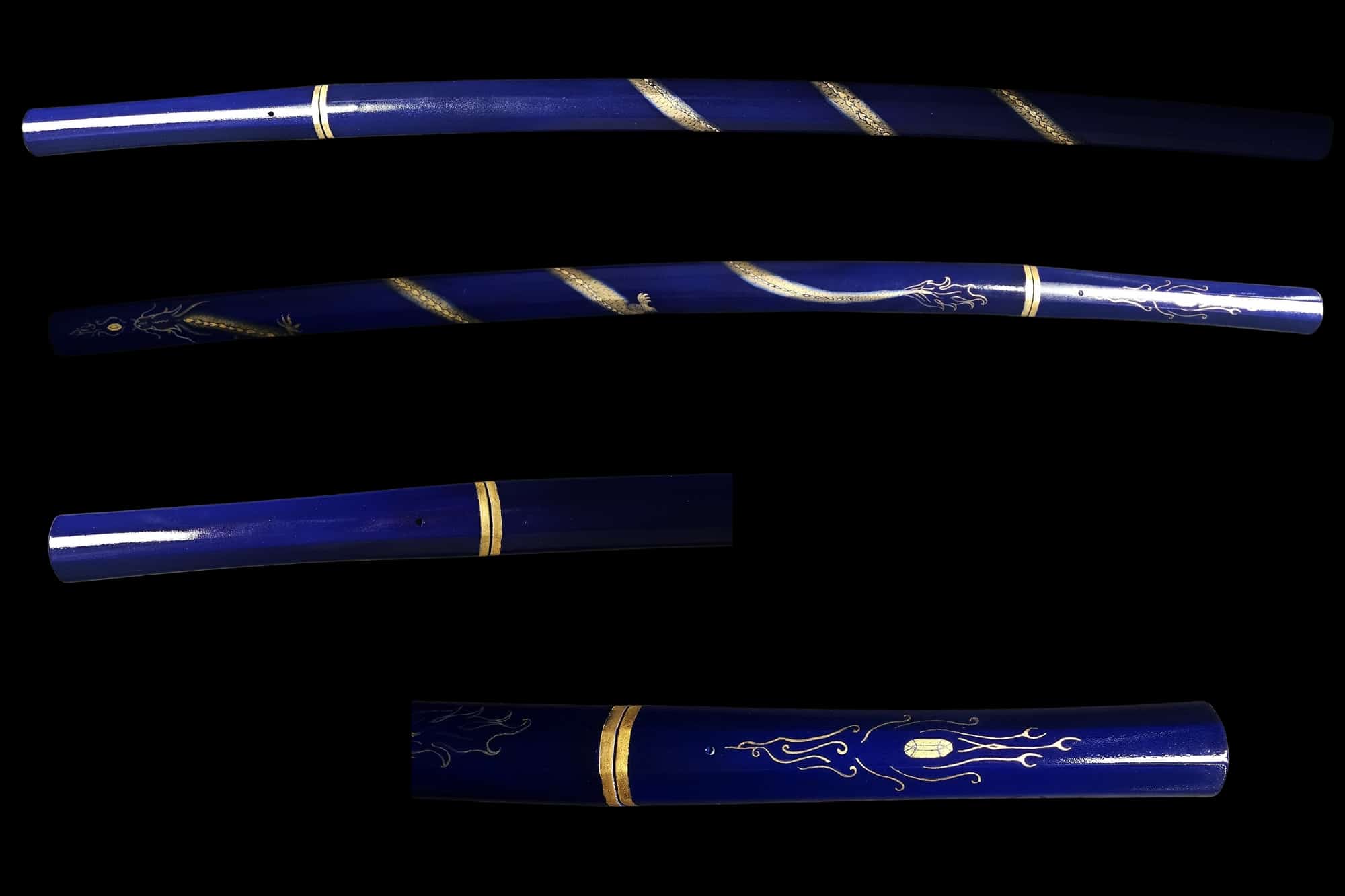
The sword is preserved in a remarkable custom shirasaya, itself an artwork of exceptional quality. The scabbard is finished in a deep royal blue lacquer, a color historically associated with dignity and refinement. Encircling the shirasaya is a magnificent dragon painted entirely by hand in 22-karat gold, climbing elegantly around the form of the blade in pursuit of the sacred jewel known as the Tama.
This motif, drawn from classical Japanese mythology, symbolizes wisdom, spiritual power and divine protection. The painting has been executed using traditional Japanese techniques preserved through generations of craftsmen, transforming the shirasaya from a purely protective mount into a work of fine art that harmonizes beautifully with the blade itself.
Specifications
Nagasa 76.9 cm
Sori 1.2 cm
Weight 1045 g
Period Genji 1st year (May 1864), late Edo period
Certification NBTHK Tokubetsu Hozon Tōken
Documentation Listed in Shin Shintō Taikan (page 109)
The legacy of Gassan Sadakazu continued through one of the most distinguished swordmaking lineages in modern Japan. His son Gassan Sadakatsu became an important swordsmith of the Taishō and early Shōwa periods, followed by the second generation Gassan Sadakazu. Today the tradition continues through Gassan Sadatoshi, the current master of the Osaka Gassan school and one of the most respected swordsmiths working in Japan.
This katana embodies the peak of Sadakazu’s craftsmanship, combining masterful forging, extraordinary horimono carving and a commanding classical form. The addition of the exceptional custom shirasaya further elevates the piece, creating a harmonious union between blade and presentation.
With its NBTHK Tokubetsu Hozon certification, its documentation in Shin Shintō Taikan, and its association with one of the most important swordsmiths in Japanese history, this blade represents a museum-level work of exceptional cultural significance.
A rare opportunity to acquire a true masterpiece by Gassan Sadakazu, Imperial Household Artist and one of the greatest masters of Japanese swordmaking.