
Japanese Tantō Ōno Yoshimitsu
Mukansa Master Swordsmith
Shōwa 55 (June 1980)
This refined Japanese tantō was forged by Ōno Yoshimitsu (大野義光), one of the most respected contemporary swordsmiths of Japan and a master of the modern tradition recognized with Mukansa status, the highest distinction awarded to swordsmiths participating in the annual Shinsaku Meitō Exhibition. Mukansa signifies that a smith’s work is considered to be of such consistently high quality that it is displayed without further judging, placing the craftsman beyond normal competition.
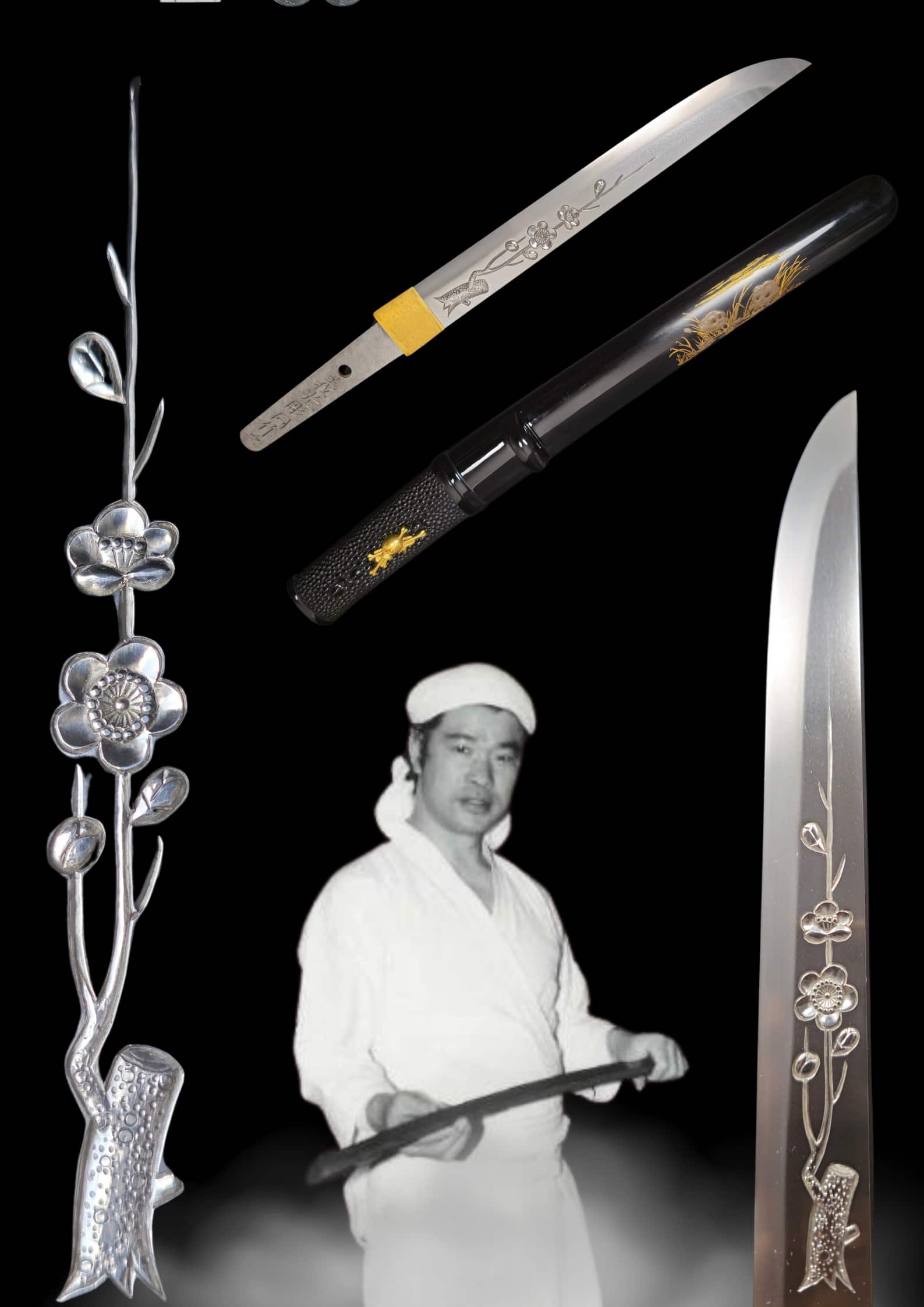
Ōno Yoshimitsu was born Yoshikawa Mitsuo on October 16, 1948, in Niigata, Japan. From an early age he developed a fascination with Japanese swords and the profound cultural traditions surrounding them. His formal training began in 1969, when he entered apprenticeship under the renowned swordsmiths Yoshindo Yoshihara and Shoji Yoshihara, both central figures in the revival of traditional swordmaking in modern Japan.
After years of rigorous training he received his official swordsmith license in 1975 from the Japanese Agency for Cultural Affairs, allowing him to establish his own forge. Shortly thereafter he began participating in the prestigious Shinsaku Meitō Ten, the annual exhibition of newly made Japanese swords held at the Japanese Sword Museum. Between 1976 and 1980 he received the Doryoku-shō (Effort Award) every year, followed by the Yūshū-shō (Excellence Award) and later the prestigious Takamatsu-no-miya Prize, one of the highest honors granted in contemporary swordmaking.
In 1987 Yoshimitsu was promoted to Mukansa, formally recognizing that his blades had reached the highest level of artistic and technical achievement. This distinction places him among the most accomplished living swordsmiths and ensures his work is exhibited without further competition.
Yoshimitsu’s craftsmanship is deeply inspired by the legendary Meibutsu Yamatorige, a celebrated Ko-Bizen tachi designated as a National Treasure of Japan. Rather than attempting to reproduce historical blades directly, Yoshimitsu seeks to capture their spirit and aesthetic essence. His work often reflects the classical elegance of the Bizen tradition, particularly through luminous nioi-deki hamon, refined ko-nie activity, flowing ashi and yō, and the delicate appearance of utsuri, elements that together evoke the atmosphere of the great masterpieces of the Kamakura period.
Beyond forging, Yoshimitsu is known for his scholarly approach to swordmaking. He frequently commissions different polishers to work on blades of similar style in order to study how various polishing techniques influence the visual character of the steel and hamon. This research reflects his belief that the Japanese sword is not merely a weapon but a complete artistic creation shaped by both the smith and the polisher.
His reputation as a master craftsman led to important commissions. In 1984 he was invited by the Grand Shrine of Ise, Japan’s most sacred Shinto shrine, to forge a ceremonial sword for the 61st Shikinen Sengū reconstruction ceremony. In 1989 he was again invited to create a sacred yari spear for the same reconstruction cycle, further demonstrating the high esteem in which his work is held.
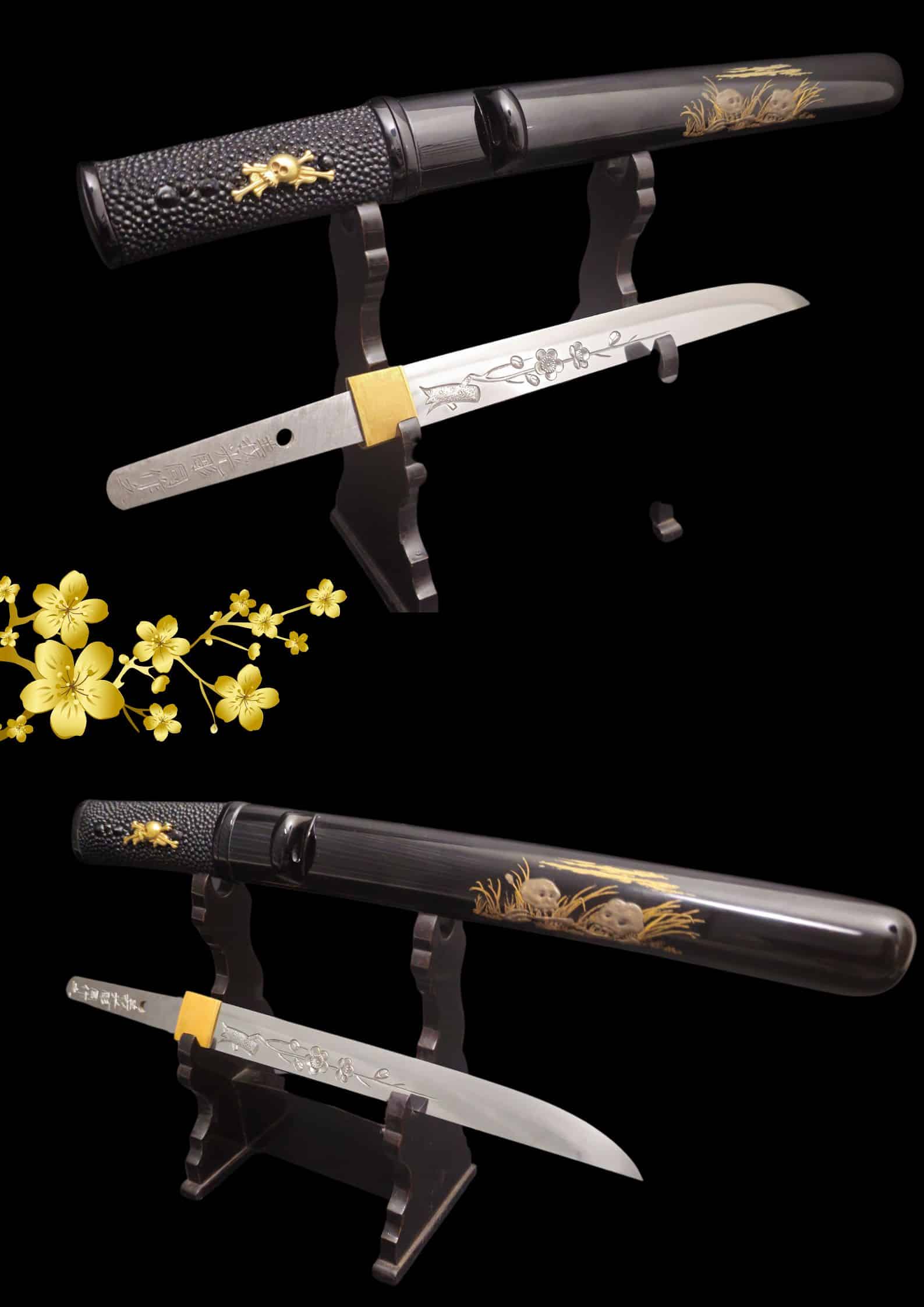
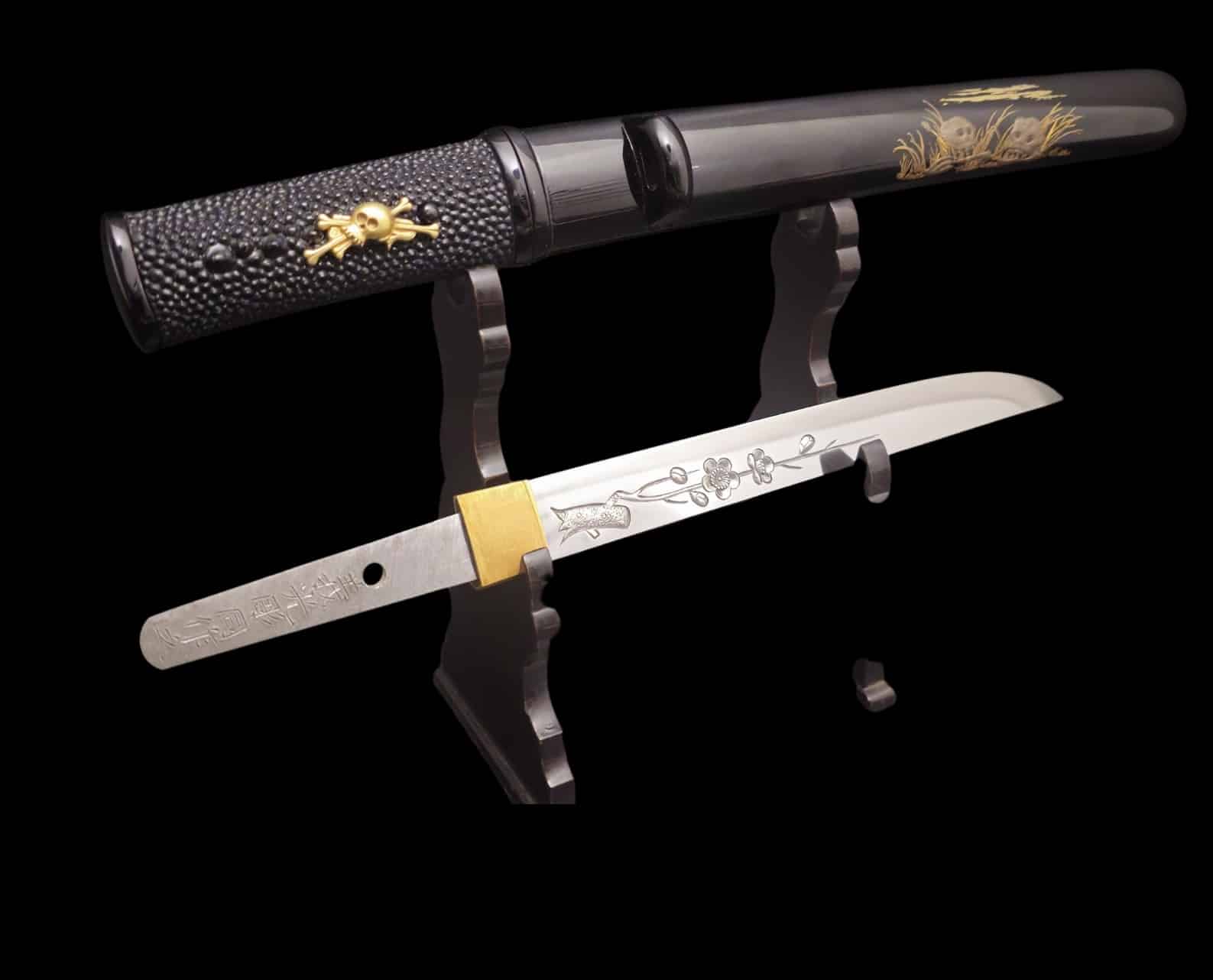
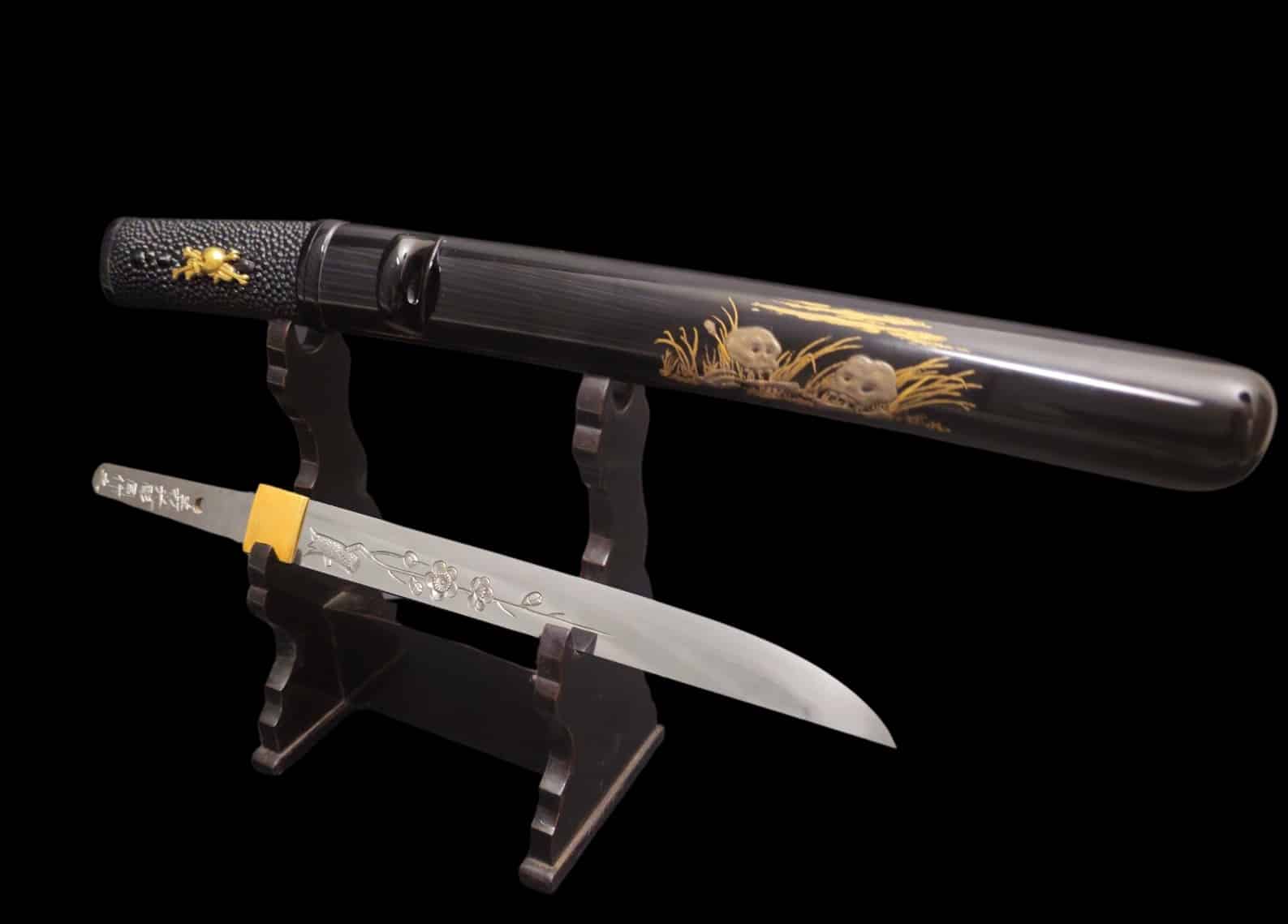
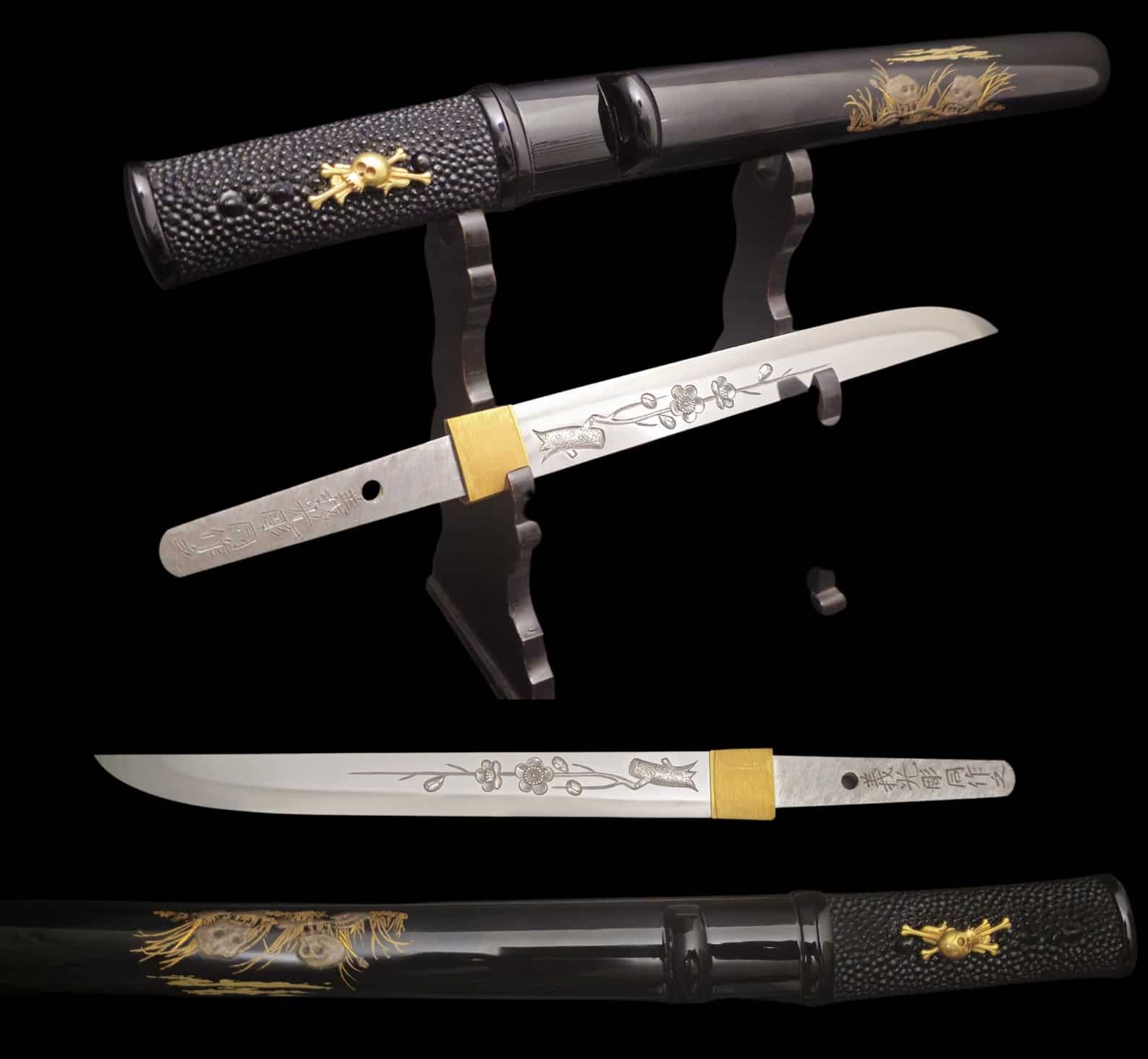
This tantō represents a refined example of Yoshimitsu’s craftsmanship. The blade is elegant and perfectly proportioned, reflecting the calm balance typical of high-level modern swordmaking executed within the classical tradition.
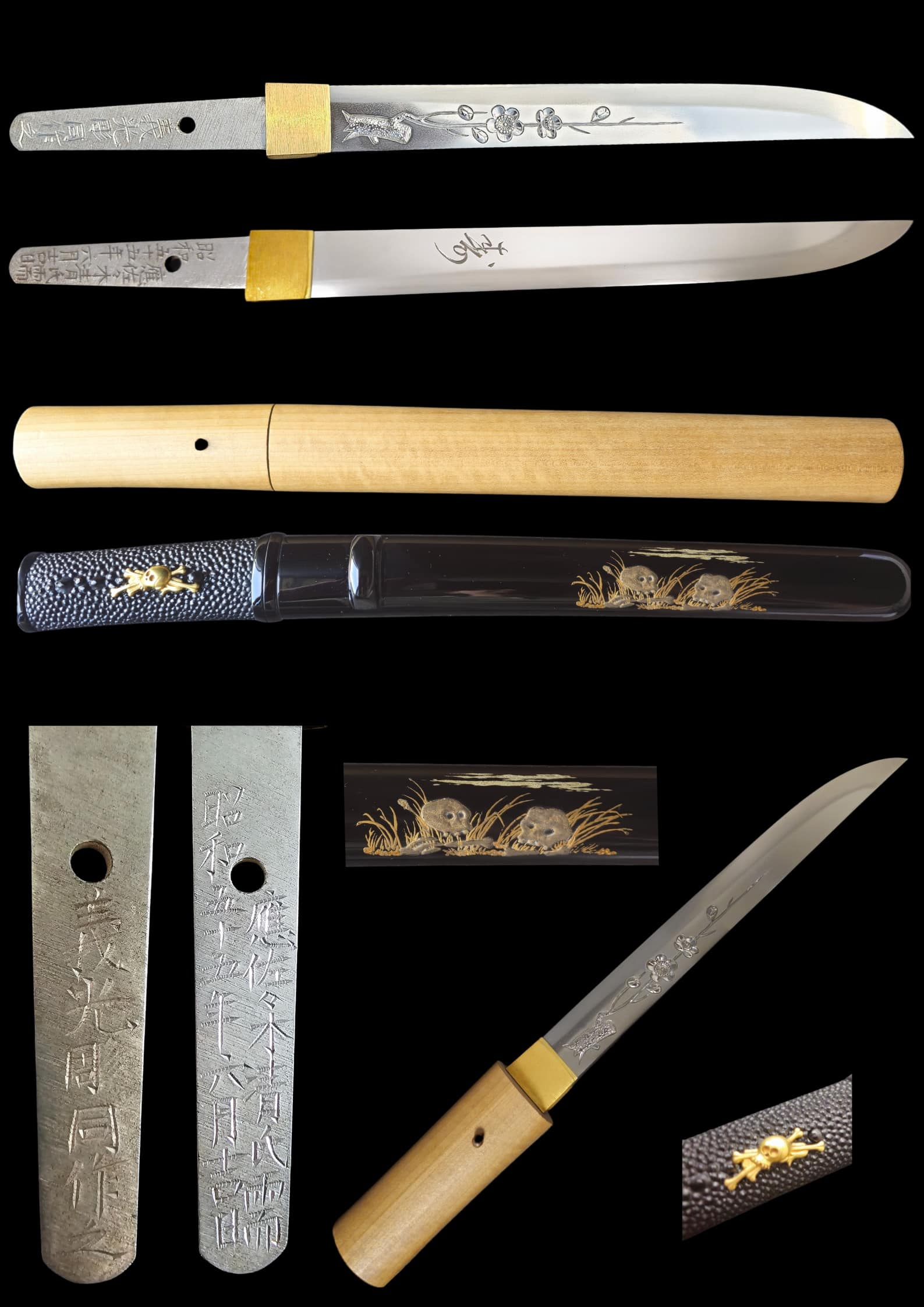
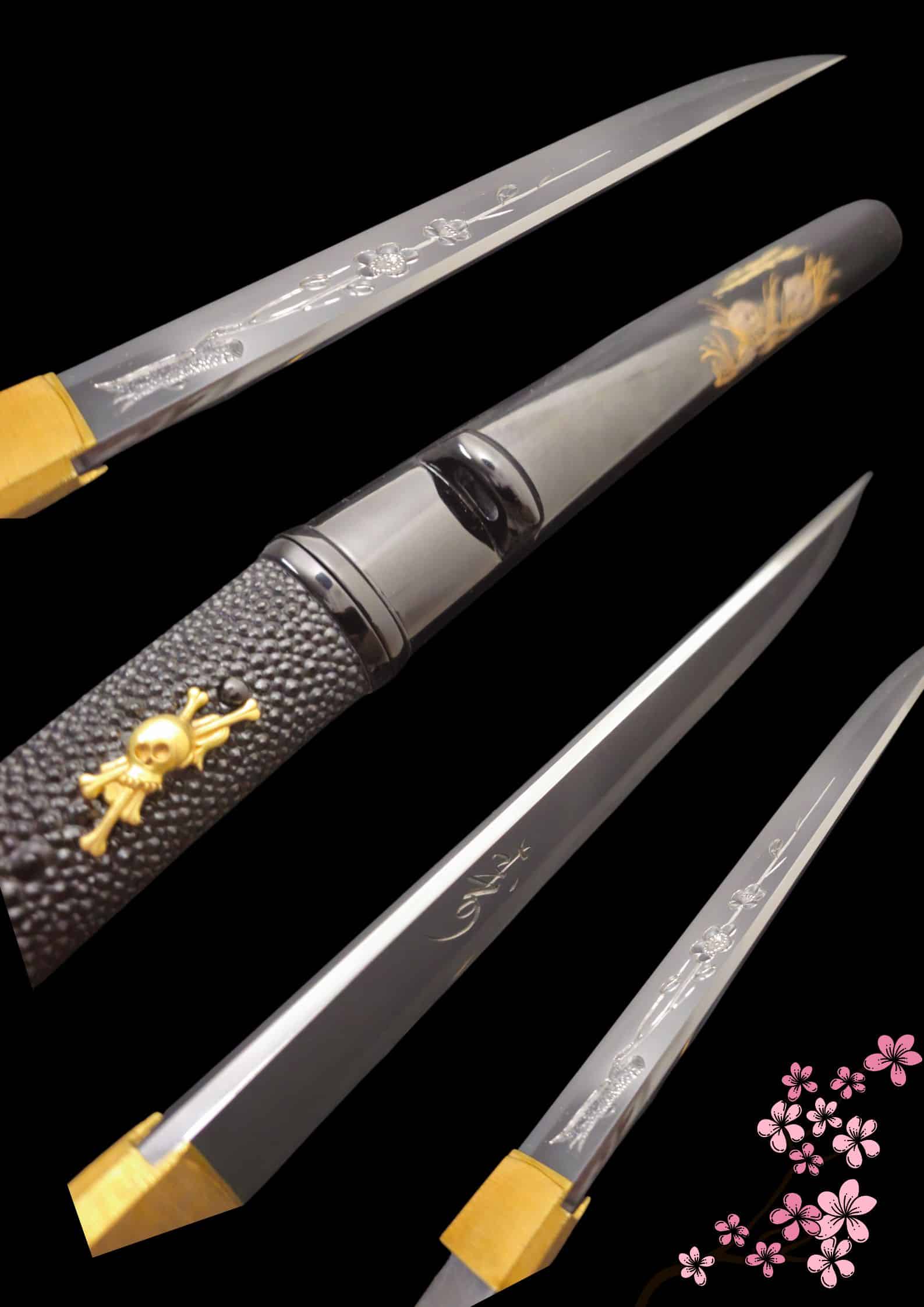
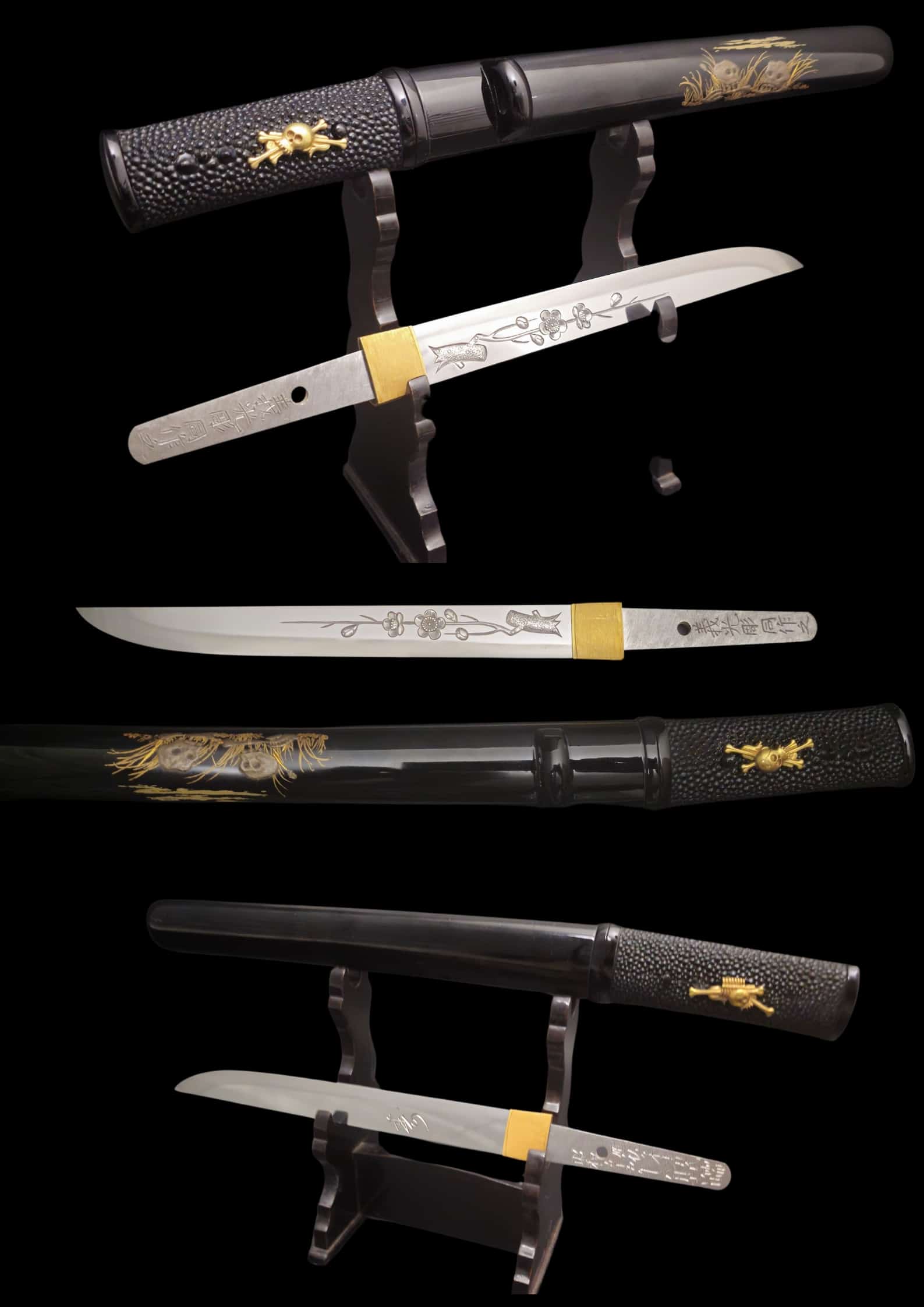
The blade is further distinguished by finely executed horimono carvings, created personally by Yoshimitsu himself, as indicated by the inscription stating that the engraving was done by the smith. The carving depicts three Japanese plum blossoms, a classical motif symbolizing resilience, renewal and the quiet beauty of nature emerging at the end of winter. Such horimono require exceptional skill, as the carving must harmonize with the blade without disturbing its structural integrity.
The tantō is mounted in an elegant black koshirae. The fittings are decorated with striking solid gold menuki depicting skull and bone motifs, a powerful symbolic theme often associated with the samurai concept of mortality and the warrior’s acceptance of fate. The same motif continues on the saya, executed with remarkable detail and precision. The blade is secured by a refined gold-covered habaki and is accompanied by a traditional wooden shirasaya for preservation.
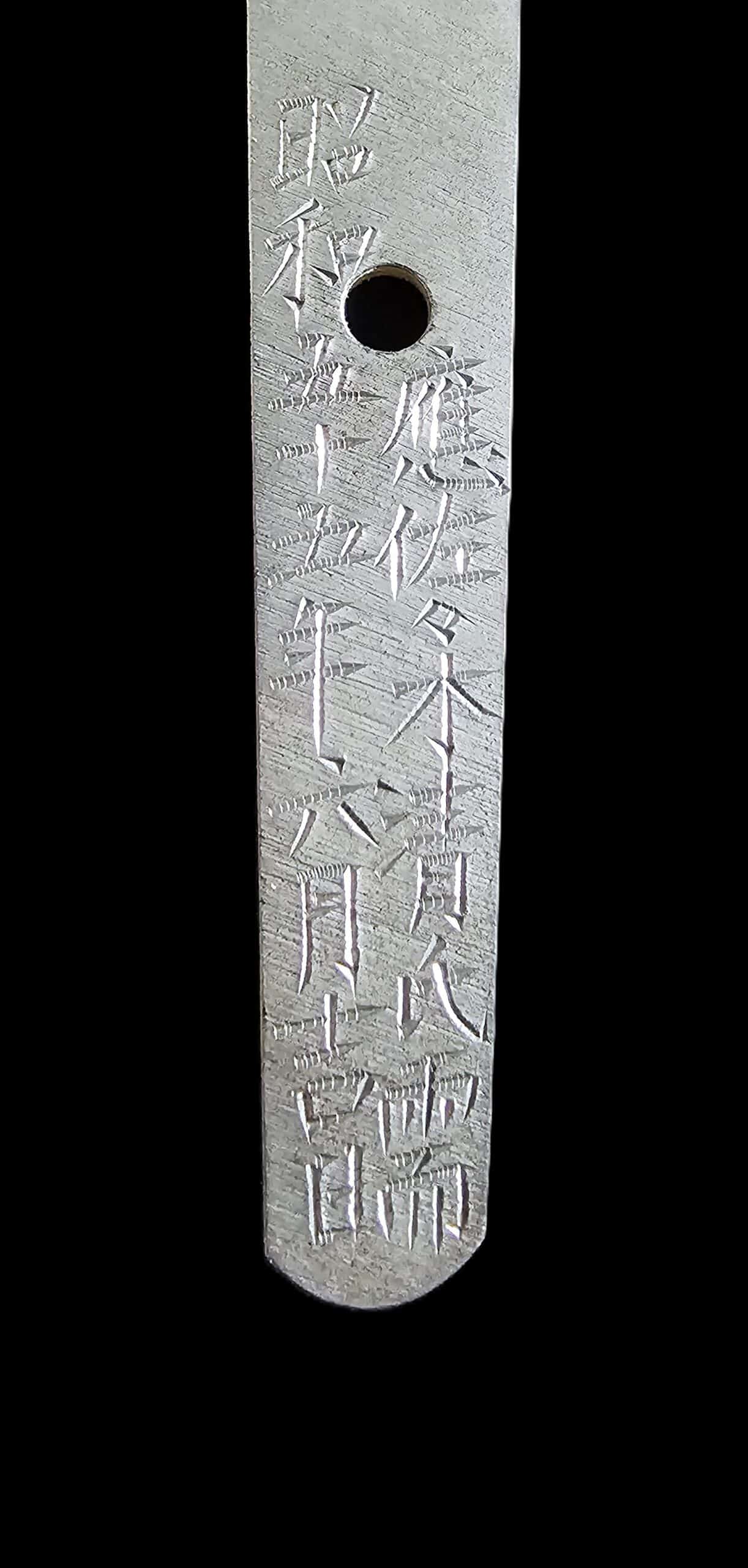
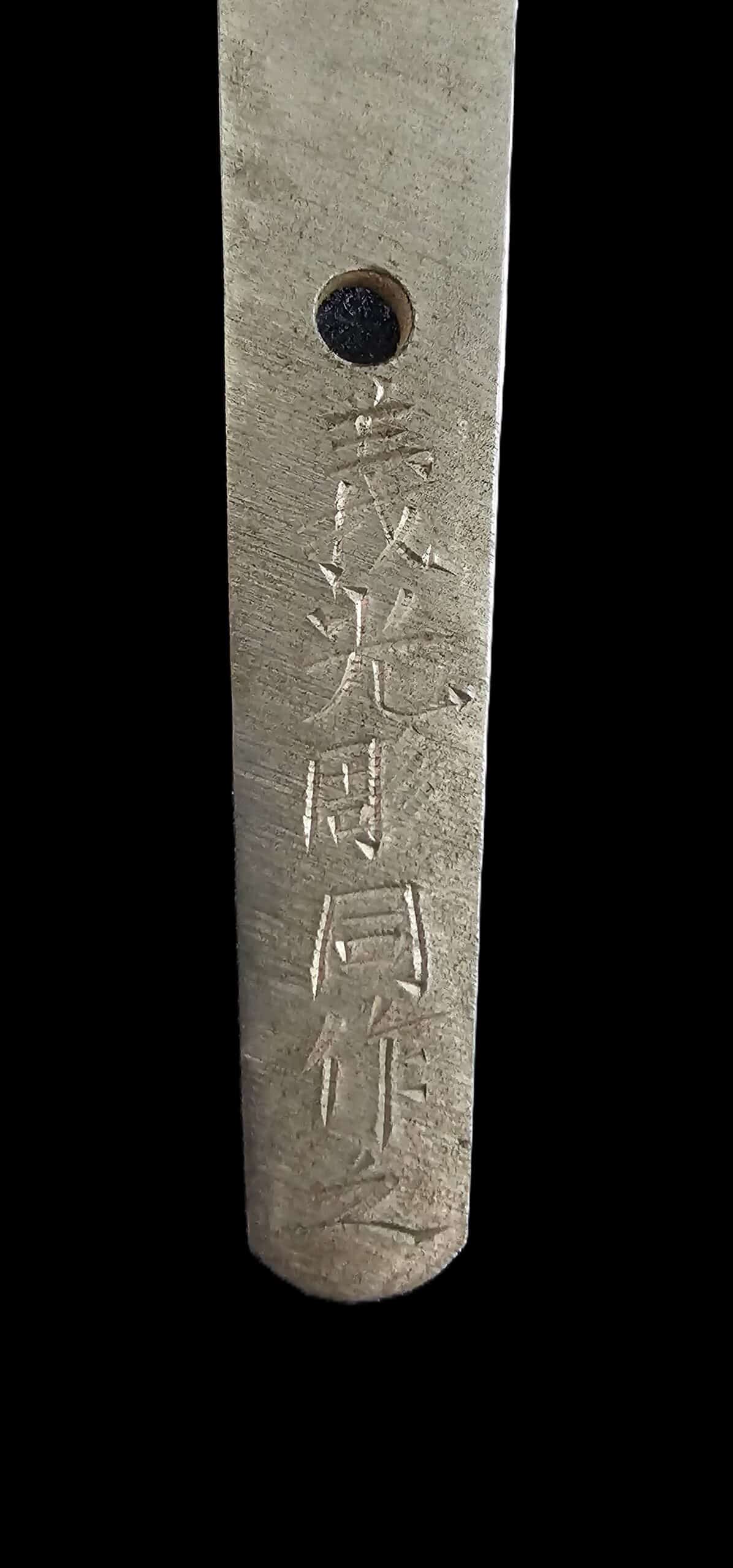
The tang bears a detailed inscription confirming the date and the circumstances of the blade’s commission.
昭和五十五年吉日
A lucky day in Shōwa 55 (1980)
慶佐々木清氏需
Made at the request of Mr. Kiyoshi Sasaki
義光彫同作之
Horimono carved by Yoshimitsu himself
Specifications
Classification Tantō
Nagasa 21.6 cm
Weight 138 g
Date June 1980 (Shōwa 55)
This tantō stands as an exceptional work by Ōno Yoshimitsu, Mukansa master swordsmith and one of the most important figures in modern Japanese swordmaking. Combining refined forging, masterful horimono and striking mountings, the blade reflects both the artistic heritage of classical Japanese swords and the continued vitality of the tradition in the modern era.
A beautiful and highly collectible example of contemporary Japanese sword craftsmanship, worthy of inclusion in the finest collections of modern nihontō.