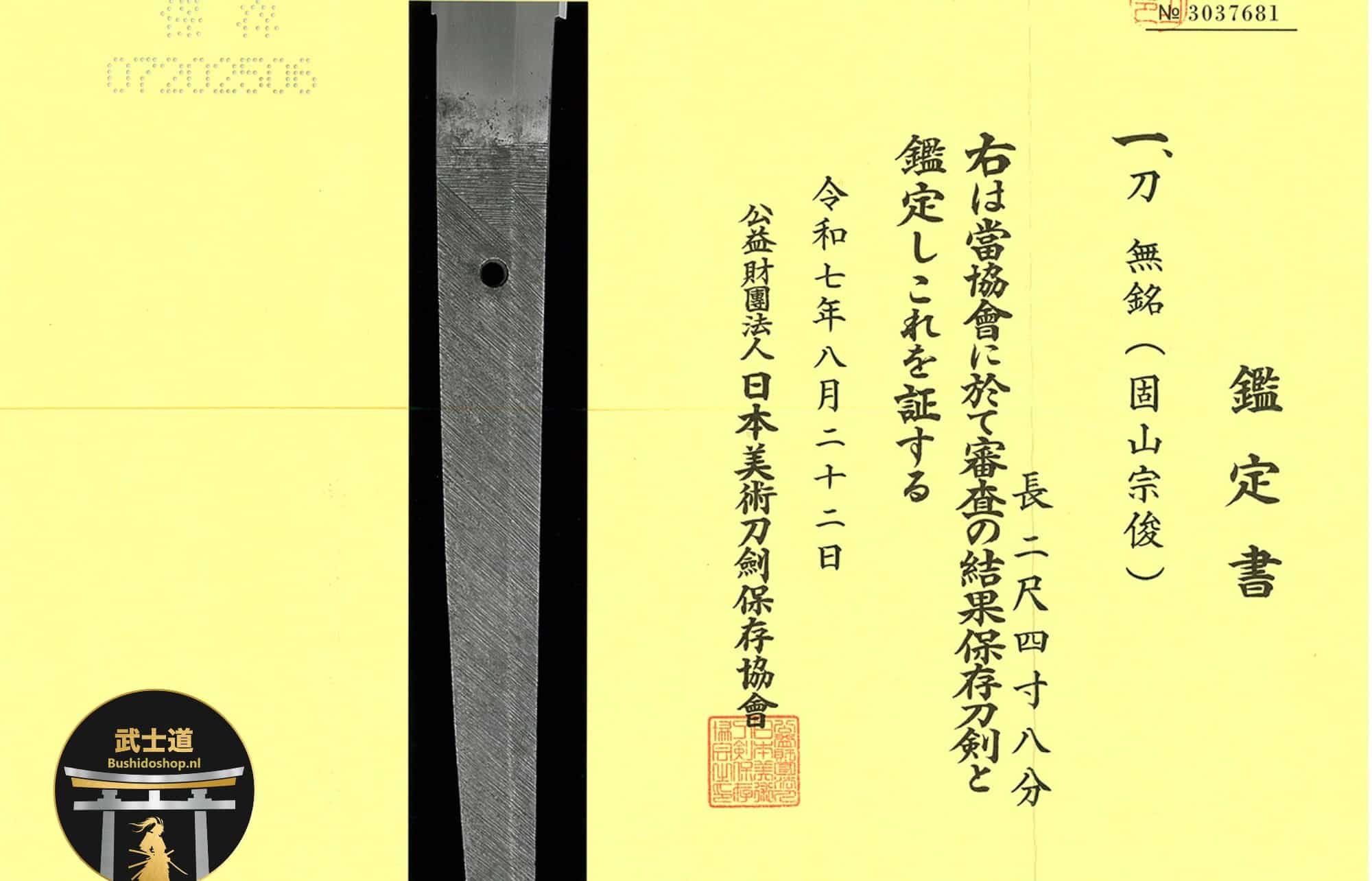

Japanese Katana Koyama Munetoshi
Disciple of Koyama Munetsugu
NBTHK Hozon Tōken
Late Edo Period Bunkyū 1 (1861)
Mutsu Province
This refined katana was forged by Koyama Sōshun Munetoshi (小山宗春宗俊), an accomplished swordsmith of the late Edo period and a direct disciple of the celebrated master Koyama Munetsugu, one of the most respected smiths of the Shin-Shintō era. Munetoshi, born in Shirakawa in Mutsu Province, studied swordmaking under Munetsugu and carried forward the traditions of the Koyama school with great skill and dedication.
Munetoshi sometimes signed his works Hakuryū-shi (白龍子), meaning “Master of the White Dragon,” a poetic art name reflecting both spiritual symbolism and the refined aesthetics associated with high-level swordsmiths of the period. Within the Koyama lineage he became known for blades that display both technical precision and elegant balance. Contemporary accounts suggest that the quality of his work occasionally rivaled, and in some cases even surpassed, that of his famous teacher.
The Koyama school occupies an important place in the history of Japanese swordmaking. Under the leadership of Koyama Munetsugu, the school revived classical forging methods while introducing exceptional refinement in steel quality and cutting performance. Blades from this lineage are particularly admired for their clear jihada, bright nioiguchi and excellent cutting ability, characteristics that made them highly valued among samurai of the late Edo period.
This katana was forged in 1861, during the Bunkyū era, a moment in history that marked the final decades of the samurai age. Japan was approaching the dramatic transformation of the Meiji Restoration, yet the warrior class still carried swords as symbols of honor, discipline and authority. Swords created during this period represent the last flowering of traditional samurai craftsmanship before the profound social changes that followed.
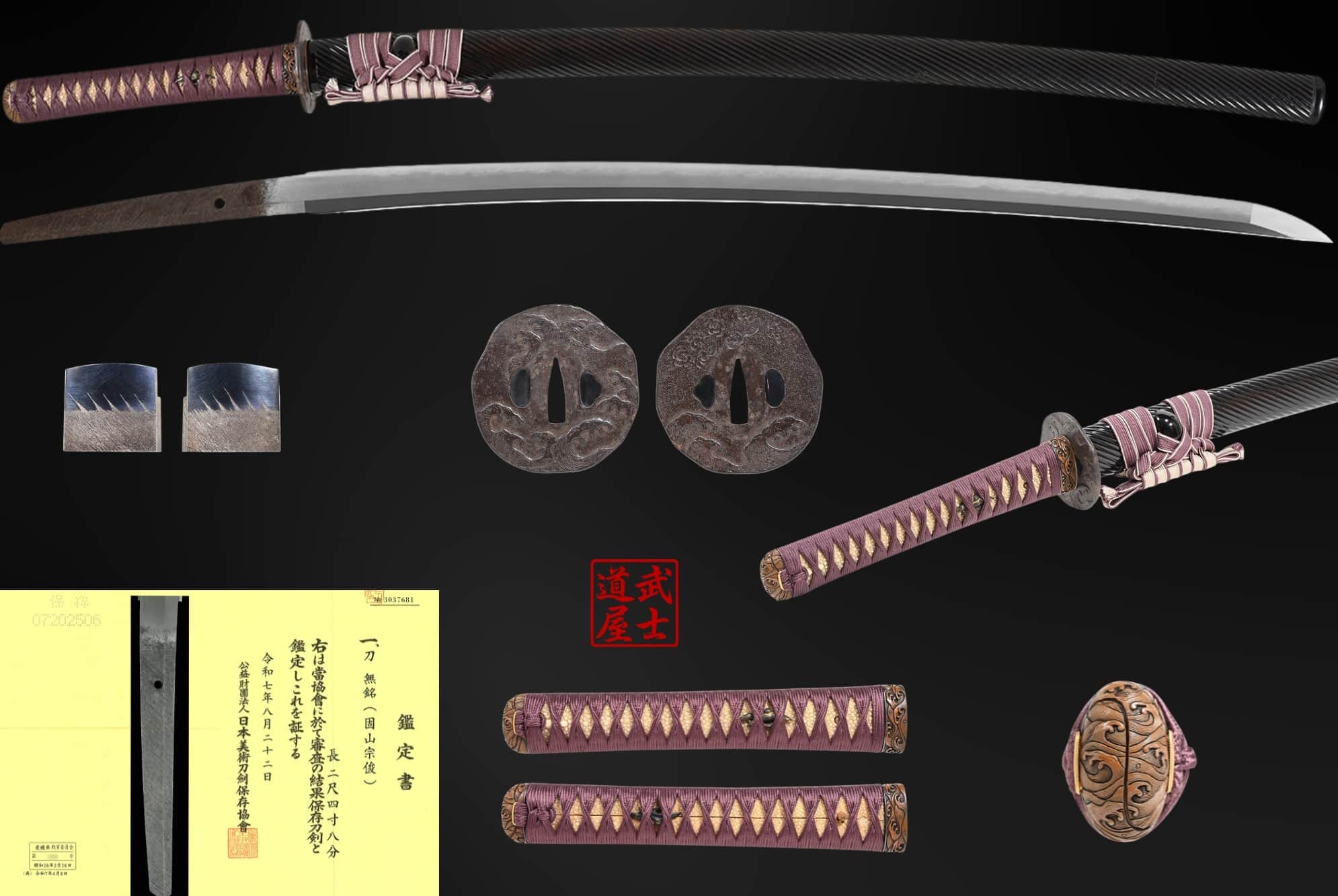
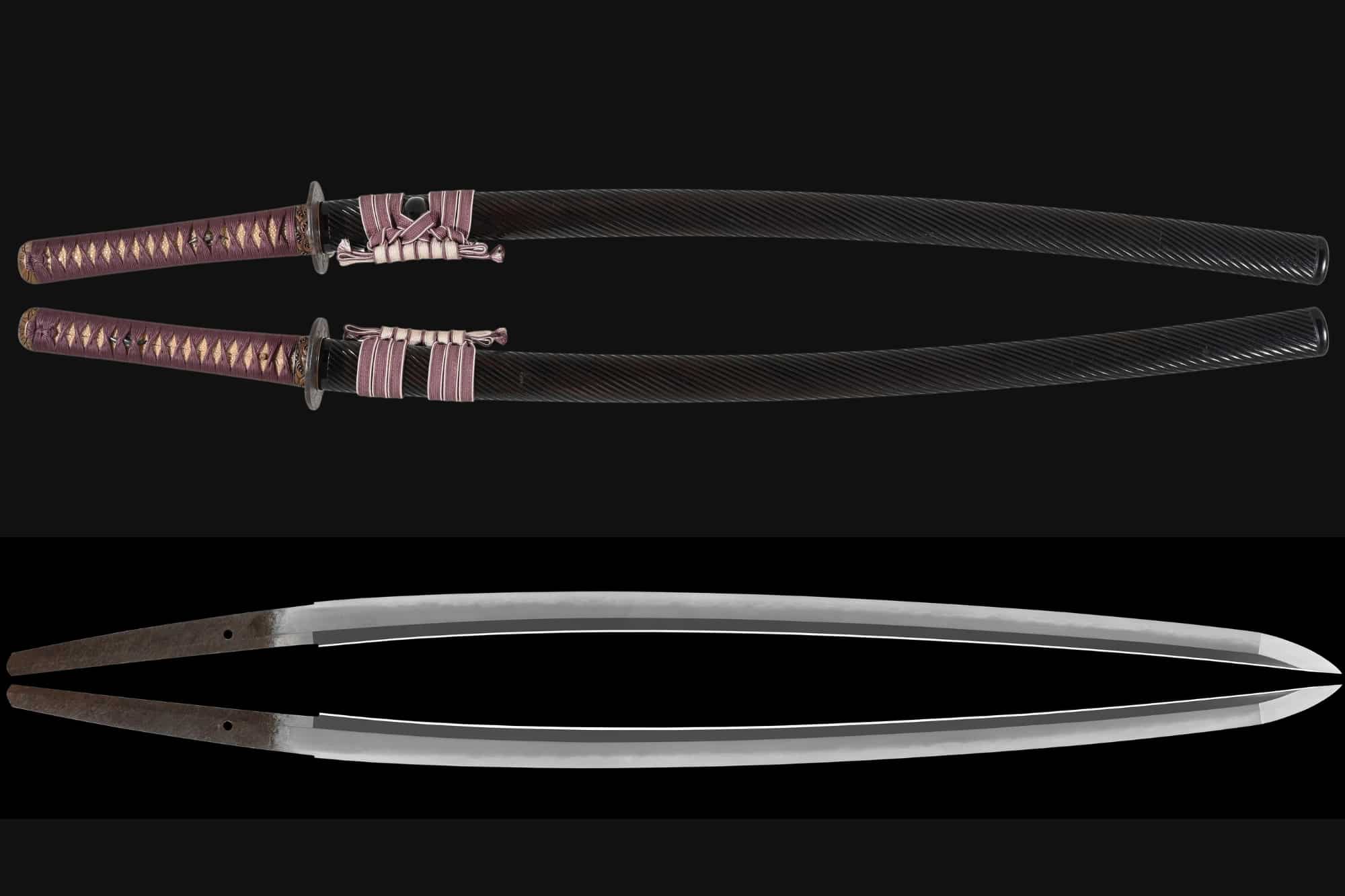
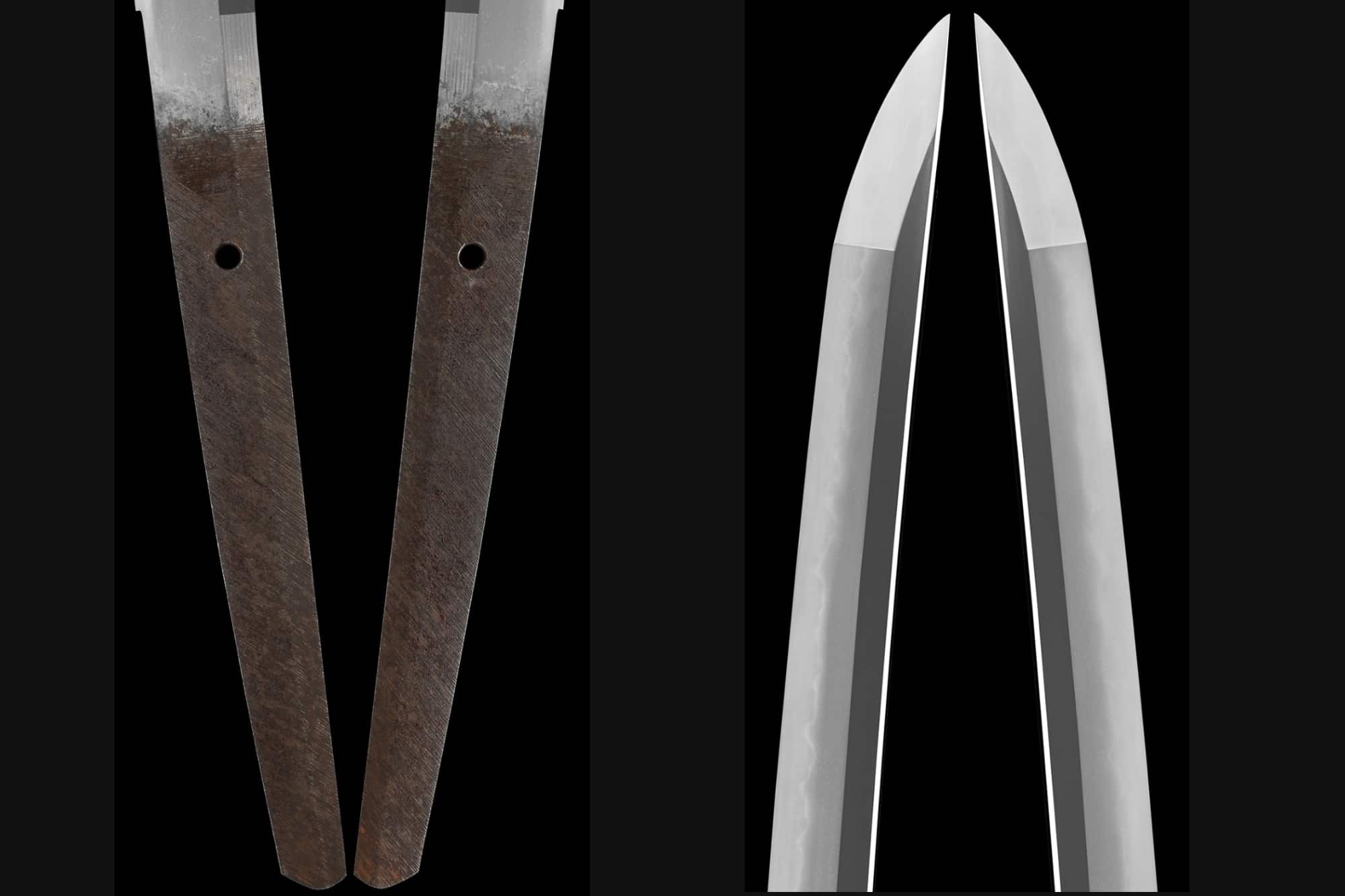
The blade displays a commanding nagasa of 75.4 cm, giving it impressive presence and authority. The overall sugata is powerful yet graceful, with a well-balanced curvature that combines elegance with practical cutting geometry. The proportions of the blade show careful control, with strong width at the base and a natural taper toward the tip, creating a harmonious and functional form.
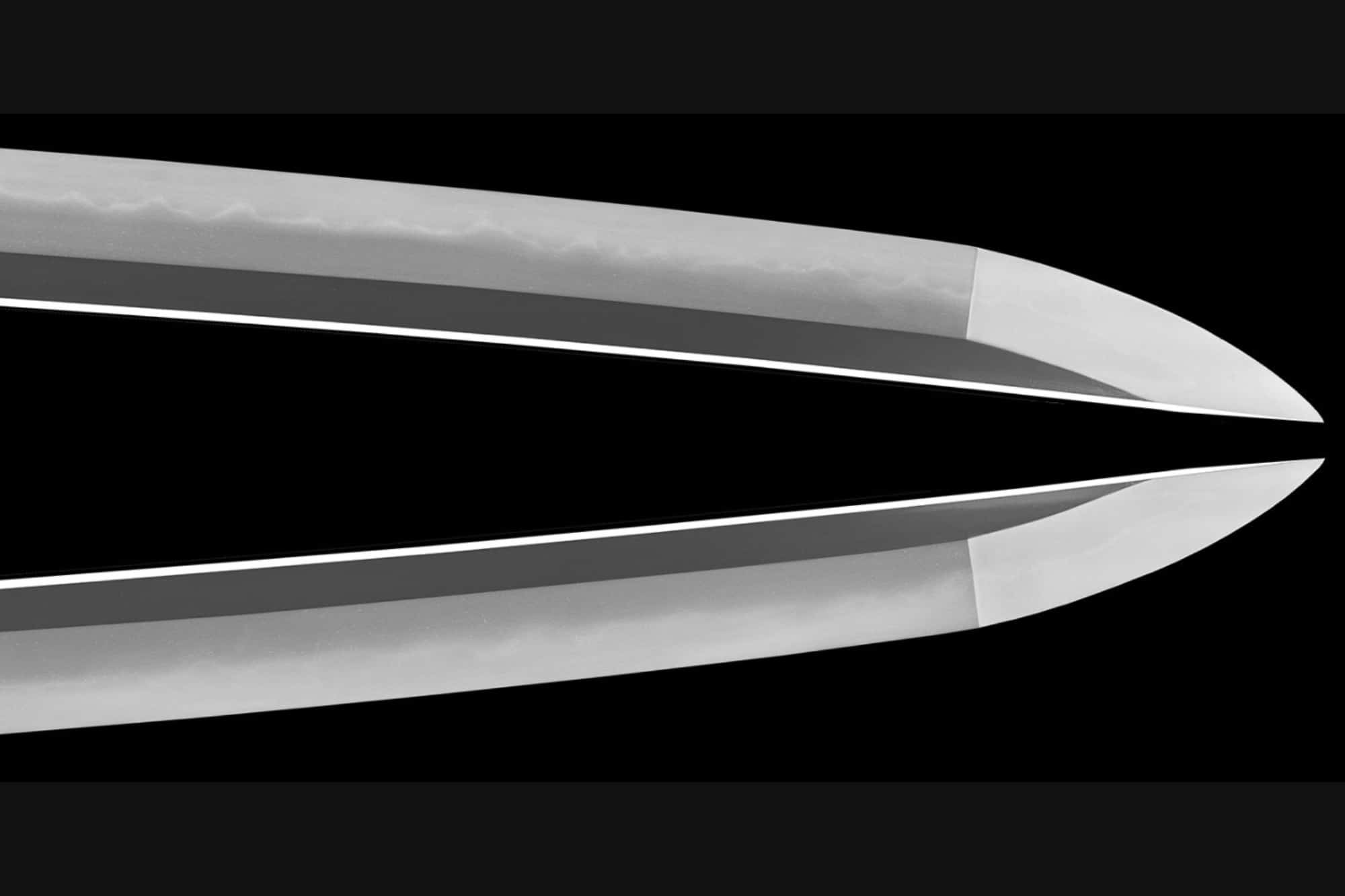
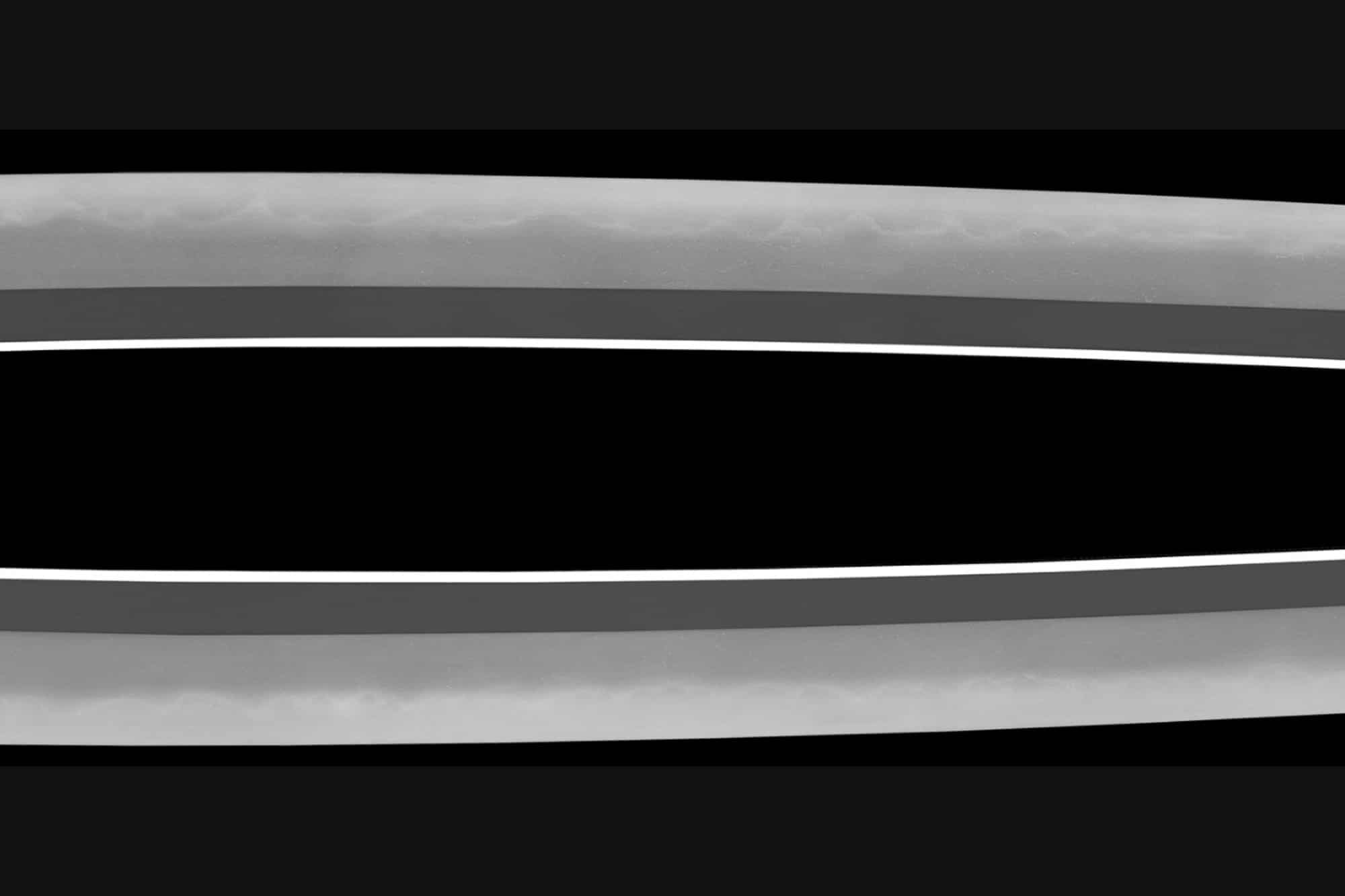
The steel reveals a refined itame hada, characteristic of the Koyama tradition, producing a luminous and tightly forged surface structure. Along the edge runs a bright hamon with a clear nioiguchi, displaying the controlled heat treatment and technical precision for which the Koyama school became renowned. The activity within the hardened edge gives the blade vitality while maintaining a calm and dignified overall appearance.
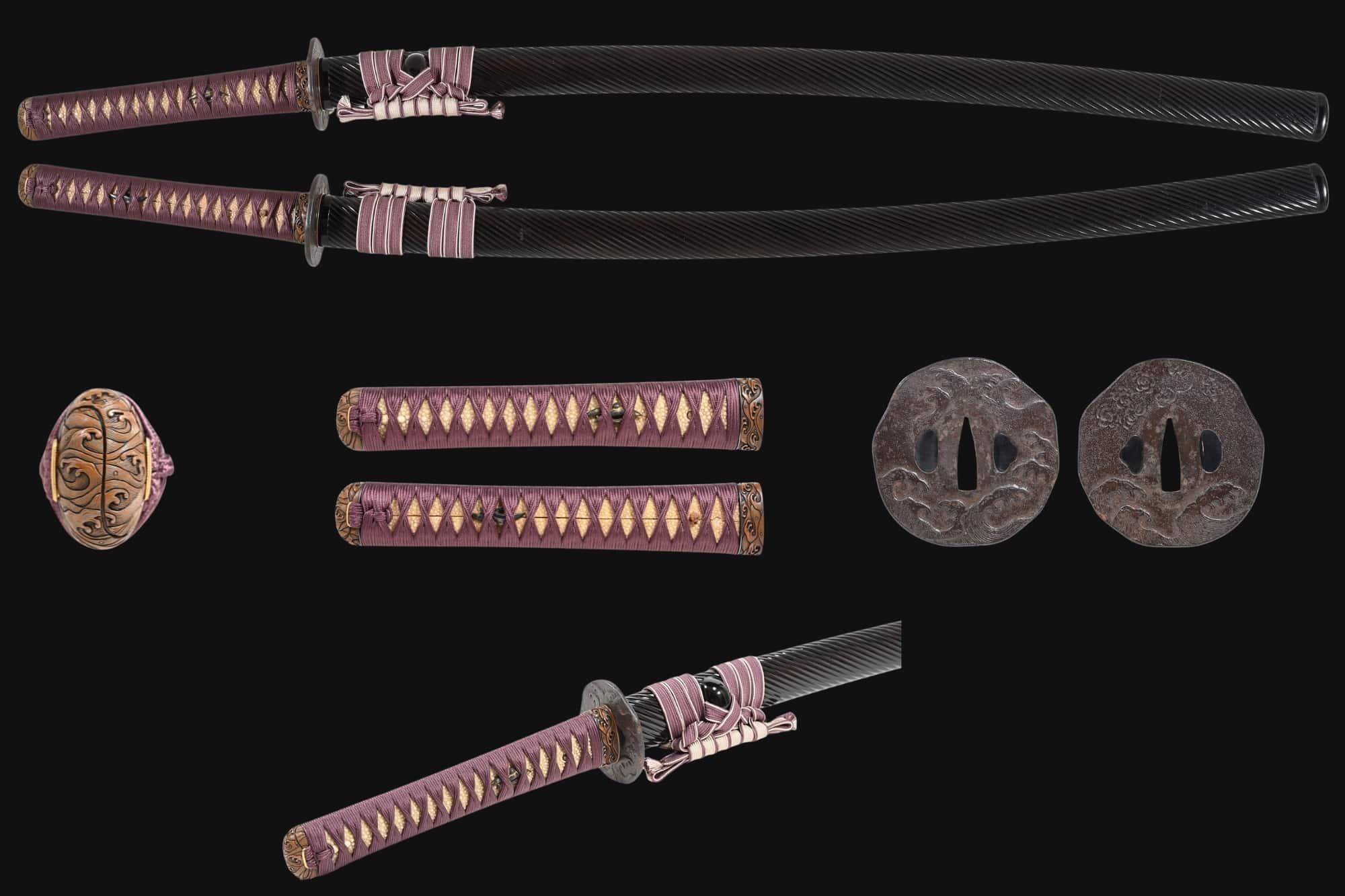
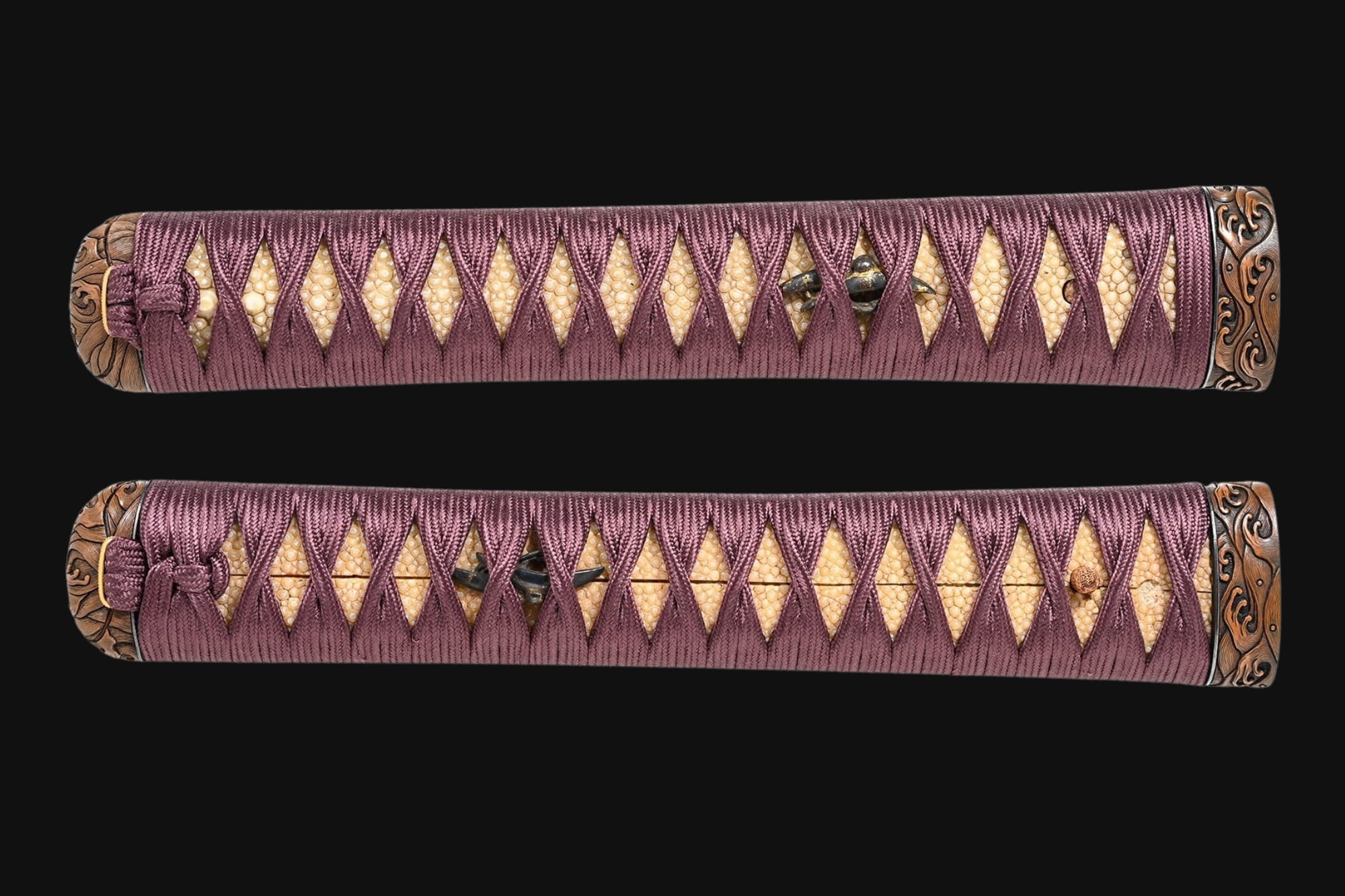
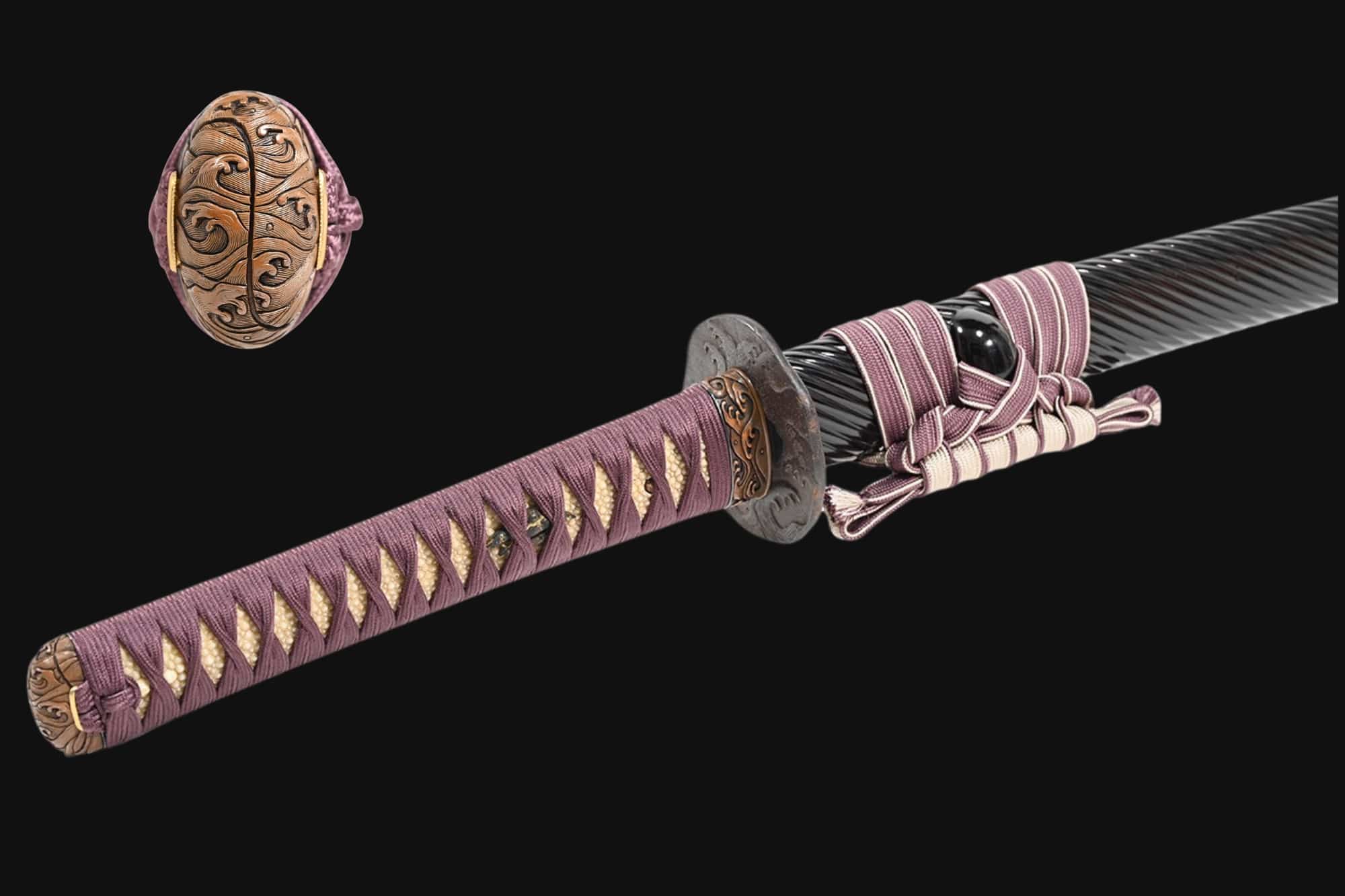
The sword is mounted in a striking koshirae of high quality, whose refined details complement the elegance of the blade. The mountings reflect the status and appreciation such a sword would have commanded during the late Edo period, enhancing the visual presence of the katana while maintaining harmony with its historical character.
The tang remains original with one mekugi-ana, preserving the integrity of the blade and its historical authenticity. The sword is accompanied by NBTHK Hozon Tōken certification, confirming its authenticity and recognizing it as a preserved Japanese sword of historical and artistic importance.
Nagasa 75.4 cm
Sori 2.0 cm
Motohaba 3.4 cm
Moto-kasane 7.2 mm
Sakihaba 2.35 cm
Saki-kasane 5.0 mm
Mekugi-ana one
Era Late Edo period – Bunkyū 1 (1861)
Province Mutsu
Certification NBTHK Hozon Tōken
This katana represents the refined craftsmanship of a highly skilled disciple of Koyama Munetsugu, forged during the final years of the samurai era when the traditions of swordmaking had reached extraordinary levels of technical and artistic maturity. Combining powerful presence, elegant workmanship and historical authenticity, the blade captures the final brilliance of classical samurai swordmaking at the threshold of modern Japan.