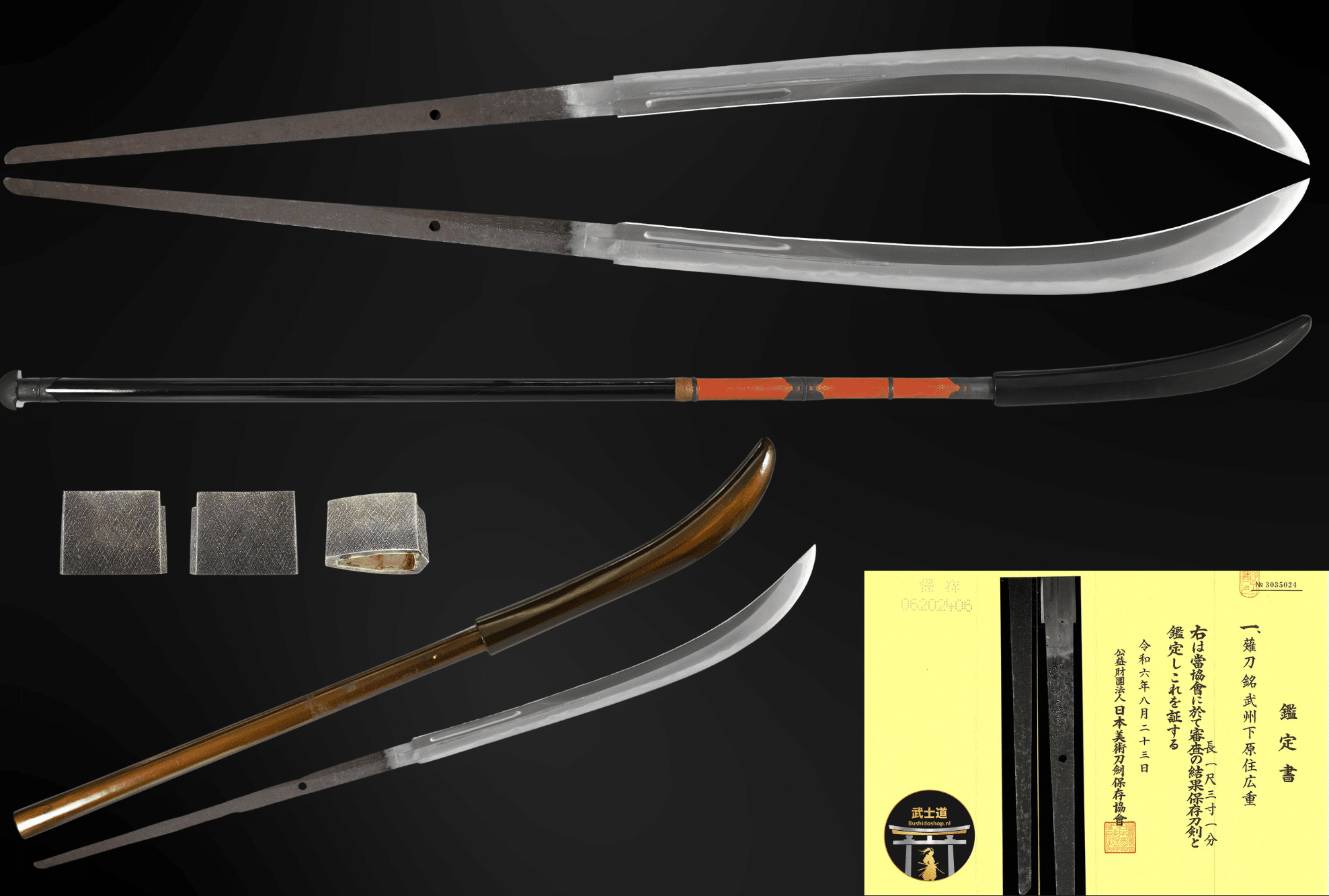
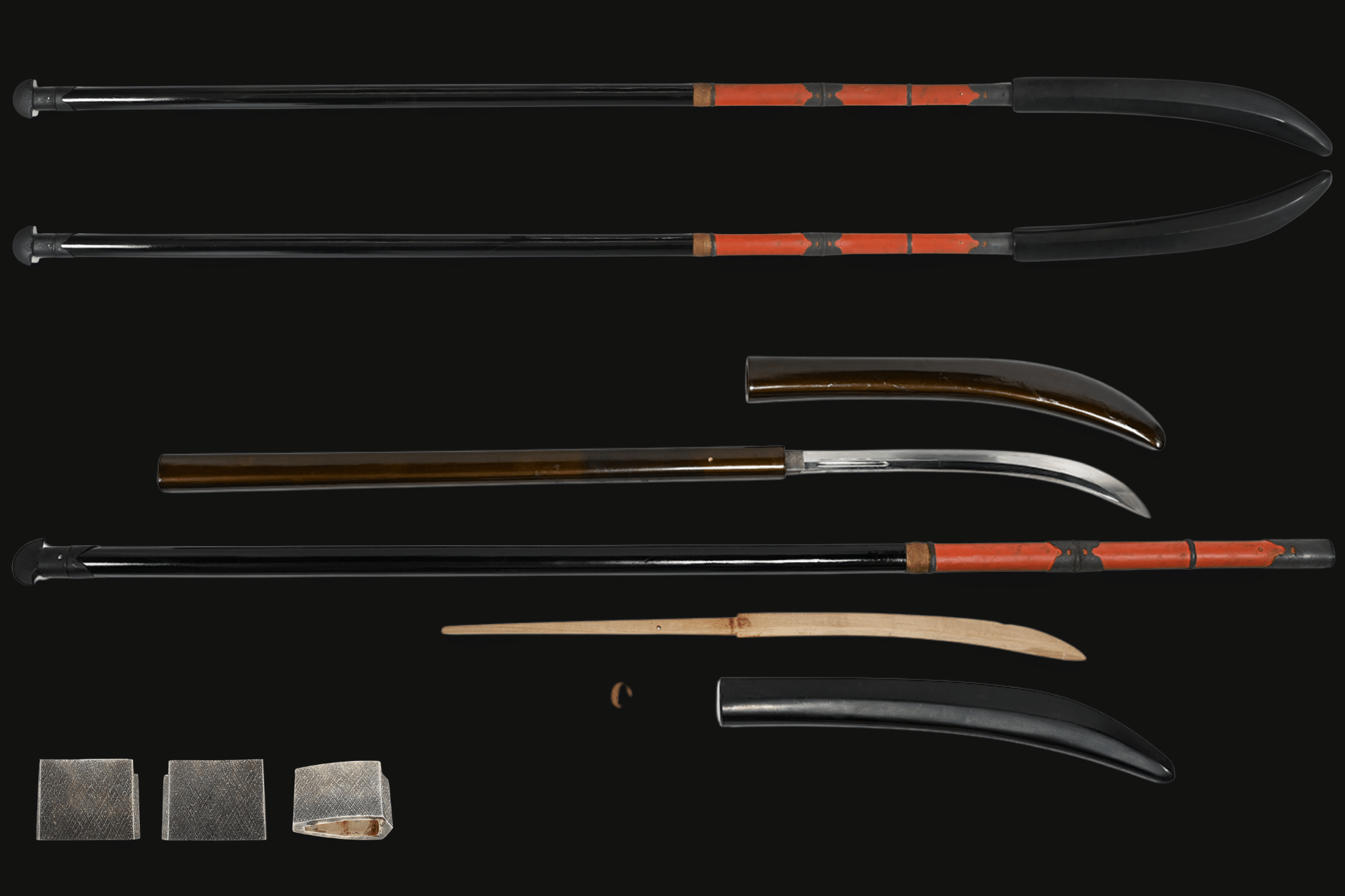
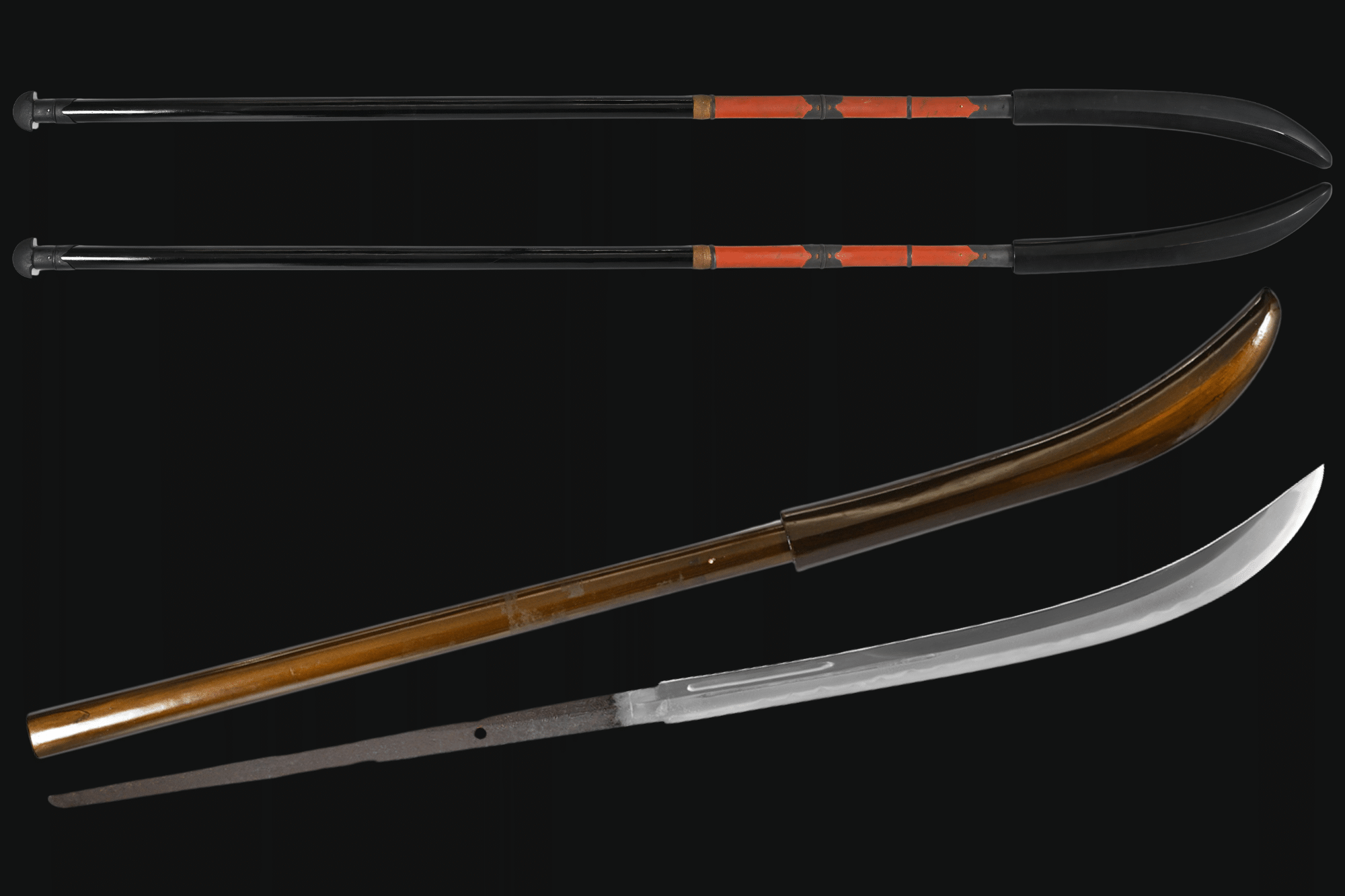
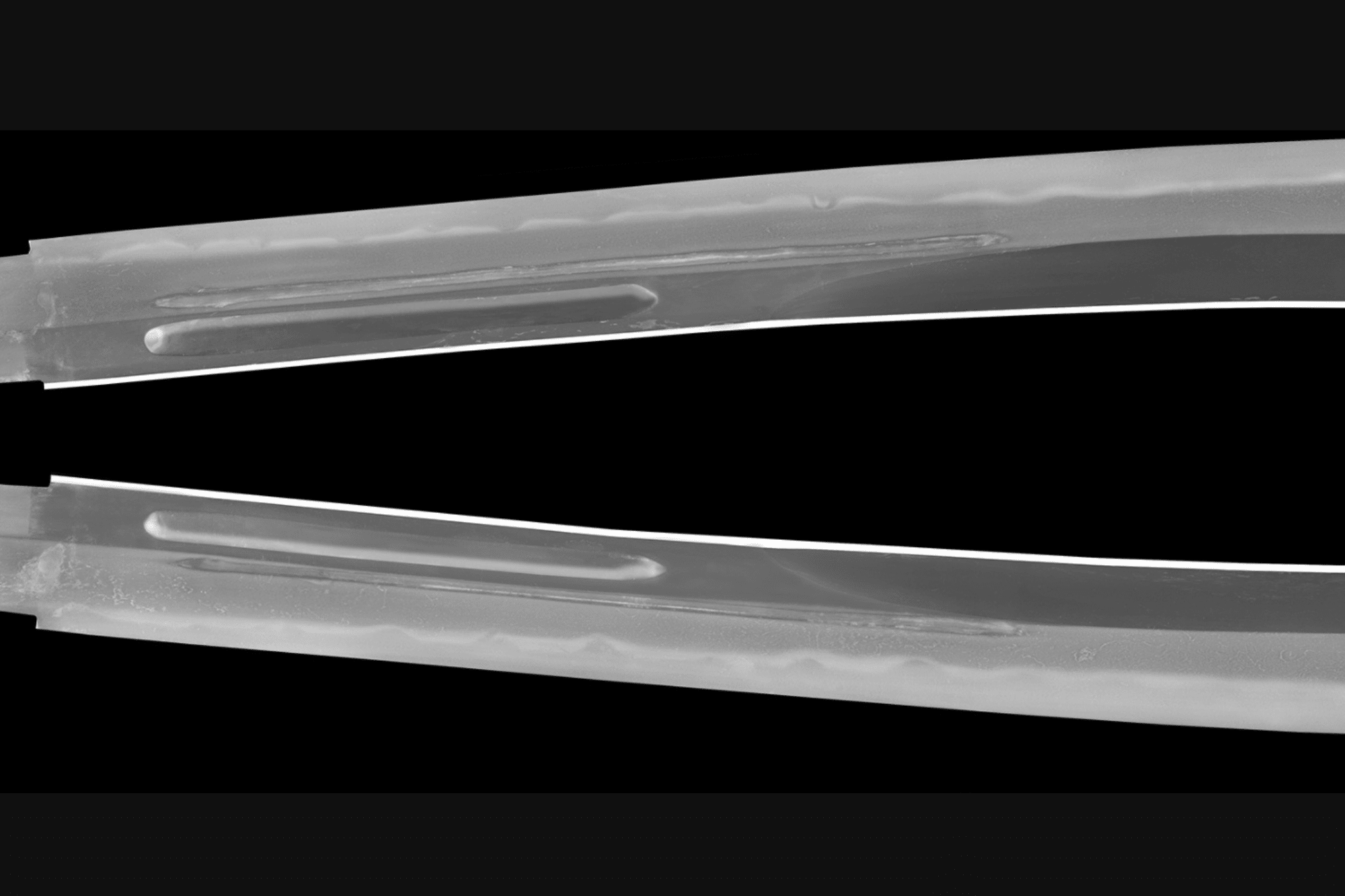
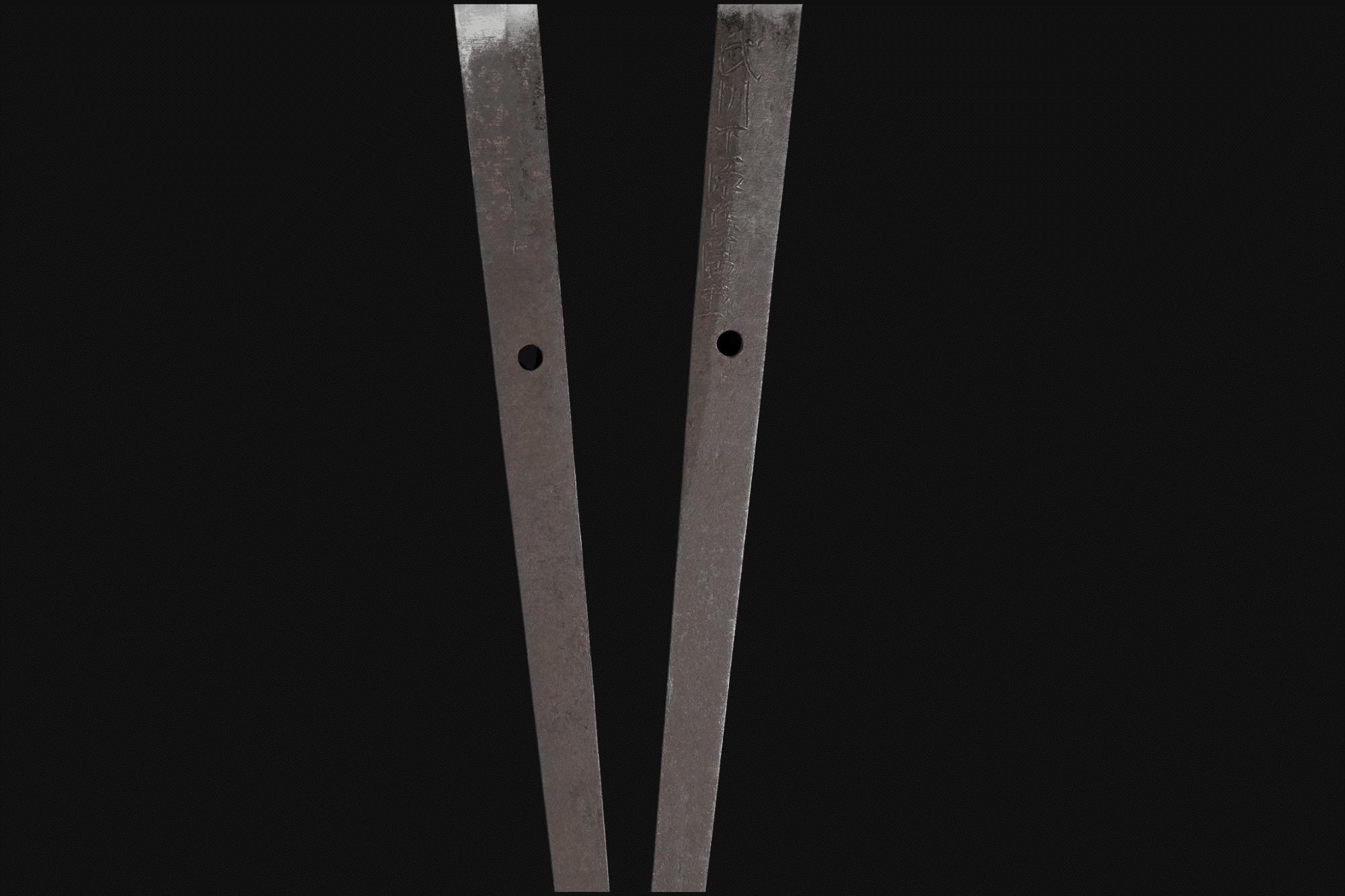
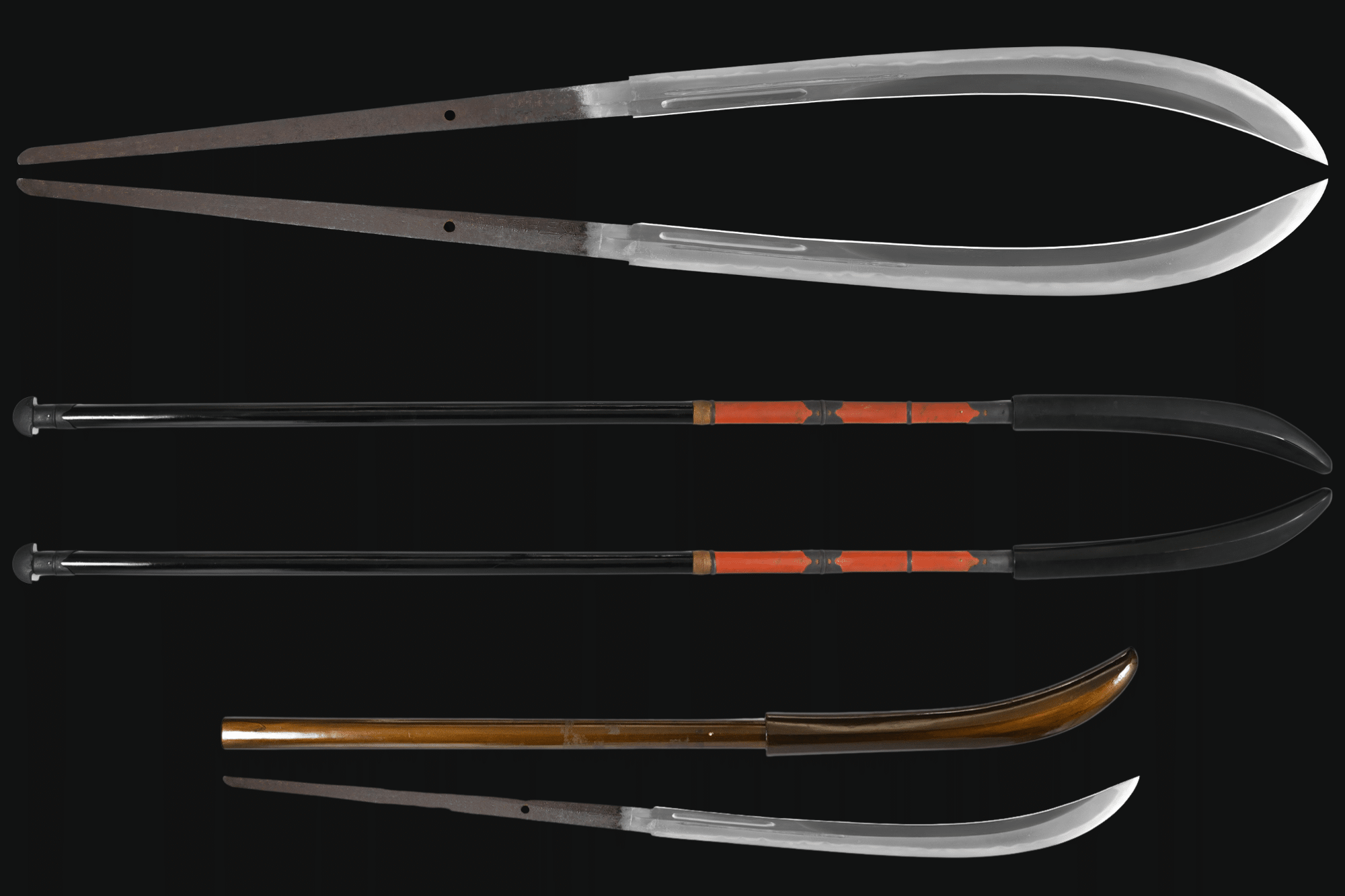
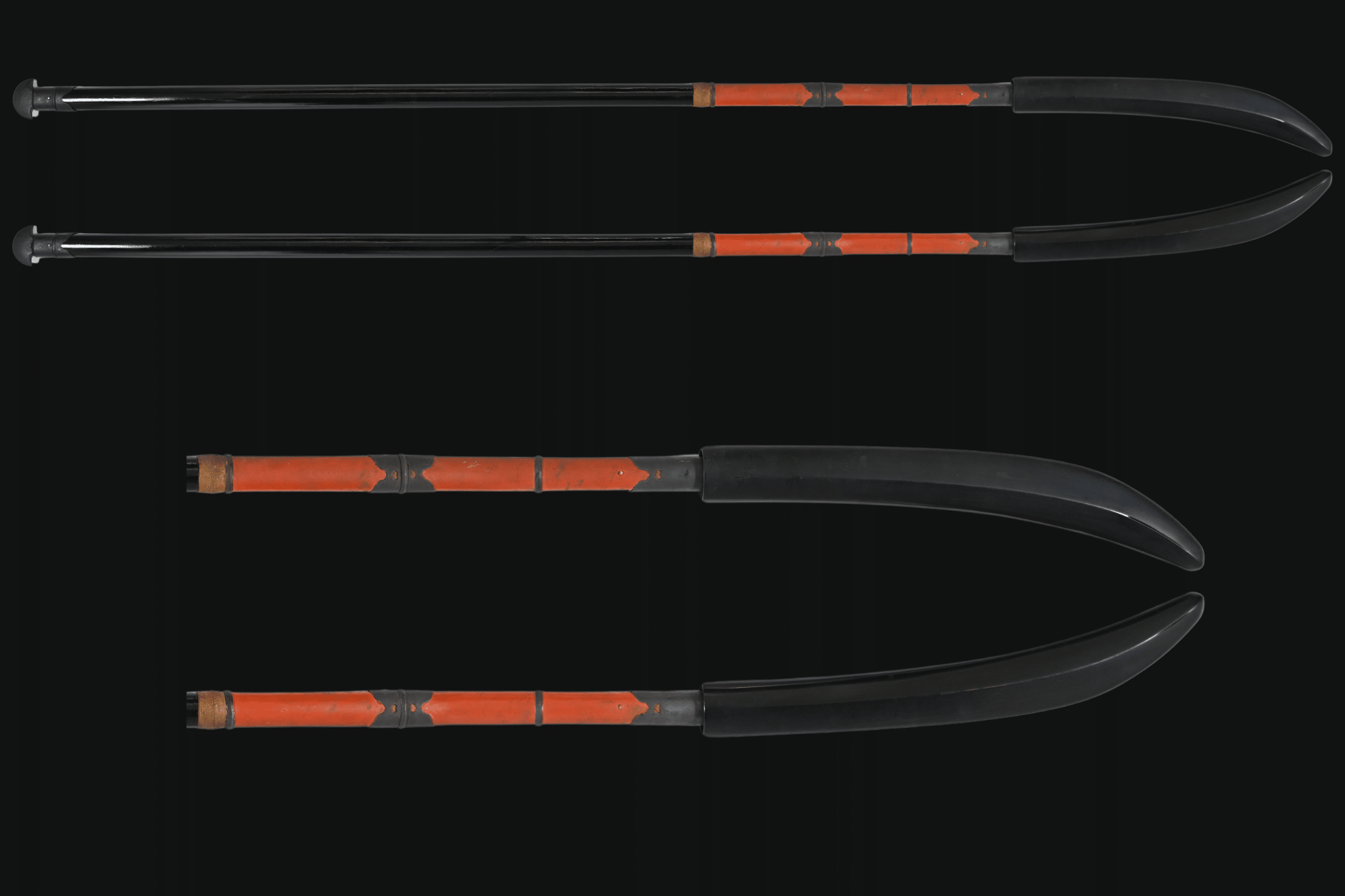
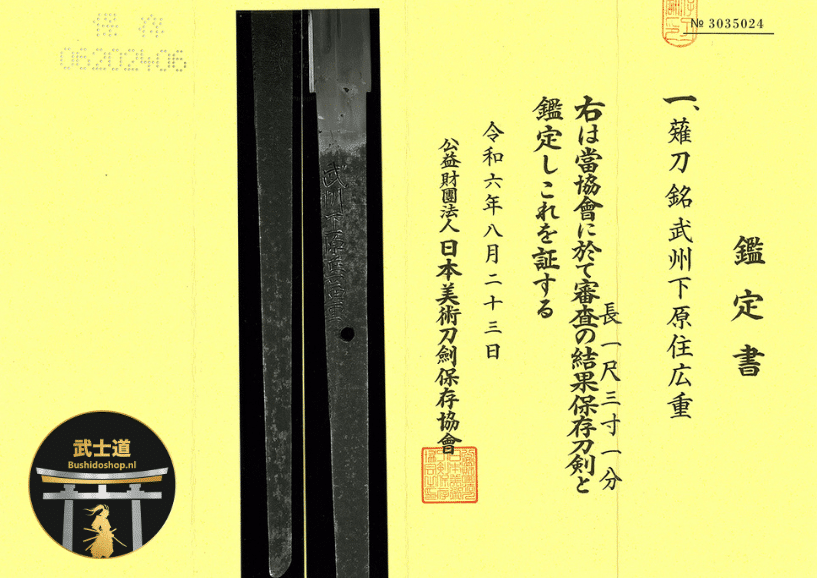

This elegant naginata was forged by Hiroshige of the Shitahara school, active in Bushū Province during the early Edo period.
SOLD
The blade is attributed to the Shimohara (Shitahara) tradition, a highly respected regional group of swordsmiths working in the area around present-day Hachiōji in Musashi Province from the late Muromachi period through the Edo period.
The Shitahara school is known for producing robust yet refined blades, well suited to practical use while maintaining strong aesthetic qualities. Among the most prominent names of this lineage are Terushige, Yasushige, Chikayoshige, and Hiroshige. The first Hiroshige was Yamamoto Shinshichirō, the fourth son of Terushige, establishing a distinguished branch of the family. The Hiroshige name continued across several generations, lasting into the Meiji period.
Within this lineage are historically important figures, including swordsmiths who later adopted the name “Musashi Tarō Yasukuni,” originally derived from Hiroshige, as well as Munekuni, who is recorded as forging battle swords for the Mito domain. This firmly places the Shitahara tradition within the martial and political history of Musashi Province.
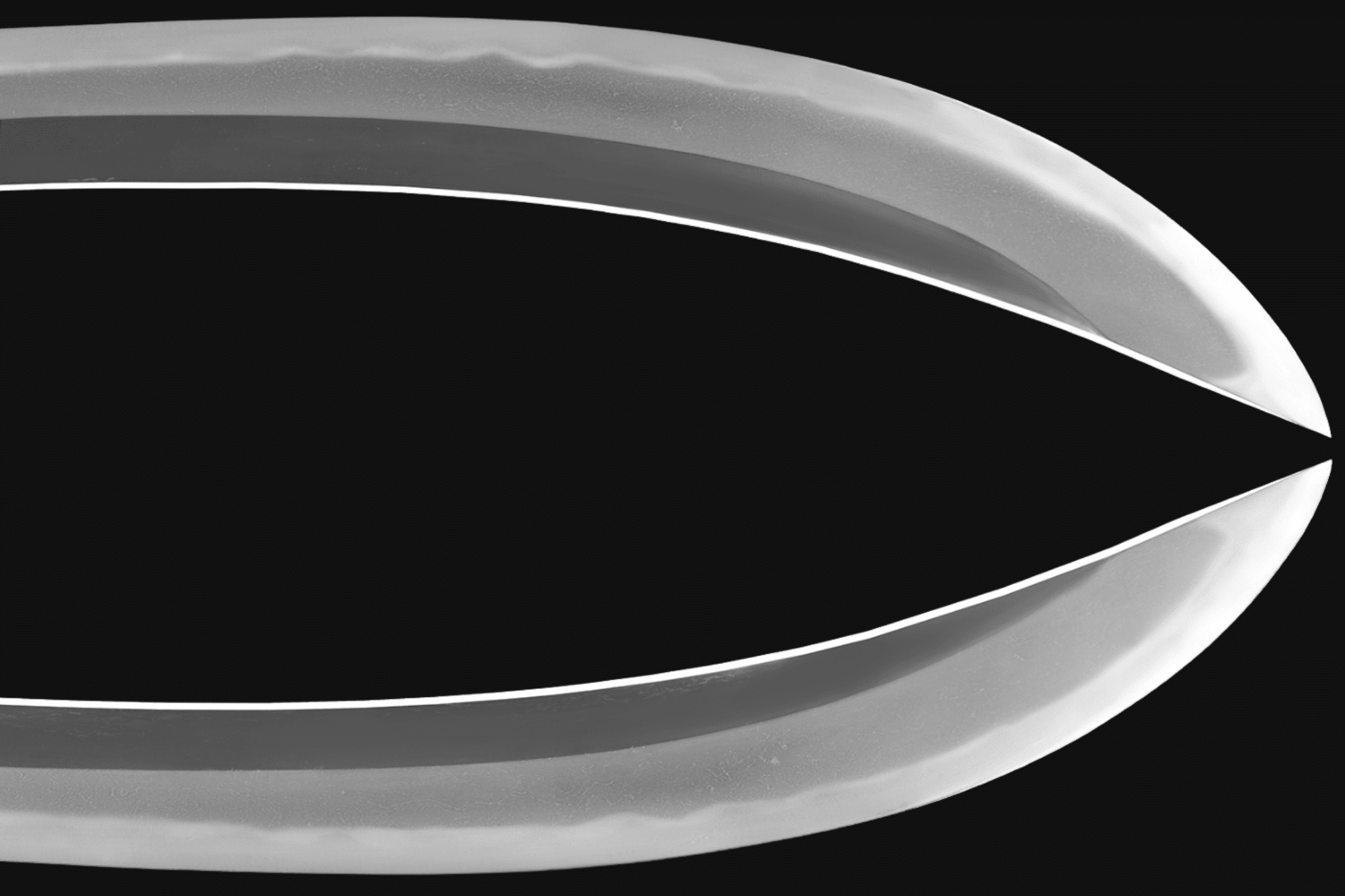
The blade shows a powerful curvature typical of functional naginata intended for battlefield use, while retaining the controlled proportions and workmanship expected from early Edo craftsmanship. It is accompanied by NBTHK Hozon papers, confirming its authenticity and historical importance.
Specifications
Blade length: 40.2 cm (1 shaku 3 sun 1 bu)
Curvature (sori): 3.2 cm
Period: Early Edo period circa 1661
Province: Musashi Province, Bushū Shitahara
Overall length: 192 cm
Certification: NBTHK Hozon Tōken
This is a genuine and well-preserved example of an early Edo period naginata from a historically important regional school, offering both martial presence and strong.
Its an old naginata and has some aging.

© 2025 Bushidoshop made with ❤ by Nieuwblik.com