€ 14.850,00

Samurai Daishō Katana & Wakizashi by Andō Hirokiyo
“A true daishō is not merely two swords worn together it is a single soul divided into two perfect blades, balanced in steel and unified in purpose.”
The Harmony of the Daishō
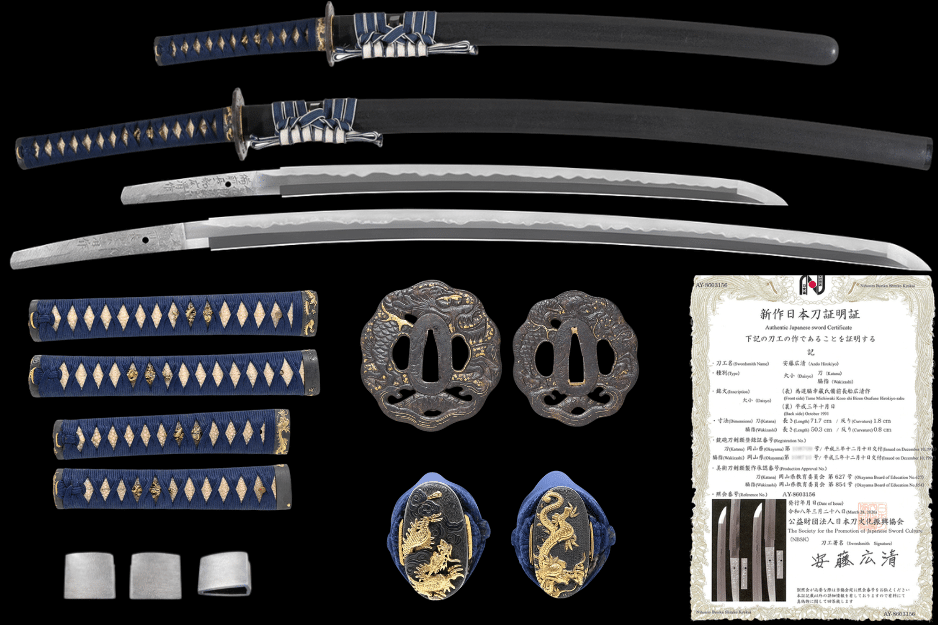
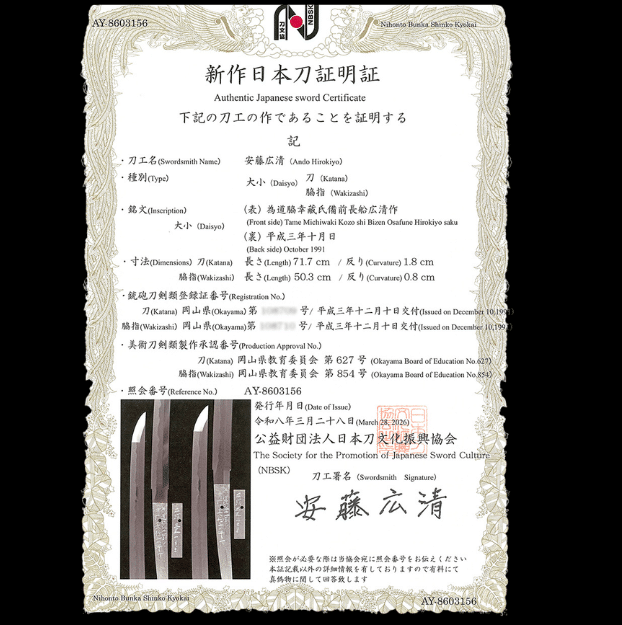
This exceptional daishō represents the classical pairing of katana and wakizashi that for centuries symbolized the authority and status of the samurai. Forged in Heisei 3 (1991) by the accomplished swordsmith Andō Hirokiyo, the two blades were commissioned as a matched pair by the original owner.
Both the blades and mountings were created as part of a single carefully planned commission, reflecting the traditional Japanese concept of a harmonious daishō in which blade, mounting, and aesthetic balance form a unified whole. Combining the work of a highly skilled modern swordsmith with historical Edo period fittings, this daishō forms an elegant and visually powerful ensemble that reflects both the living tradition of Japanese swordmaking and the enduring legacy of the samurai.
The Master Smith: Andō Hirokiyo
Andō Hirokiyo (安藤広清), born Yukio Ando in 1947 in Okayama Prefecture, belongs to the modern generation of highly skilled swordsmiths dedicated to preserving the classical traditions of Japanese swordmaking. He trained under Kobayashi Yasuhiro and later became a senior disciple of the respected swordsmith Matsuba Kunimasa. In 1981, he established his forge in Tsuyama City where he devoted his work to the Bizen tradition.
His craftsmanship has been recognized as an Important Intangible Cultural Property of Okayama Prefecture, an acknowledgment reserved for artisans who contribute significantly to the preservation of traditional Japanese culture. His blades have been repeatedly selected for exhibitions of newly forged swords in Japan.
The Legacy of the Bizen Tradition
Historically one of the most celebrated schools of Japanese sword production, the Bizen school particularly the famous Osafune lineage produced many of the greatest masterpieces of the Kamakura and Muromachi periods. Hirokiyo’s work reflects this lineage through its elegant sugata (shape), carefully balanced proportions, and vibrant temper patterns.
The Anatomy of the Steel
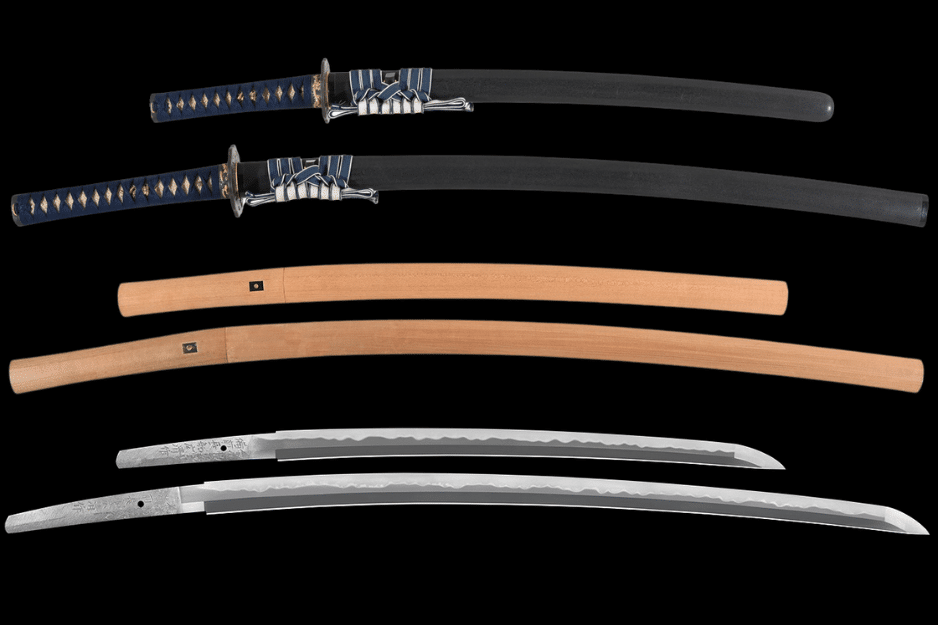
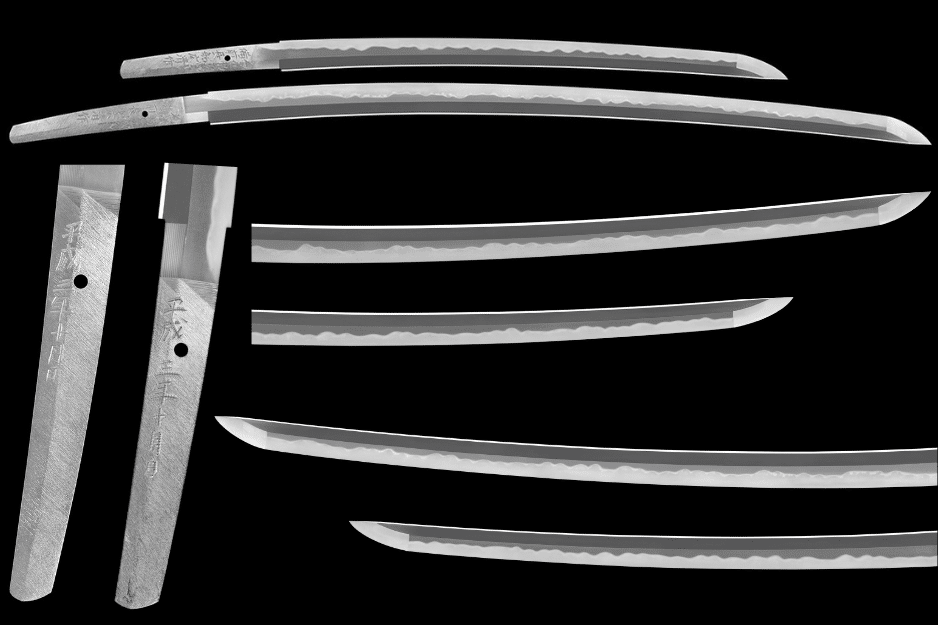
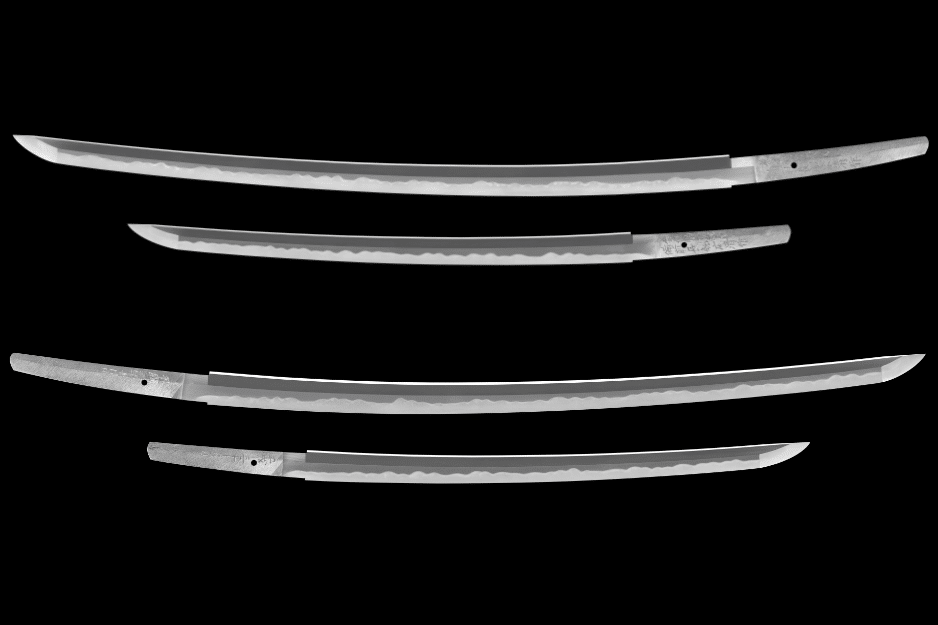
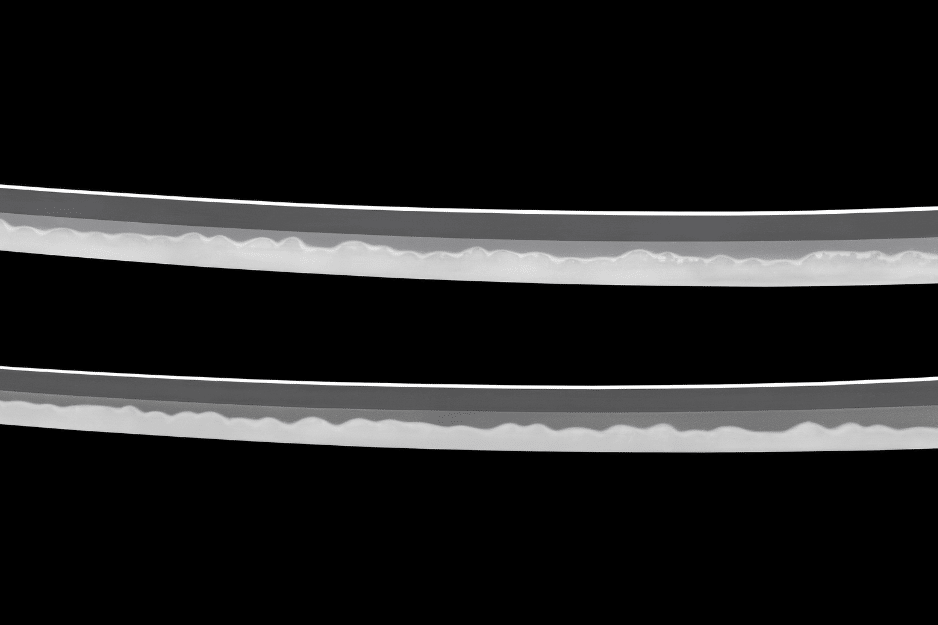
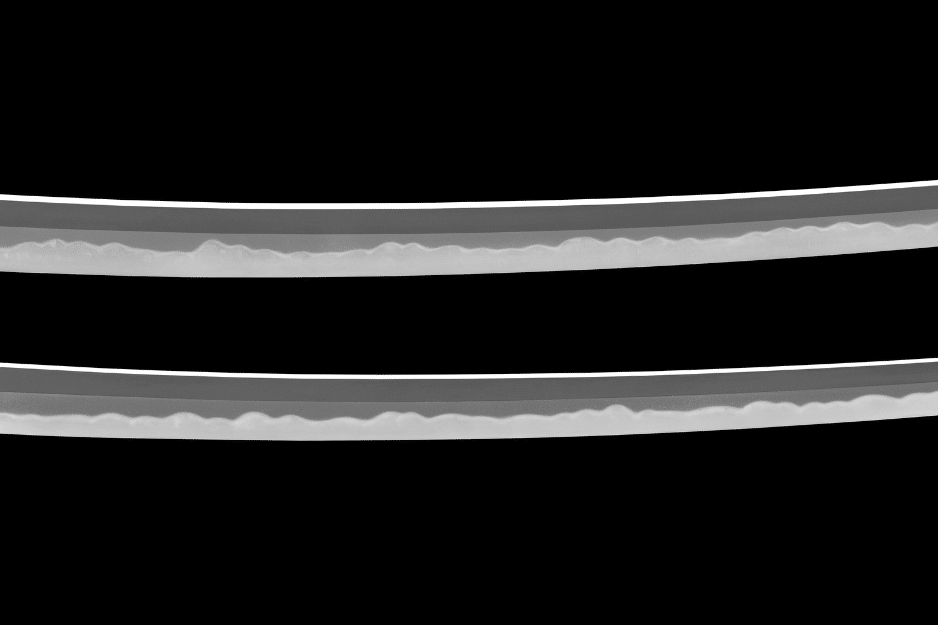
Both blades are preserved in excellent condition and reveal a clear and vibrant polish that highlights the activity within the steel.
Sugata and Curvature
Both blades display an elegant shinogi-zukuri sugata with refined curvature and excellent balance between the katana and the wakizashi.
The Hamon (Temper Line)
The hamon is executed in a lively chōji-midare pattern, characterized by rounded clove-shaped elements and gentle gunome activity within a soft nioi-based structure. This temper pattern reflects the classical Bizen aesthetic and demonstrates the smith’s high level of control during the complex yaki-ire (quenching) process.
Historical Mountings (Koshirae)
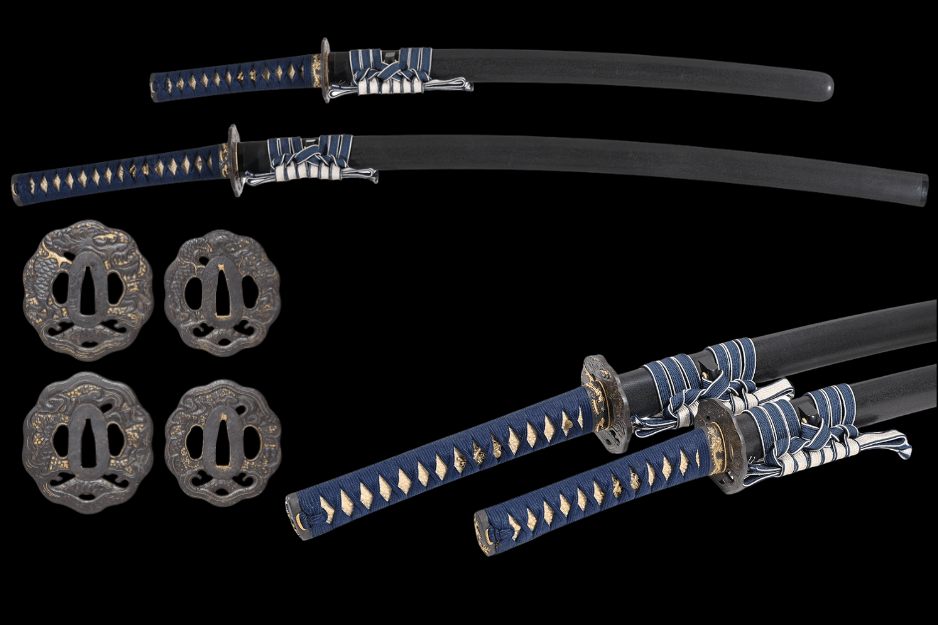
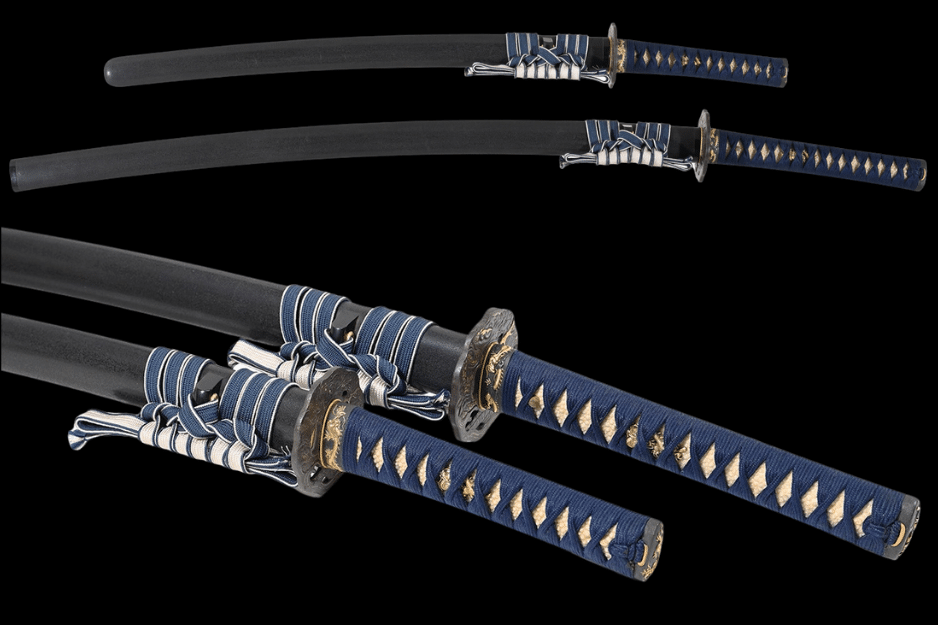
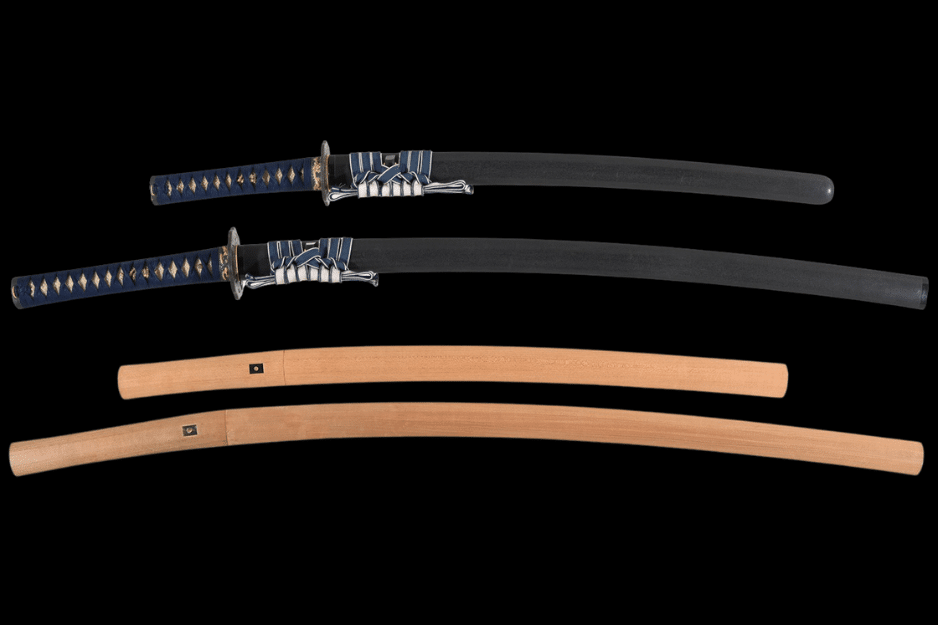
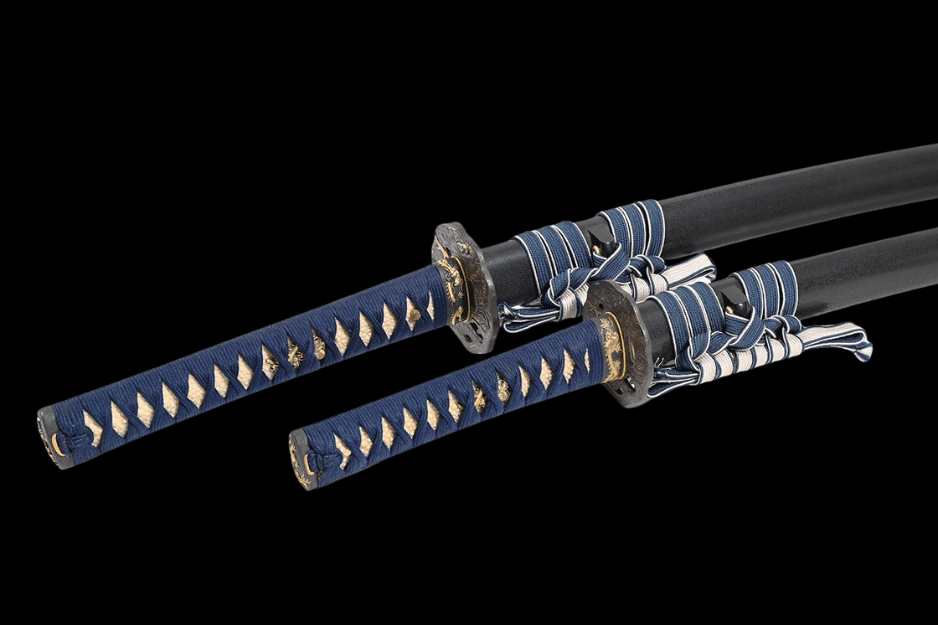
The daishō is mounted in an elegant koshirae incorporating highly prized, historical Edo period fittings.
Edo Period Jyakūshi Tsuba
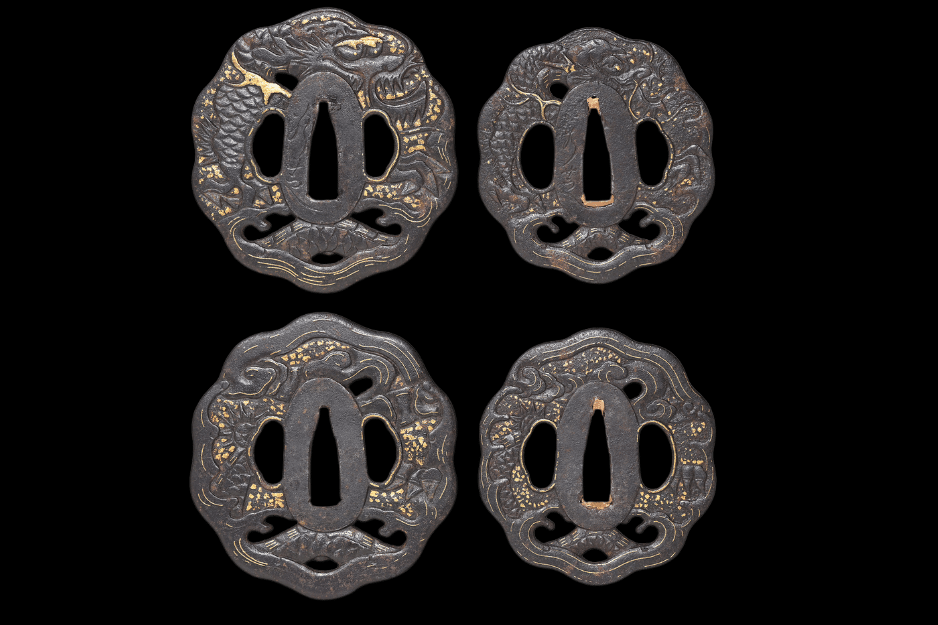
The tsuba (hand guards) form a true daishō pair from the Jyakūshi school and are signed examples. They feature powerful dragon motifs executed in iron with gold nunome-zōgan inlay. Jyakūshi tsuba were traditionally produced in Nagasaki during the Edo period and are admired for their distinctive iron surfaces, expressive dragon carvings, and subtle Chinese artistic influences.
Tsuka and Saya (Handle and Scabbard)
The tsuka (handles) are wrapped in deep blue silk ito over high-quality samegawa (ray skin) in the traditional hineri-maki style.
Fittings and Details
Fuchi & Kashira Crafted in dark shakudō and decorated with finely carved dragons in gold relief, reinforcing the dynamic theme of the mountings.
Menuki: Matching dragon menuki further enhance the visual harmony of the set.
Habaki & Saya Carefully fitted silver foil habaki sit above the saya (scabbards), which are finished in refined black ishime lacquer, providing a subtle textured surface that complements the classical character of the mounting.
Specifications
Era: Heisei 3 (1991)
Swordsmith Andō Hirokiyo (安藤広清)
School / Tradition Bizen Tradition
Certification NBSK (Nihonto Bunka Shinko Kyokai)
Mountings Custom Koshirae with signed Edo period Jyakūshi dragon tsuba and traditional fittings.
Katana Measurements:
Blade Length (Nagasa) 71.7 cm
Curvature (Sori) 1.8 cm
Wakizashi Measurements:
Blade Length (Nagasa) 50.3 cm
Curvature (Sori) 0.8 cm