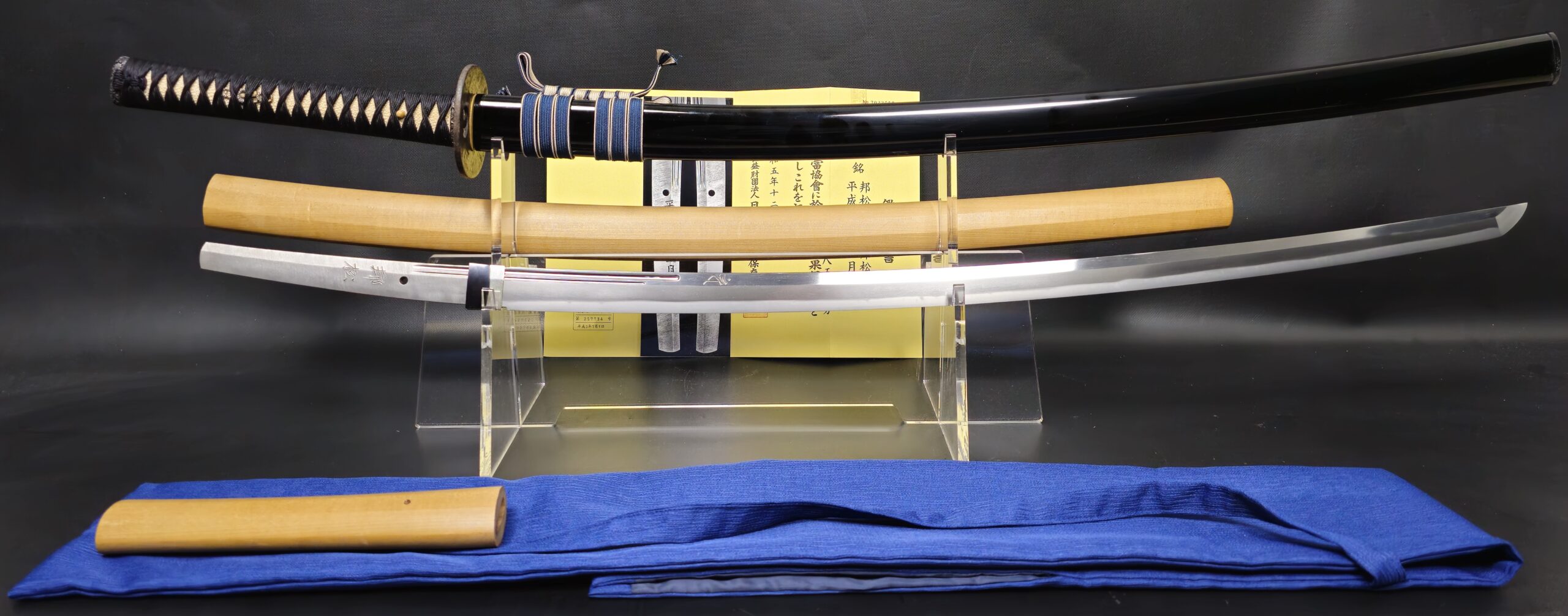
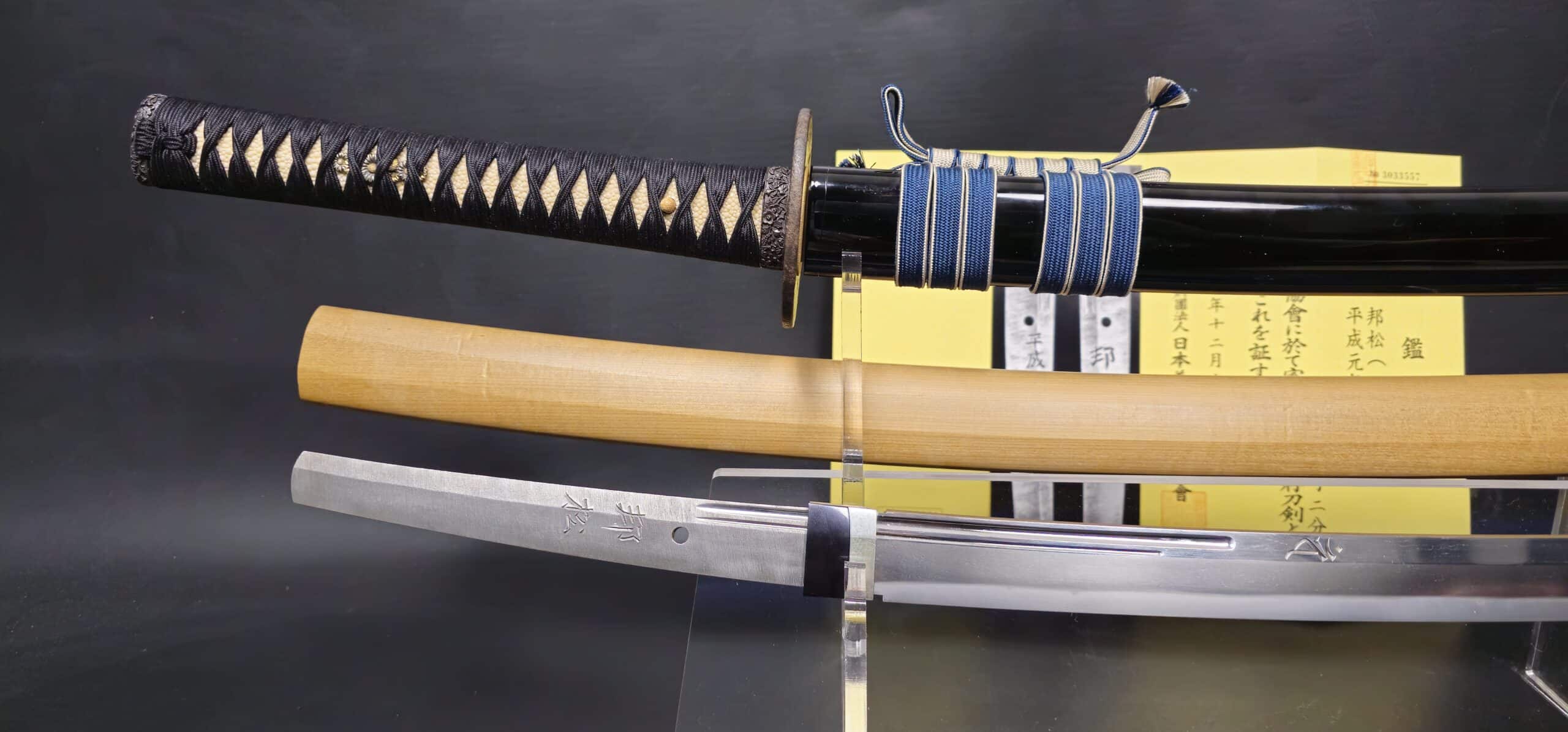
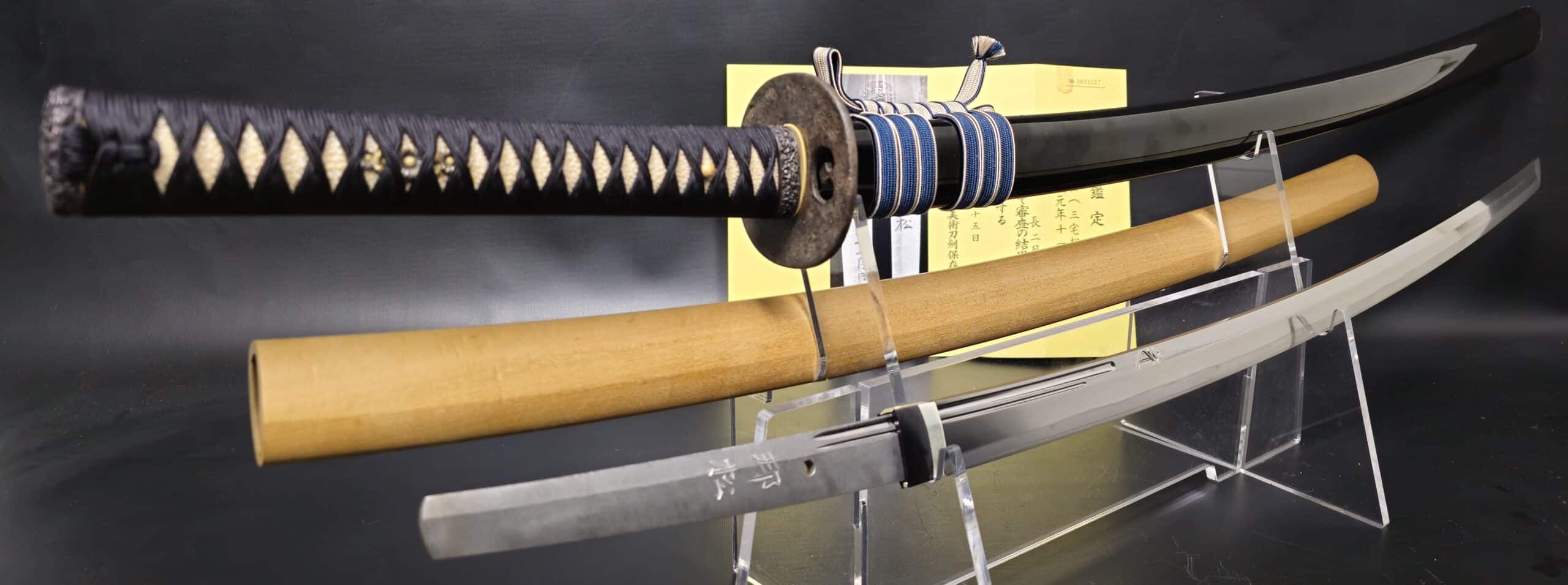
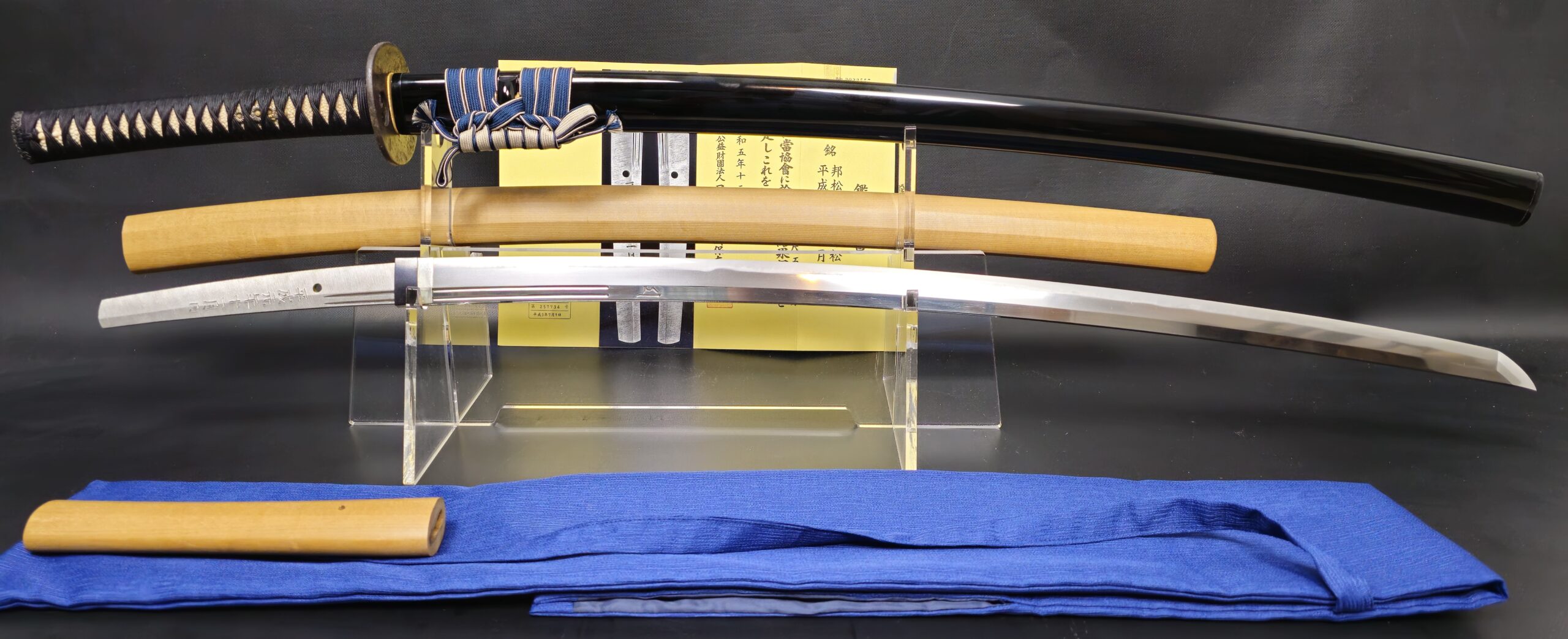
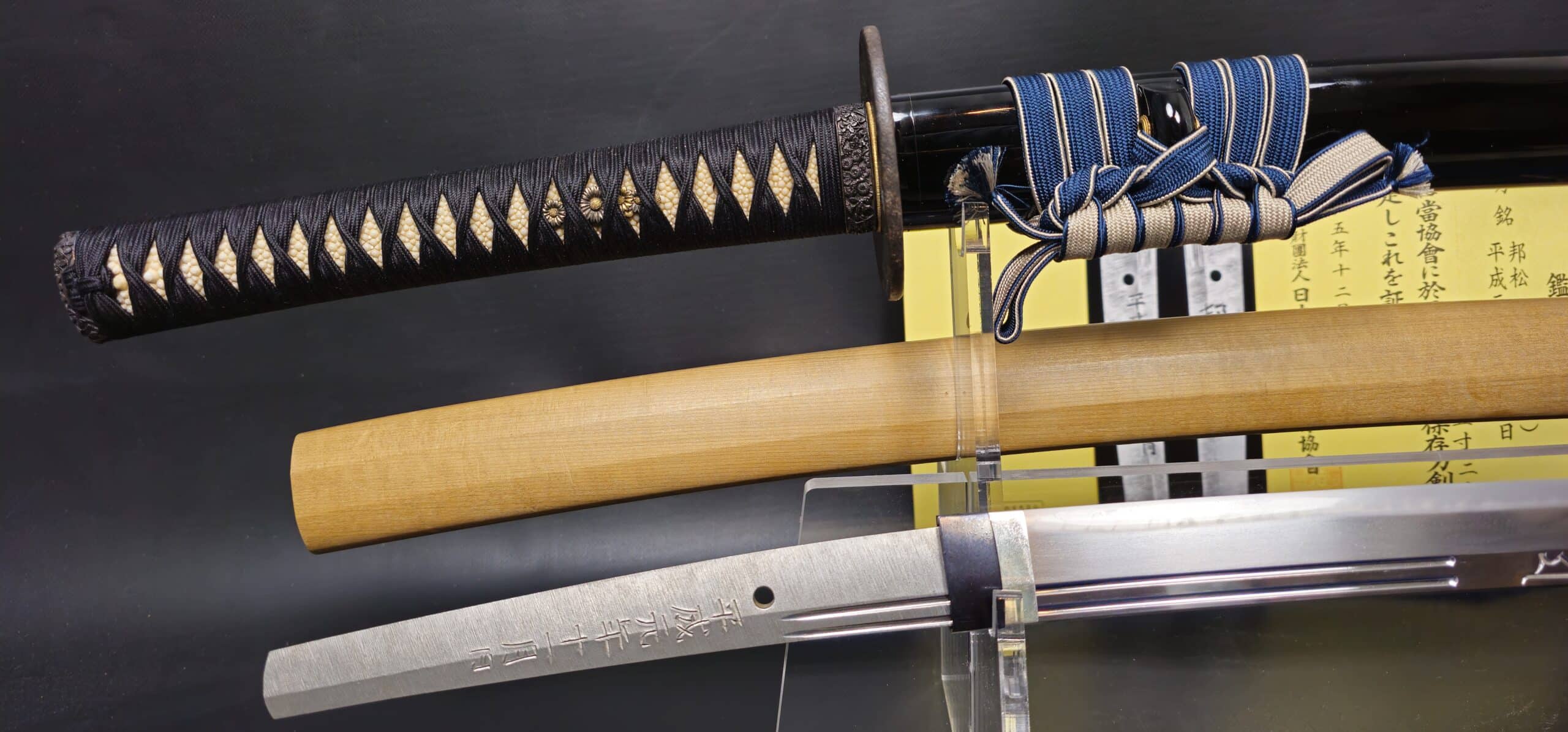
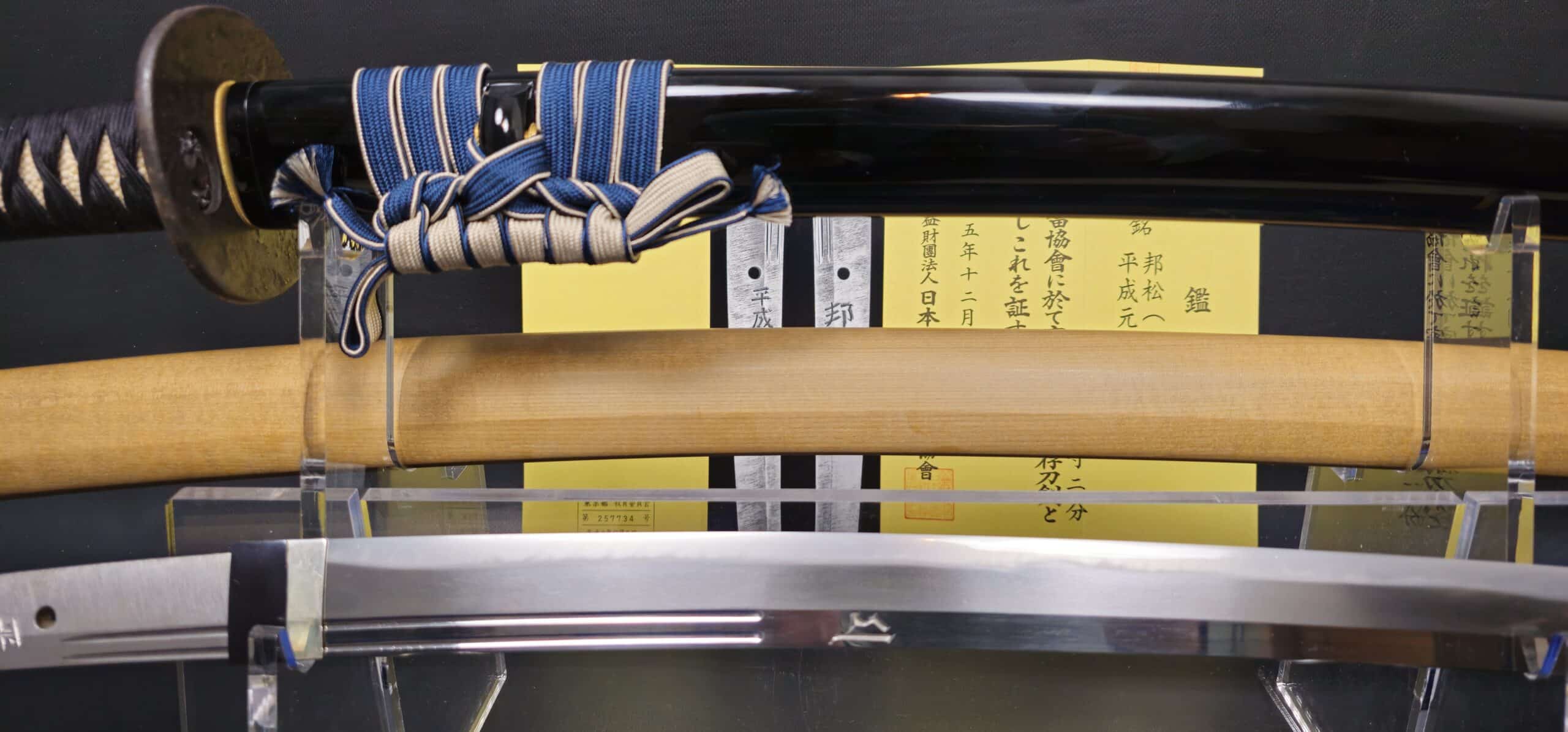

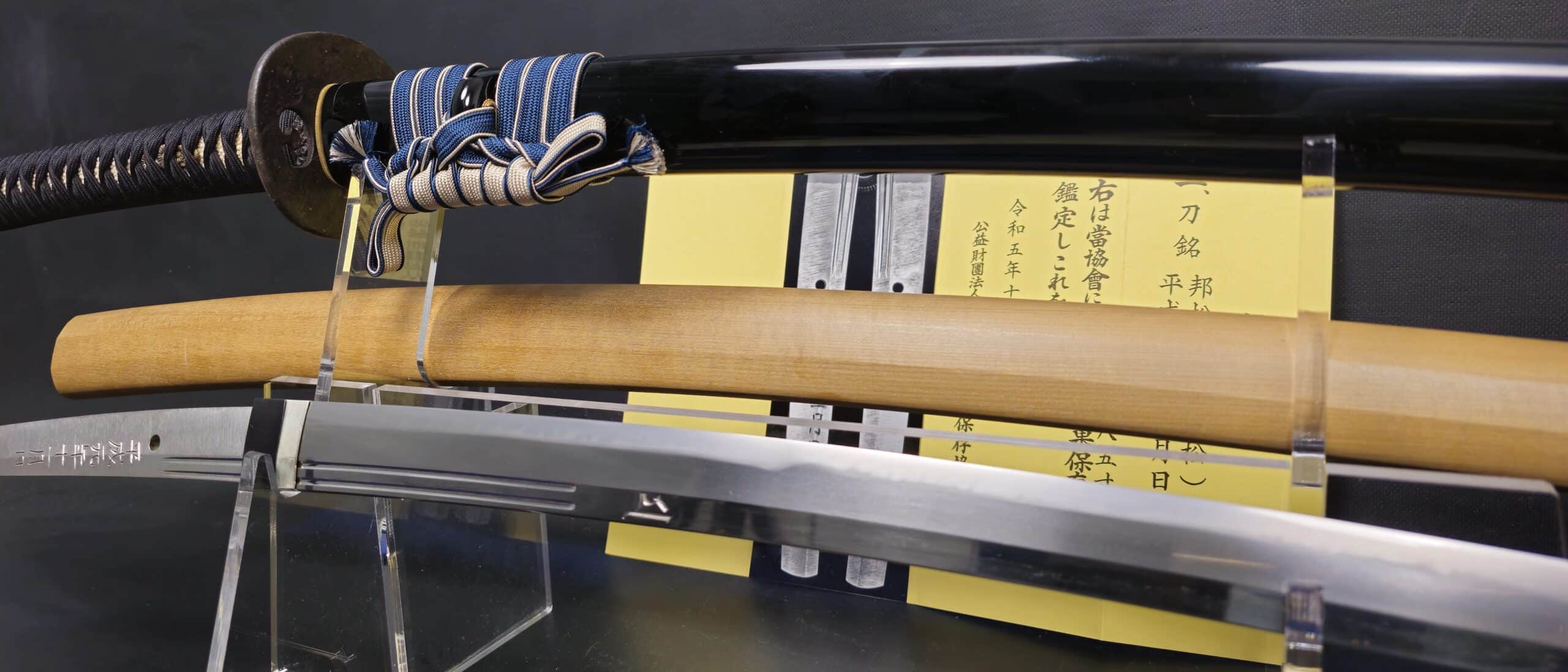

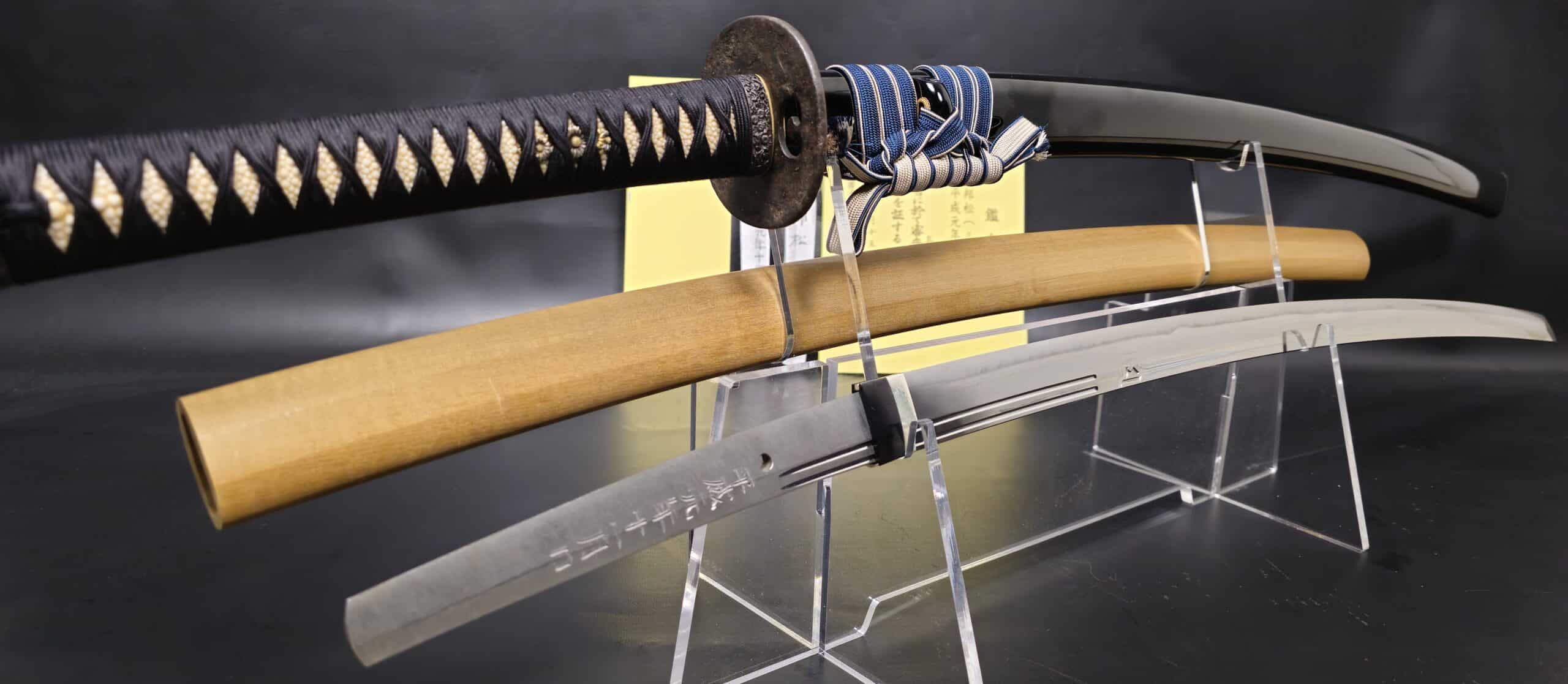
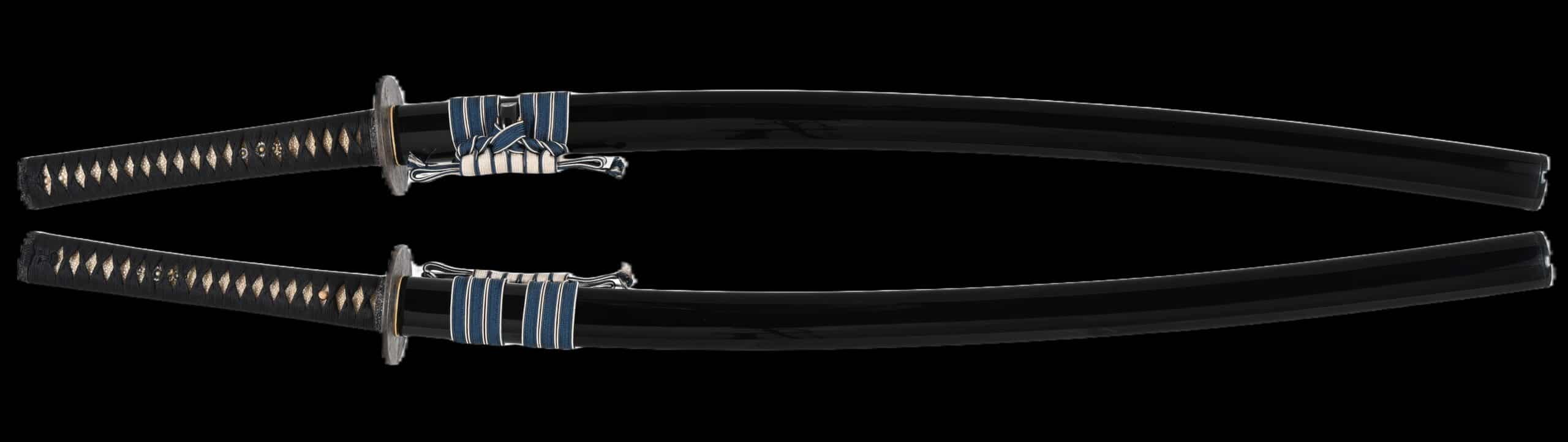
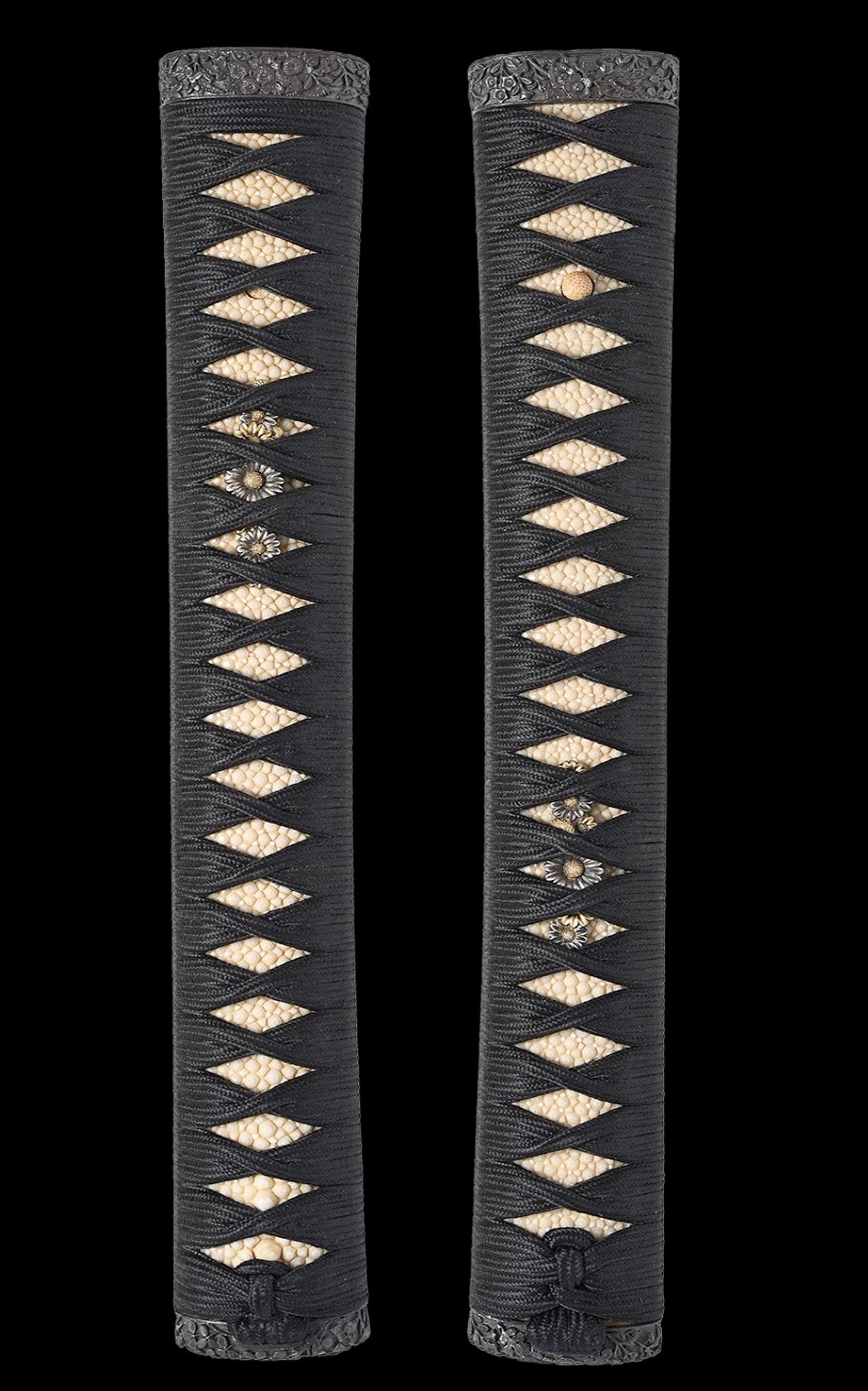
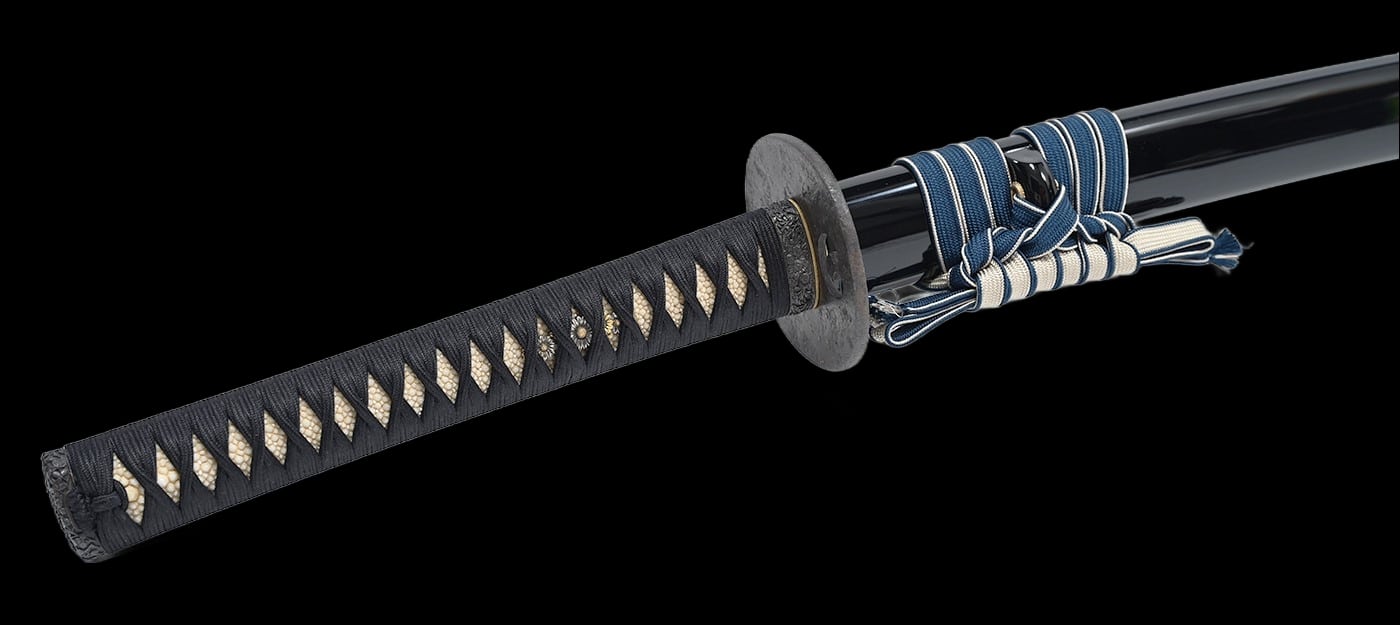
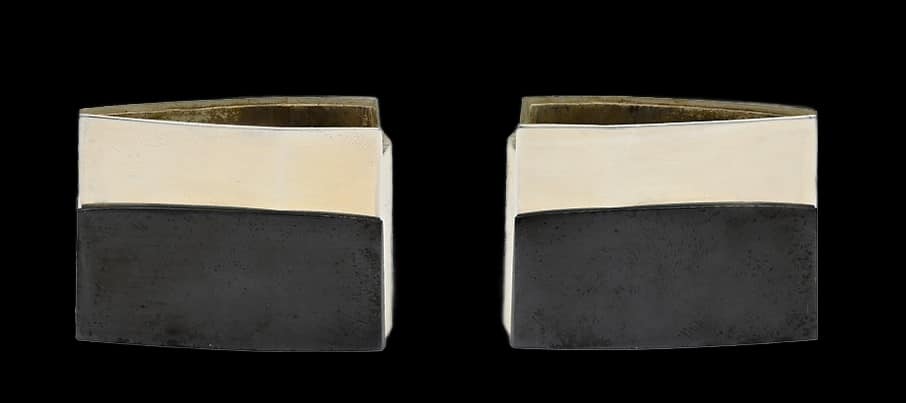

Japanese Katana Musashi no Kuni Jū Kunimatsu
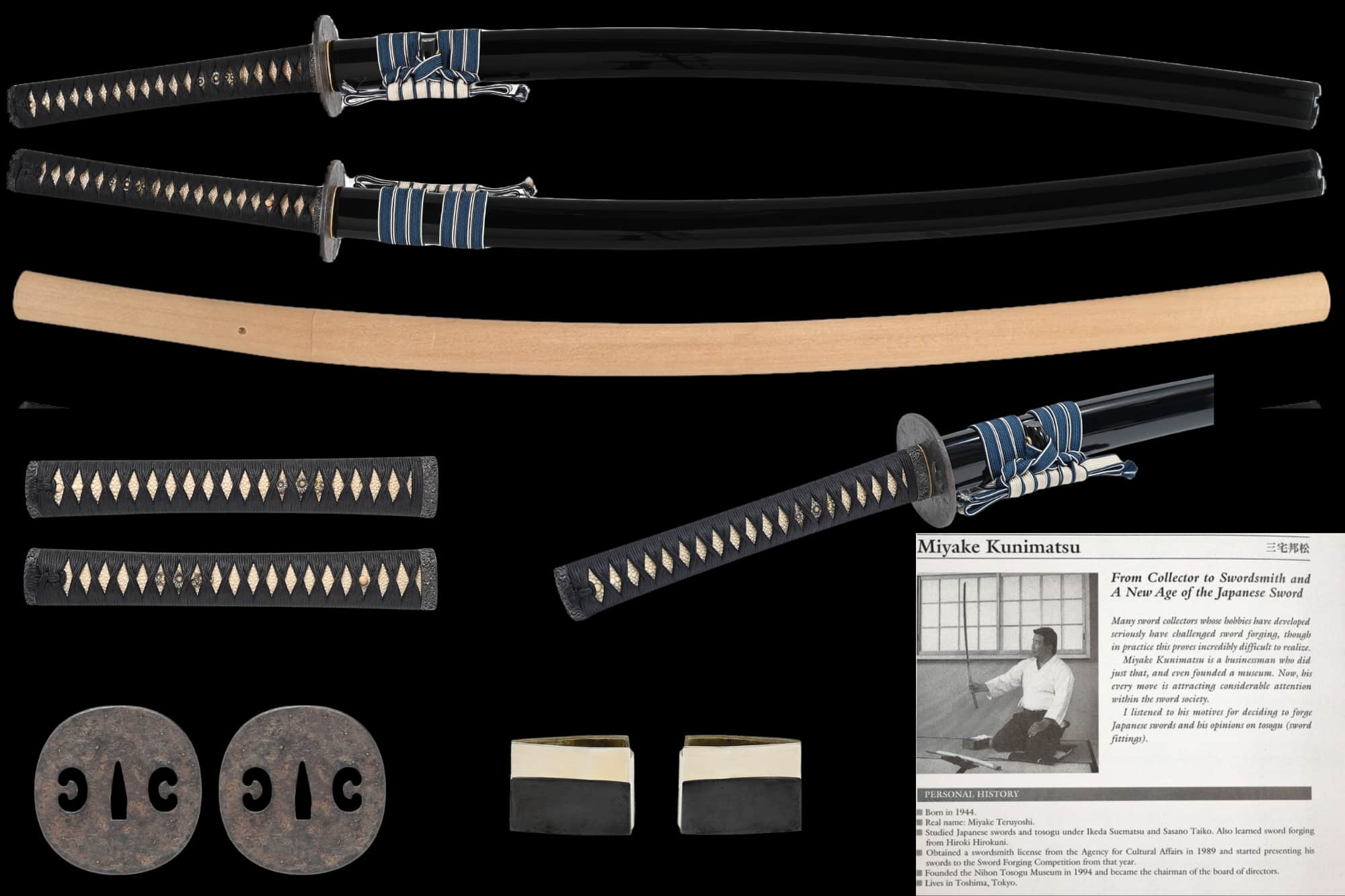
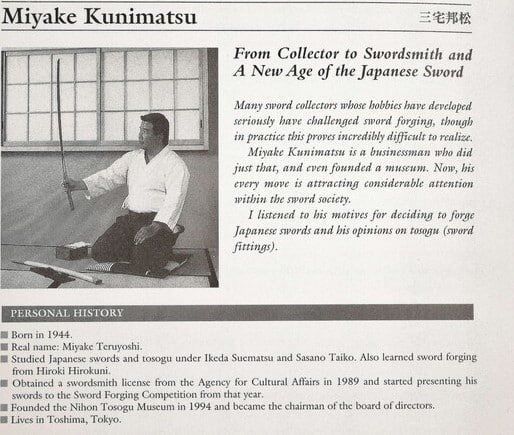
Mukansa Swordsmith Miyake Teruyoshi
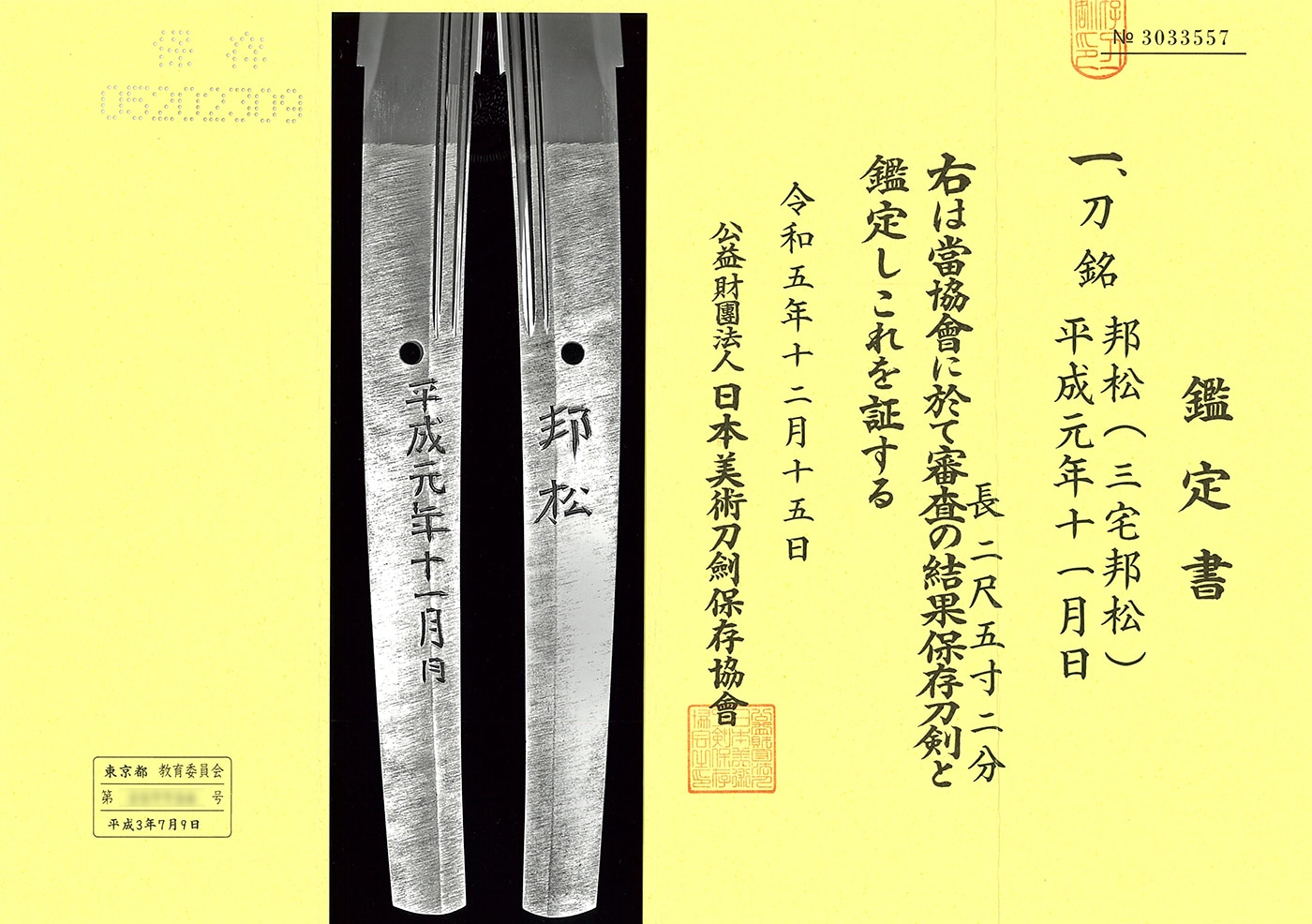
NBTHK Hozon Tōken
Heisei Period (1989) Tokyo
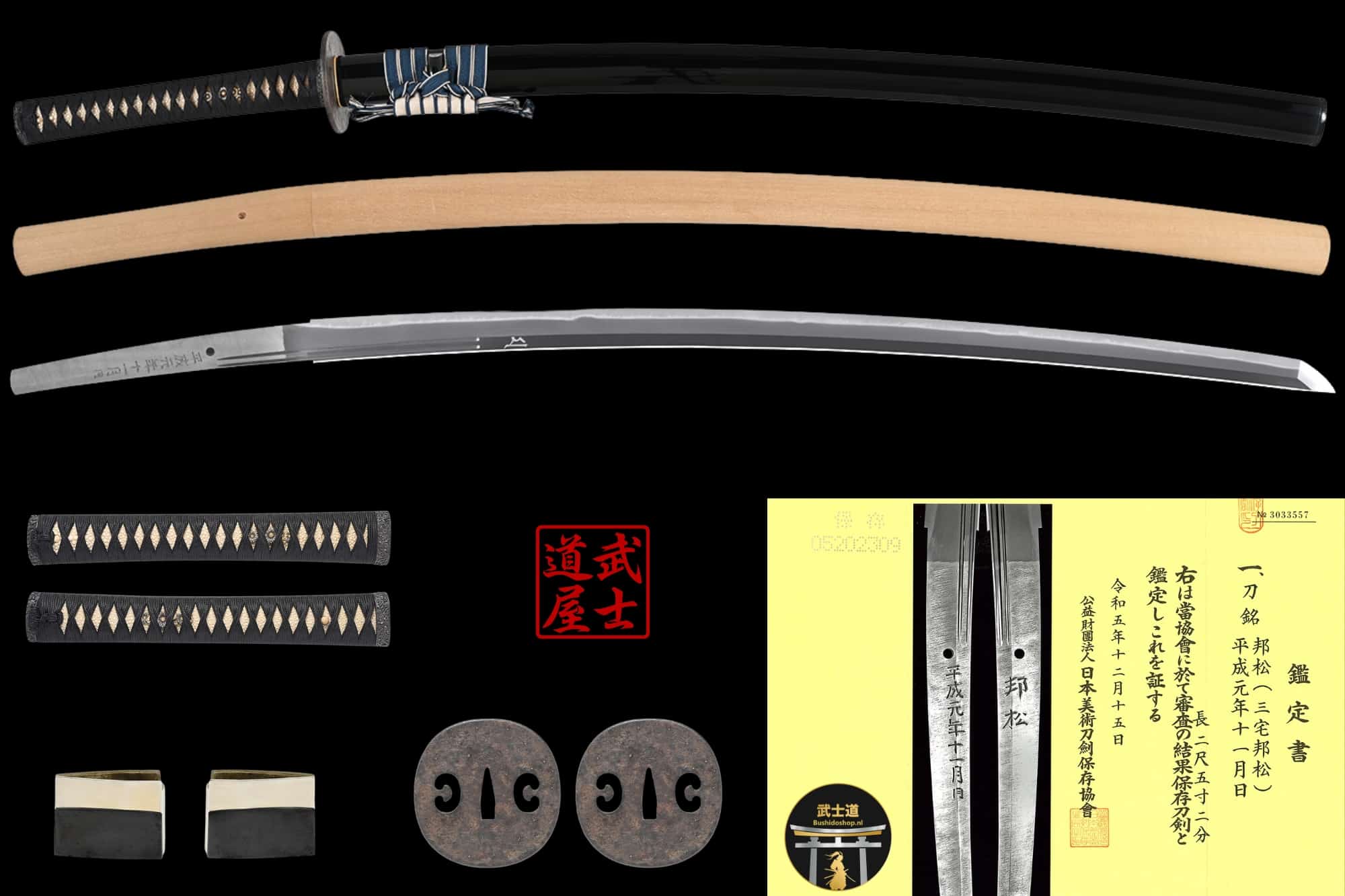
This elegant Japanese katana was forged by Musashi no Kuni Jū Kunimatsu (武蔵国住邦松), the swordsmith name of Miyake Teruyoshi, one of the most respected modern craftsmen within the contemporary Japanese sword tradition. Kunimatsu is recognized as a Mukansa swordsmith, a distinction granted only to masters whose work has reached such a consistently high level that it is exhibited without further judging at the annual Shinsaku Meitō Exhibition.
The blade is accompanied by NBTHK Hozon Tōken certification, confirming its authenticity and recognizing it as a Japanese sword worthy of preservation. Such certification reflects both the quality of the work and its importance within the continuing lineage of traditional swordmaking.
Miyake Teruyoshi studied sword forging under Hirokuni Hiroki, a respected modern master who emphasized disciplined craftsmanship and faithful adherence to traditional methods. Under this guidance Kunimatsu developed a forging style characterized by precision, balance and deep respect for classical sword aesthetics.
In addition to his training as a swordsmith, Kunimatsu pursued extensive study in the field of sword appraisal and scholarship. He studied under Ikeda Suematsu, a prominent authority in the Japanese sword world and director of the Japanese Sword Accessories Museum. This unusual combination of practical forging skill and academic knowledge gave Kunimatsu a profound understanding of historical blades and their construction. His work reflects not only technical mastery but also the informed eye of a connoisseur deeply familiar with the traditions of Japanese sword artistry.
In 1989 Kunimatsu was granted Mukansa status, formally recognizing his position among the leading contemporary swordsmiths of Japan. The title Mukansa, meaning “beyond judgment,” is reserved for craftsmen whose work consistently reaches the highest artistic and technical standards.
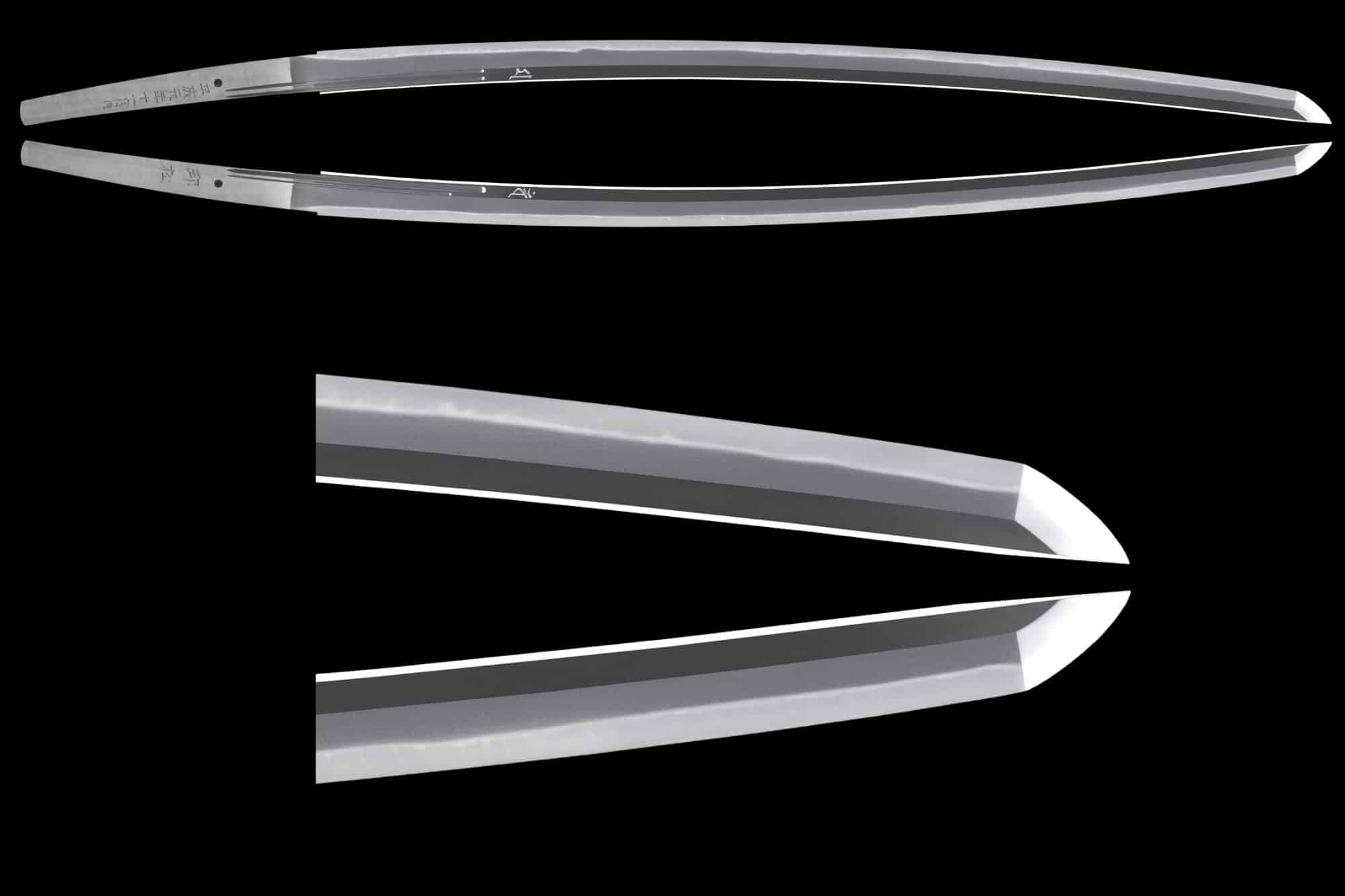
This katana, forged during the Heisei period in 1989, represents a refined example of Kunimatsu’s mature craftsmanship. The blade presents a powerful and harmonious sugata, with a generous nagasa of 76.4 cm and an elegant curvature of 2.2 cm, producing a balanced form that combines visual grace with excellent cutting geometry.
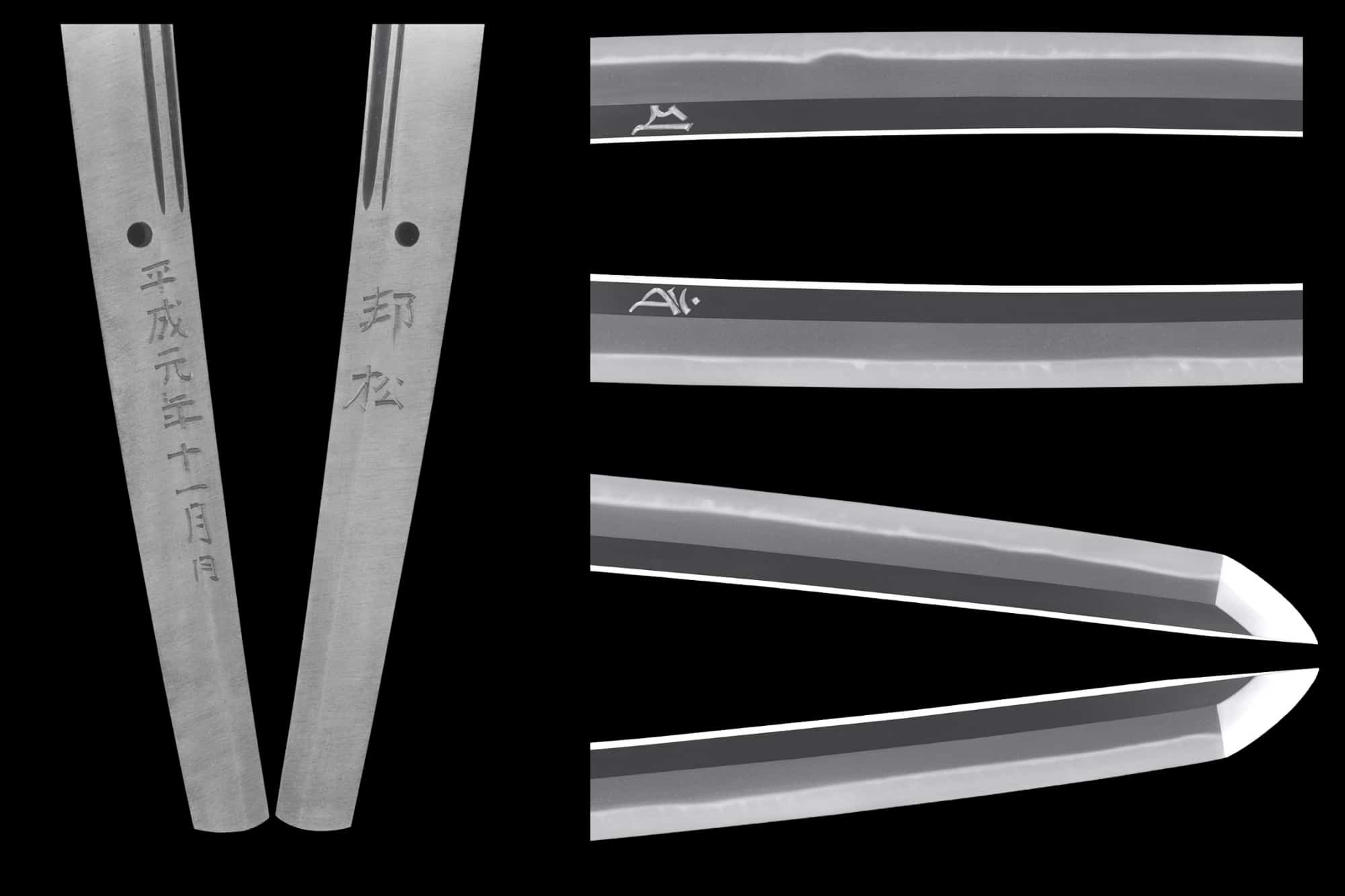
The steel reveals a beautifully refined jihada, reflecting the disciplined forging techniques of the modern Japanese tradition. The hamon displays clarity and brightness, embodying the calm elegance associated with blades inspired by the Aoe tradition, known historically for its luminous steel surface and restrained aesthetic.
A distinctive feature of the blade is the presence of double hi (bo-hi) running along both sides, carefully carved to enhance both the visual rhythm of the blade and its balance in handling. The grooves are executed with precision and flow naturally along the length of the blade. The blade also bears a finely carved kanji inscription, adding further character and artistic refinement.
The tang remains original with one mekugi-ana and a cleanly executed signature reading Kunimatsu. The crisp finish of the nakago reflects the disciplined workmanship of a smith who fully understands the traditional standards by which Japanese swords are judged.
Although forged in the modern era, the sword clearly embodies the spirit of classical samurai craftsmanship. Its balance, proportions and refined forging demonstrate a deep respect for historical models while maintaining the precision and clarity associated with contemporary master smiths.
Nagasa 76.4 cm
Sori 2.2 cm
Kissaki 2.2 cm
Mekugi-ana one
Era Heisei period (1989)
Province Musashi (Tokyo)
Signature Kunimatsu
Certification NBTHK Hozon Tōken
This katana stands as a remarkable work by Mukansa master Kunimatsu, combining modern technical excellence with the aesthetics and discipline of traditional Japanese swordmaking. For collectors of contemporary nihontō, blades by Mukansa smiths represent the highest level of living craftsmanship, preserving the spirit of the samurai sword in the modern age.
A distinguished and highly collectible katana that bridges the legacy of Japan’s classical sword tradition with the mastery of one of its foremost modern craftsmen.