
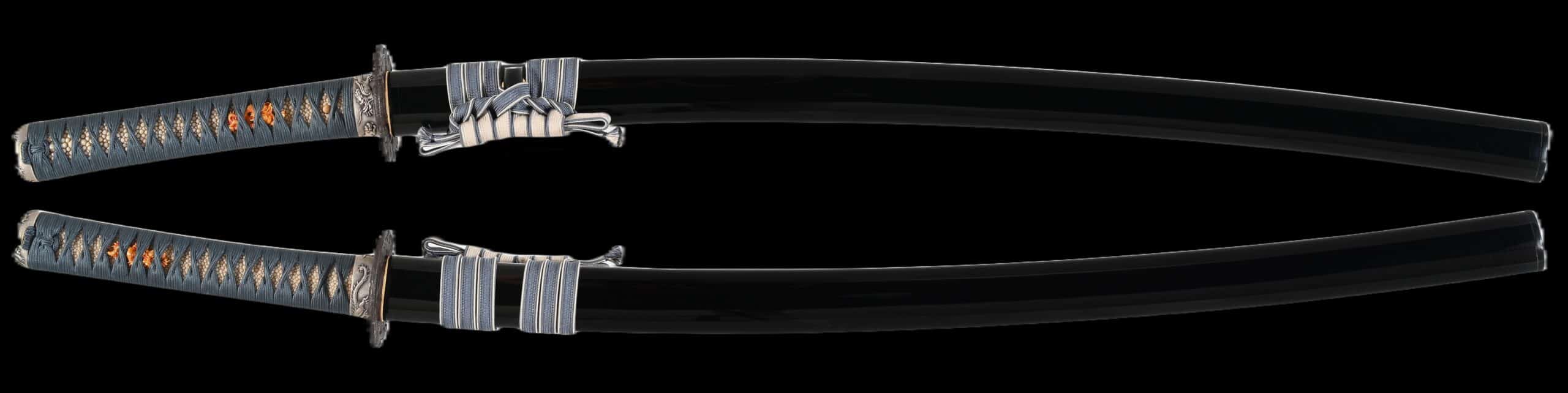

Japanese Katana Niwa Kanenobu
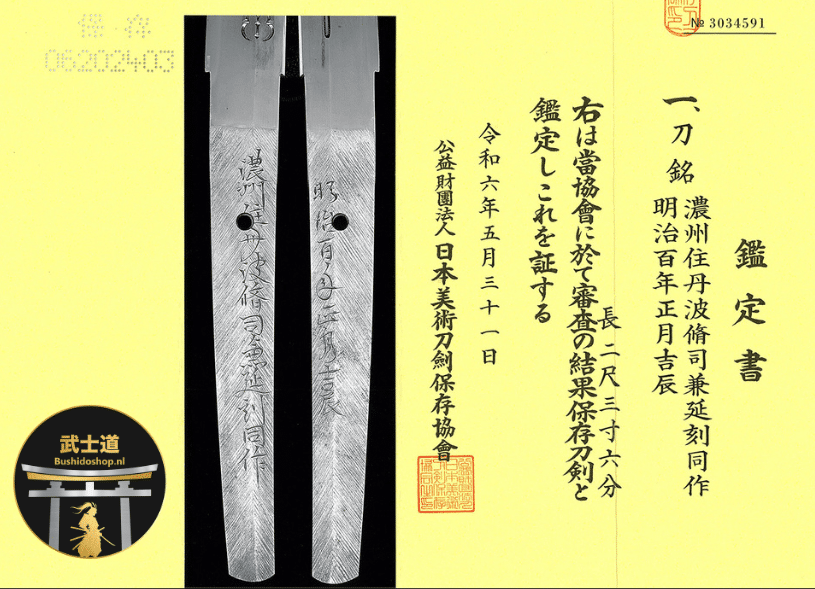
NBTHK Hozon Tōken
Important Intangible Cultural Property Holder
Shōwa 43 (1968)
This refined katana was forged in 1968 by Niwa Kanenobu (丹波守兼信), also known as Tamba Shūji, one of the most respected post-war masters of the Mino (Nōshū) tradition and a swordsmith officially recognized for preserving the classical techniques of Japanese swordmaking and horimono engraving. Blades by Kanenobu represent the continuation of the historic Mino tradition into the modern era and are highly regarded for their technical precision, strong cutting geometry and refined decorative carving executed by the smith himself.
Niwa Kanenobu was born Niwa Shūji in 1903 and trained under his father Niwa Kanematsu, inheriting the Kanenobu name and the family’s long-standing swordmaking tradition. Over the course of more than sixty years he dedicated himself to the preservation of classical Japanese swordcraft. His work stands firmly within the traditions of the Mino school, a lineage historically known for practical battlefield swords characterized by strong shapes, bright hamon and excellent cutting performance.
In 1973 (Shōwa 48) Kanenobu was officially designated Important Intangible Cultural Property holder of Gifu Prefecture, recognizing him as a preserver of traditional Japanese sword forging and horimono engraving techniques. This designation placed him among a very small group of smiths whose craftsmanship was formally acknowledged as culturally significant. Within modern swordmaking only two lineages achieved official recognition for swordsmith-executed horimono engraving: the Kanenobu lineage of Nōshū and the famous Gassan school, highlighting the exceptional rarity and prestige of his work.
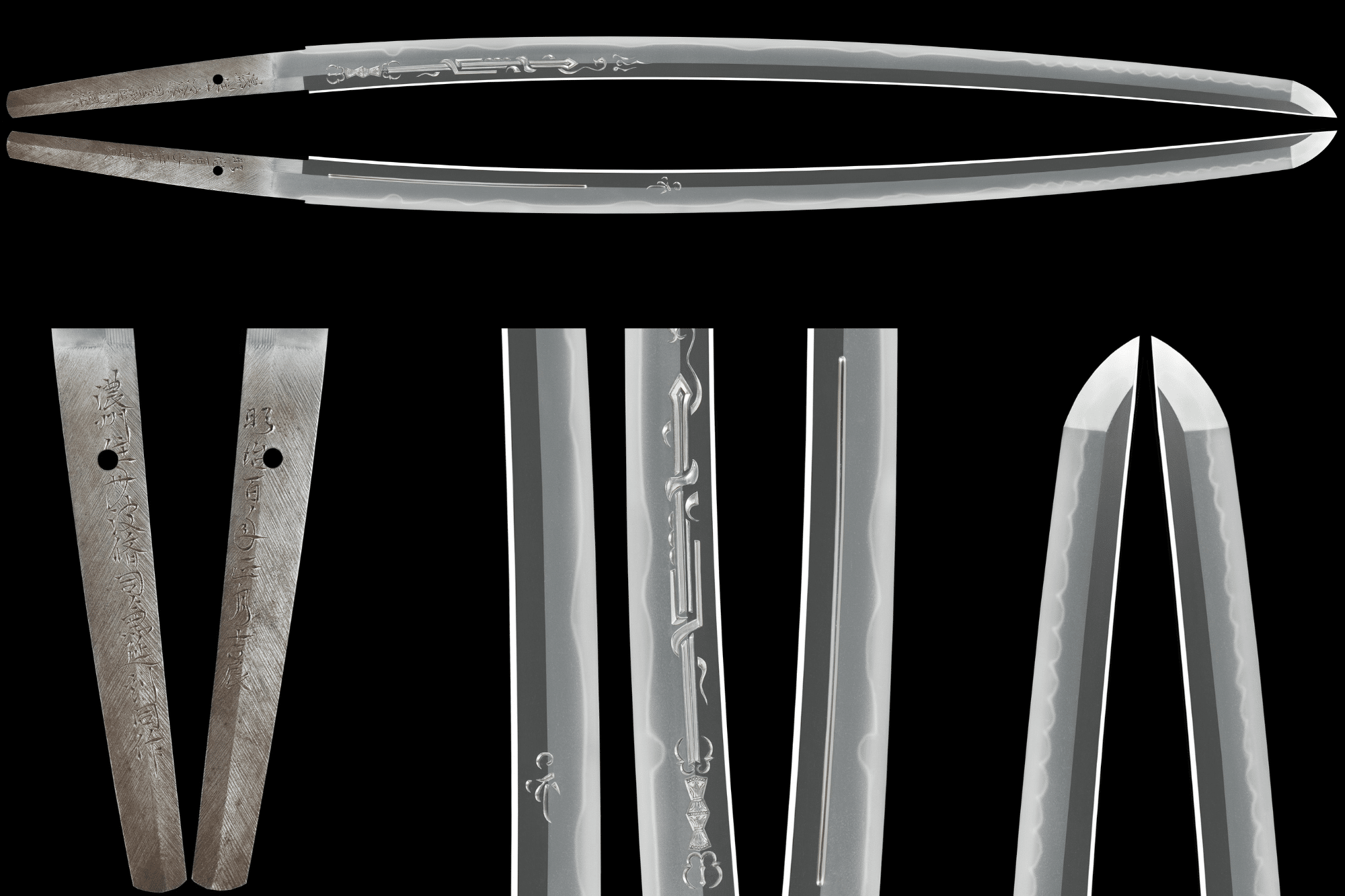
The blade represents the mature craftsmanship of Kanenobu and displays a powerful yet elegant sugata consistent with the Mino tradition. The proportions are balanced and practical, giving the sword both a dignified appearance and excellent handling characteristics.
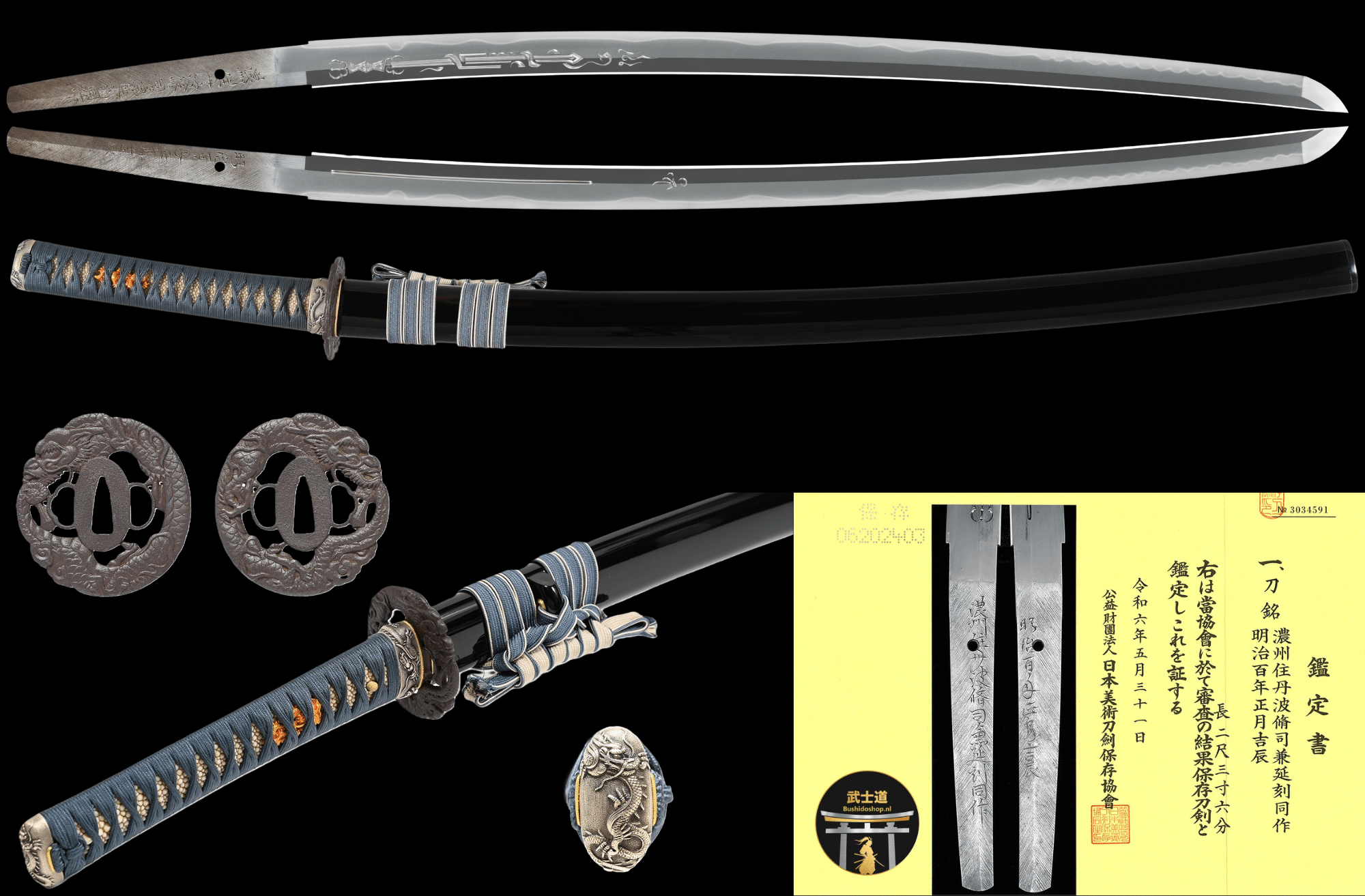
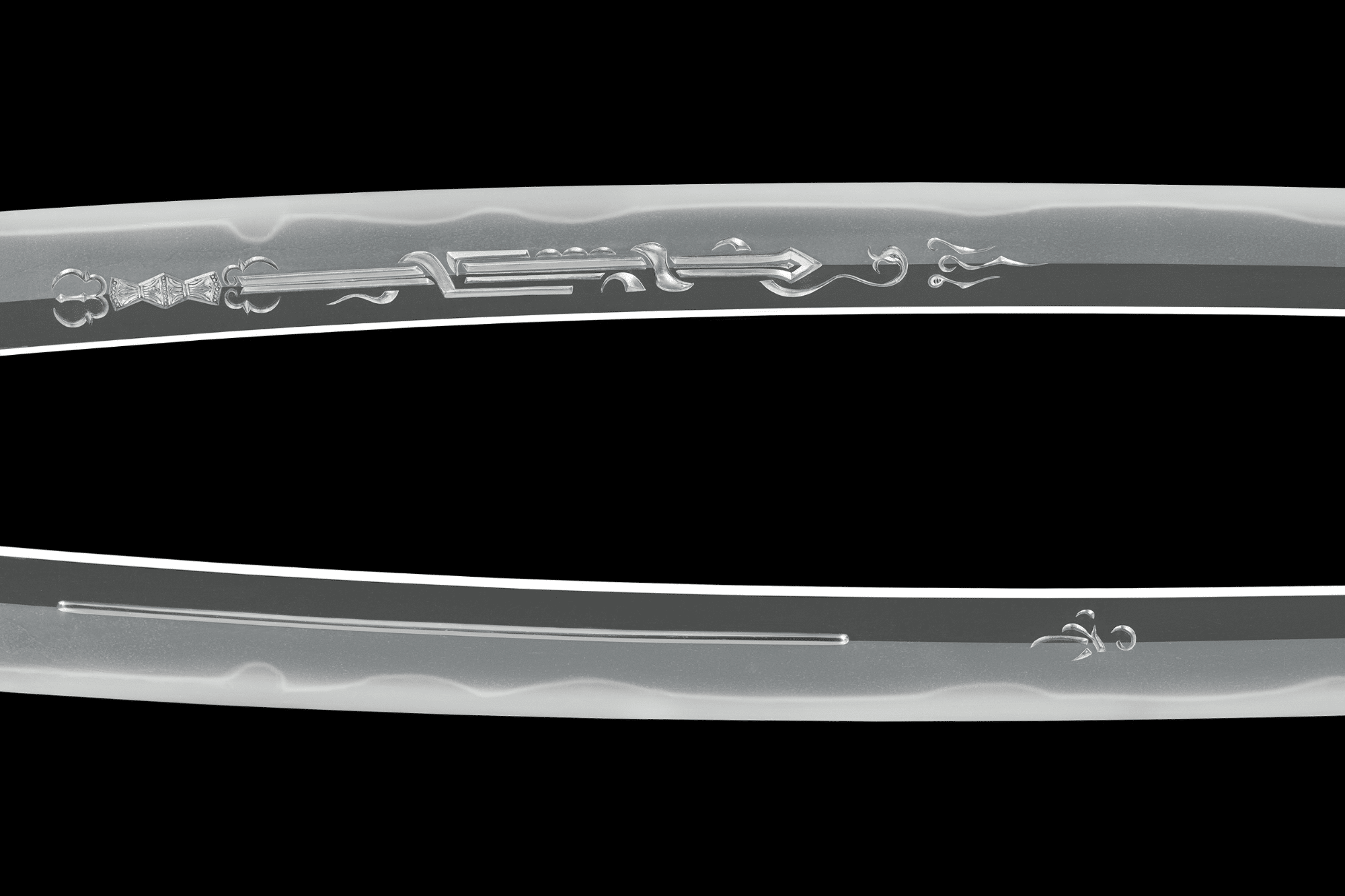
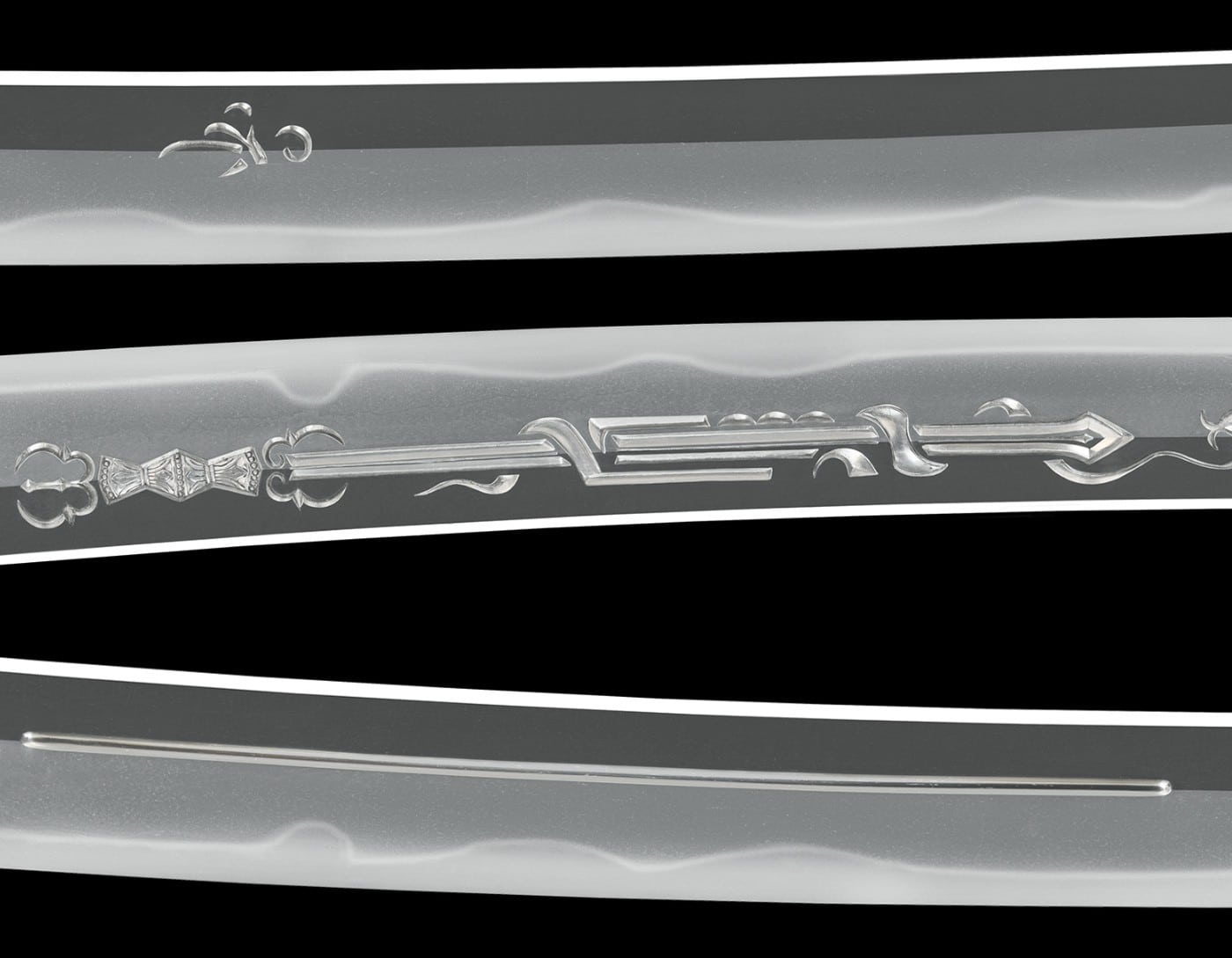
Particularly remarkable is the presence of richly executed horimono, carved personally by the smith. Unlike many modern blades where carving is performed by a specialist engraver, the horimono on this sword were executed directly by Kanenobu himself, demonstrating mastery of both forging and sculptural techniques.
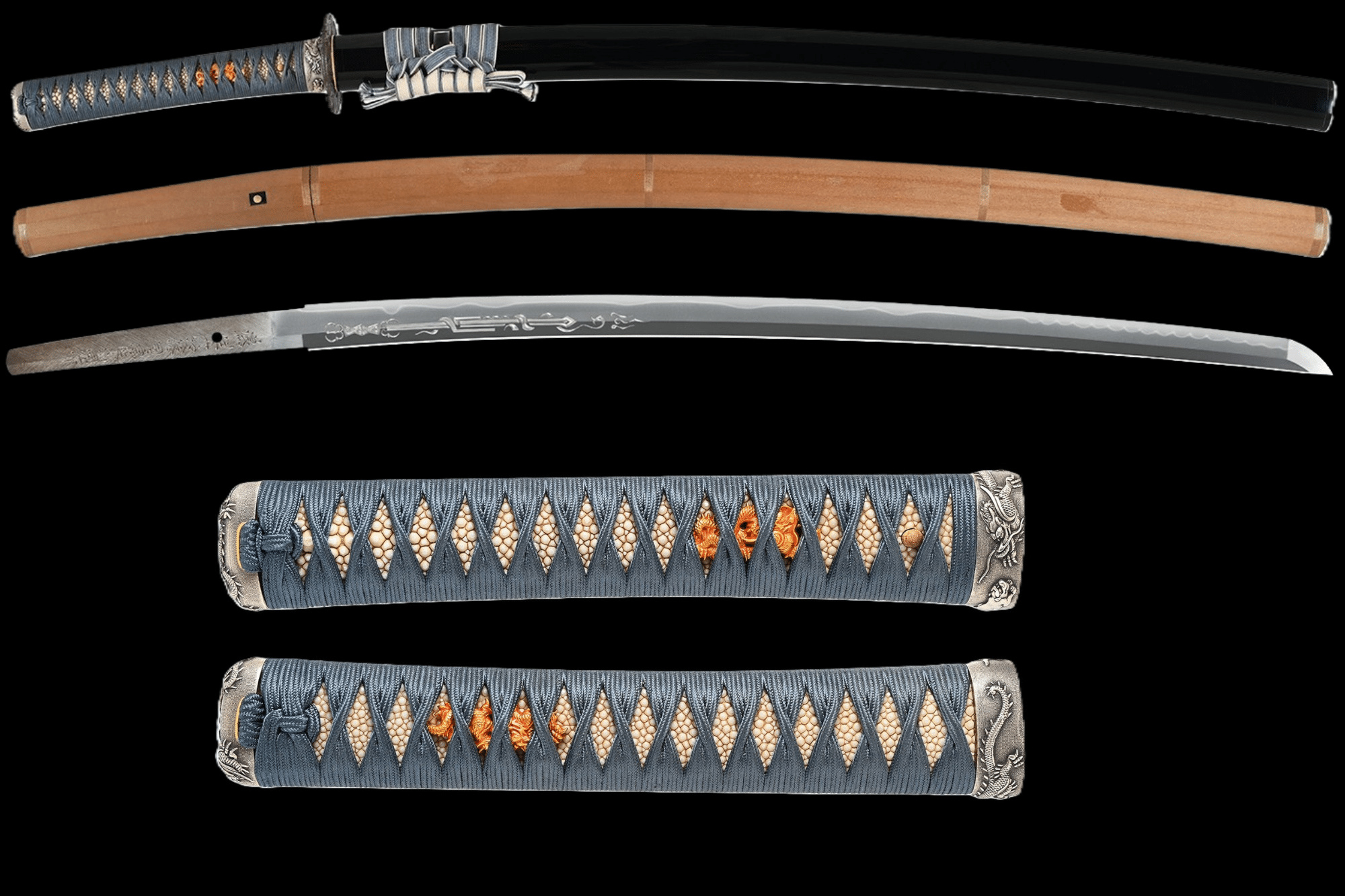
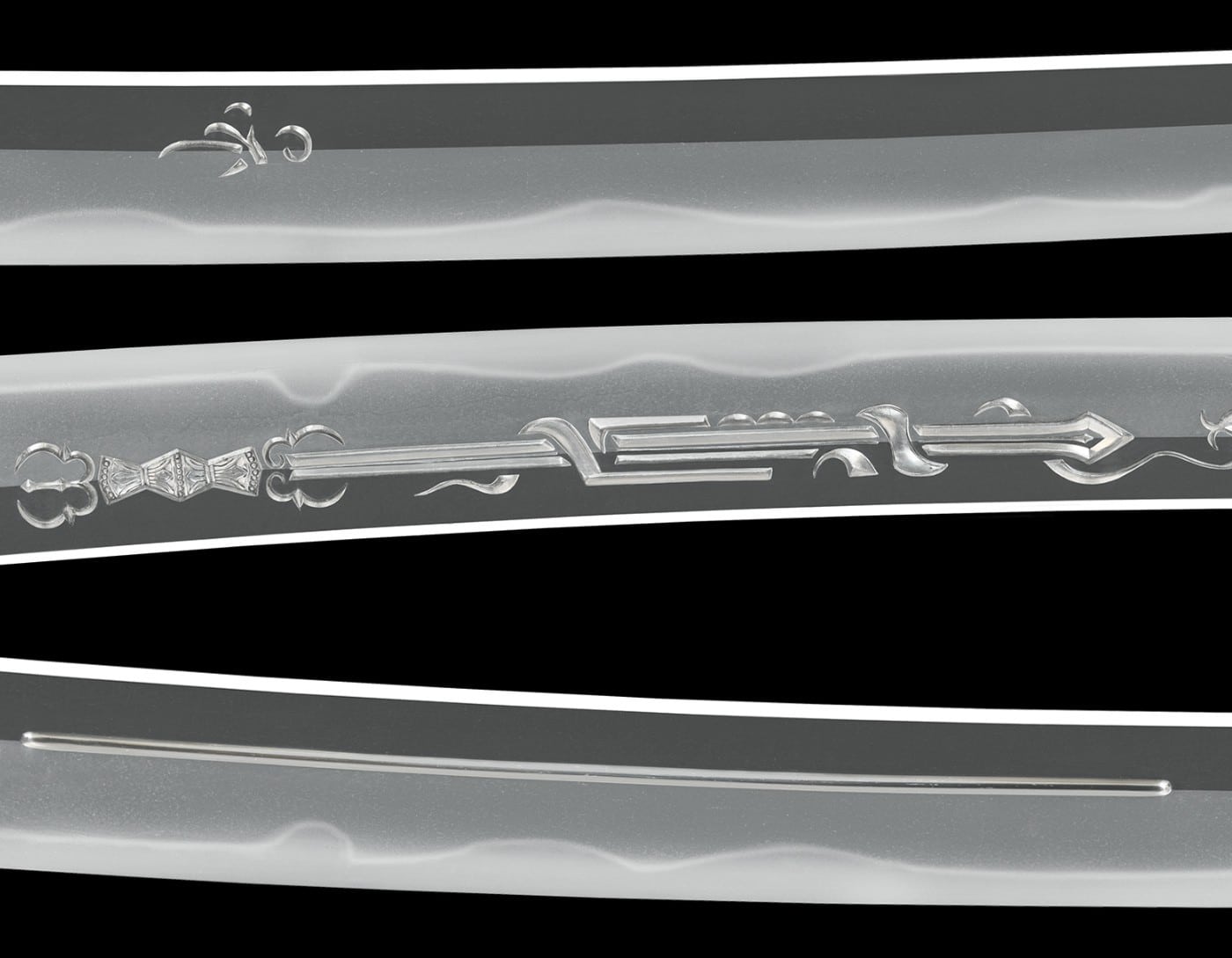
On the principal side of the blade appears a finely rendered ken, a straight ritual sword motif associated with esoteric Buddhist symbolism. The carving is executed with crisp symmetrical lines and excellent depth control, creating a strong visual presence without disturbing the natural flow of the blade. The ken is accompanied by vajra-inspired ornamental elements, evoking the symbolic weapon of wisdom used in Buddhist tradition to cut through ignorance and illusion. Such motifs are deeply connected to Mikkyō esoteric Buddhism, reinforcing the spiritual dimension often associated with Japanese swords.
The opposite side of the blade features a precisely carved bo-hi, executed with remarkable control and symmetry. This groove enhances both visual balance and structural harmony while subtly reducing the blade’s weight and improving handling characteristics.
The quality of the engraving reflects extraordinary technical confidence. The transitions between surfaces are clean, the carved lines possess vitality, and the final polish reveals subtle relief and depth without harshness. Horimono of this level are encountered only on blades produced by true engraving masters and are considered a defining hallmark of Kanenobu’s highest quality works.
The blade itself reflects the strength and discipline of the Mino tradition. The shape is classically proportioned with a confident curvature and balanced geometry suited for practical use. The steel is carefully forged and displays a well controlled jihada, while the hamon presents a bright and lively hardened edge typical of refined modern Mino work.
The tang remains original with one mekugi-ana, preserving the integrity of the blade. The sword is officially recognized with NBTHK Hozon Tōken certification, confirming its authenticity and importance as a preserved Japanese sword.
Blade Specifications
Nagasa 71.6 cm
Sori 1.6 cm
Motohaba 3.35 cm
Sakihaba 2.25 cm
Kasane 7 mm
Saki-kasane 5 mm
Mekugi-ana one
Period Shōwa era, 1968 (Shōwa 43)
Province Gifu Prefecture, Mino (Nōshū)
Certification NBTHK Hozon Tōken
This katana represents the mature work of a fully recognized master swordsmith and cultural preserver. It combines the classical aesthetics of the Mino tradition with museum-level horimono carved personally by the smith himself, a rarity even among high quality Shōwa-period blades.
Works by Niwa Kanenobu, particularly those featuring original horimono executed by the master, are increasingly difficult to acquire and are highly sought after by advanced collectors, museums and specialists in modern Japanese sword craftsmanship. The sword stands as a powerful testament to the survival of traditional swordmaking in the twentieth century and to the exceptional skill of one of the last great masters of the Nōshū tradition.