€ 8.750,00

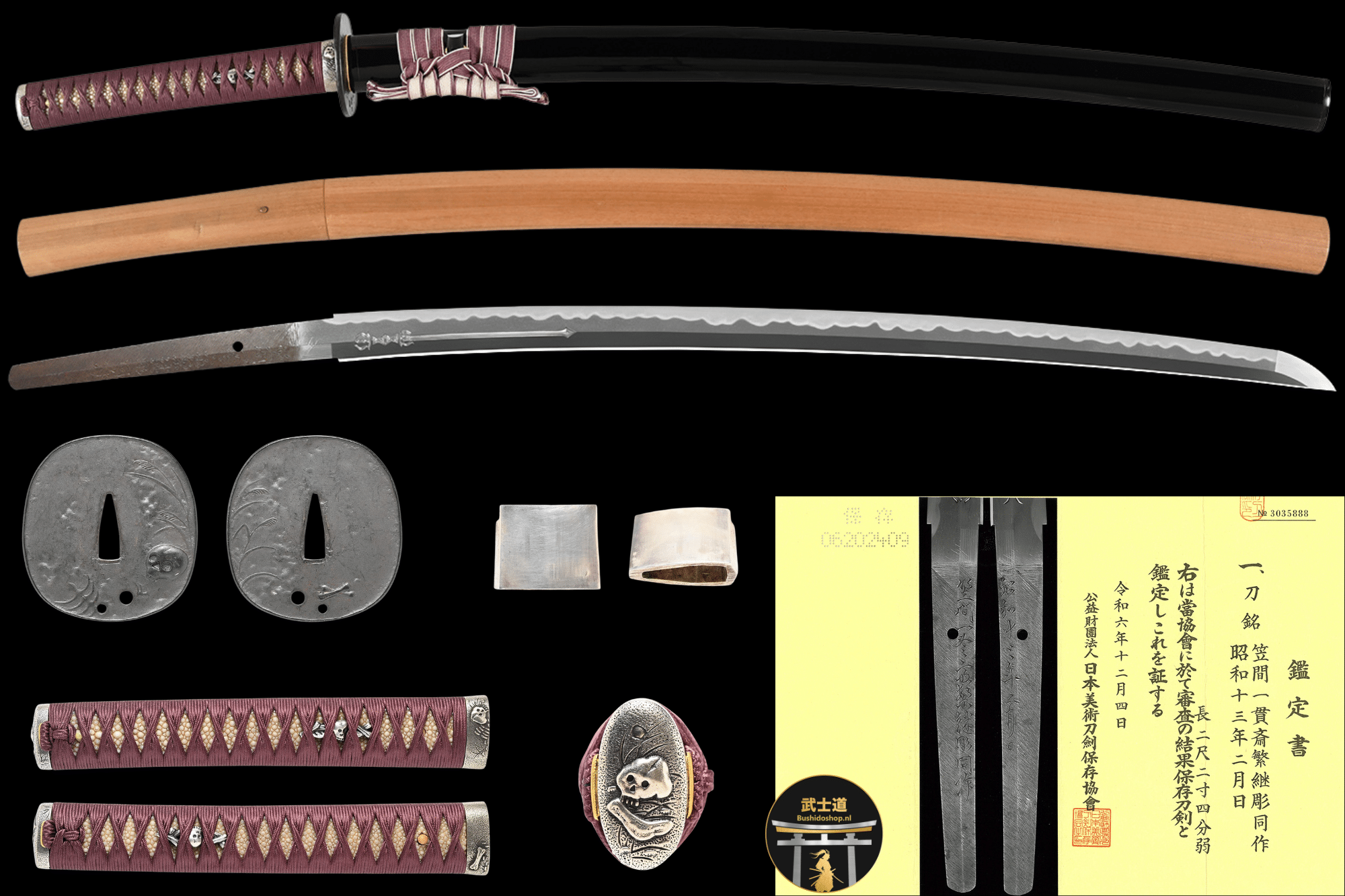
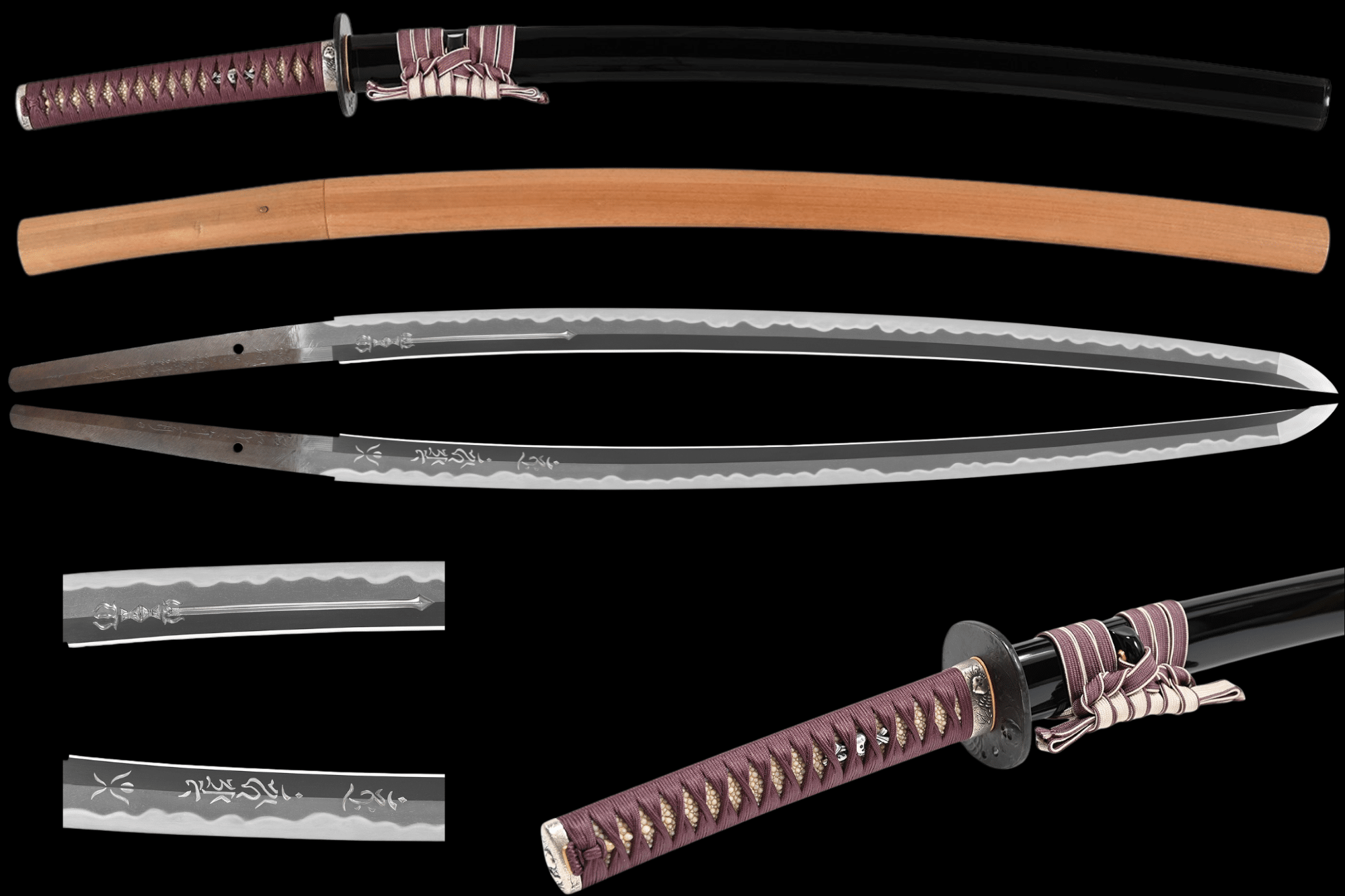
Japanese Samurai Sword Katana Kasama Ikkansai Shigetsugu NBTHK Hozon .
Kasama Ikkansai Shigetsugu (real name Kasama Giichi, born 1886 in Shizuoka Prefecture) was trained under leading masters of his generation, including Miyaguchi Ikkansai Shigeju and Morioka Shōkichi of the Gassan school. Through this lineage, he mastered not only forging techniques but also refined blade engraving (horimono), for which he became especially respected.
His reputation led to his appointment as master instructor at Kurihara Hikosaburō’s Japanese Sword Training School. In 1935, Shigetsugu was commissioned to forge swords at the Tokiwamatsu Sword Research Institute at the Toyama residence, where he became chief swordsmith and was appointed to the Imperial Household Ministry’s sword department. After the Second World War, he played a vital role in preserving and transmitting traditional swordmaking techniques, educating the next generation of masters. Among his students were Tsukamoto Okimasa (later his son-in-law) and Miyairi Akihira, who would later be designated a Living National Treasure.
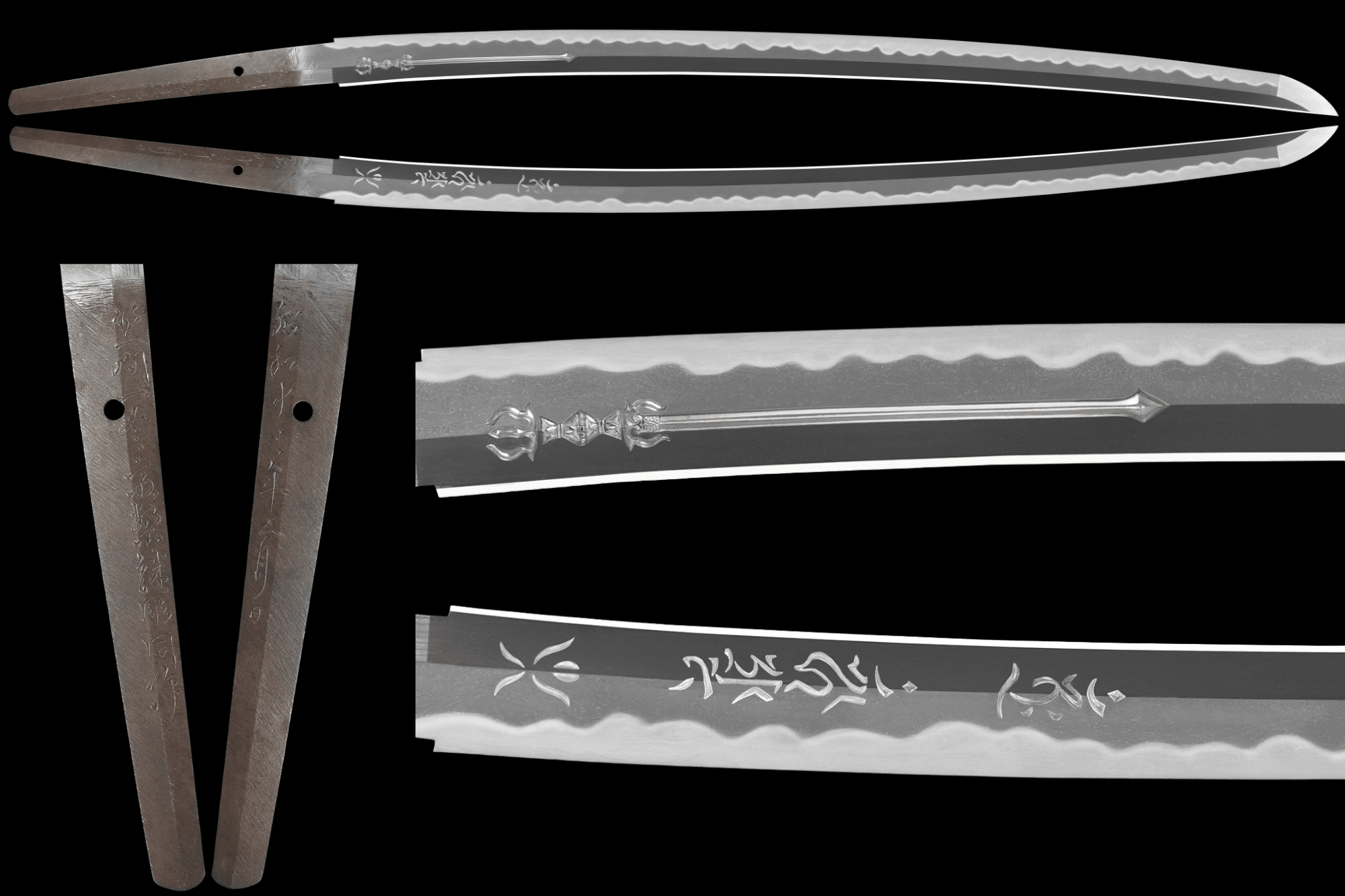
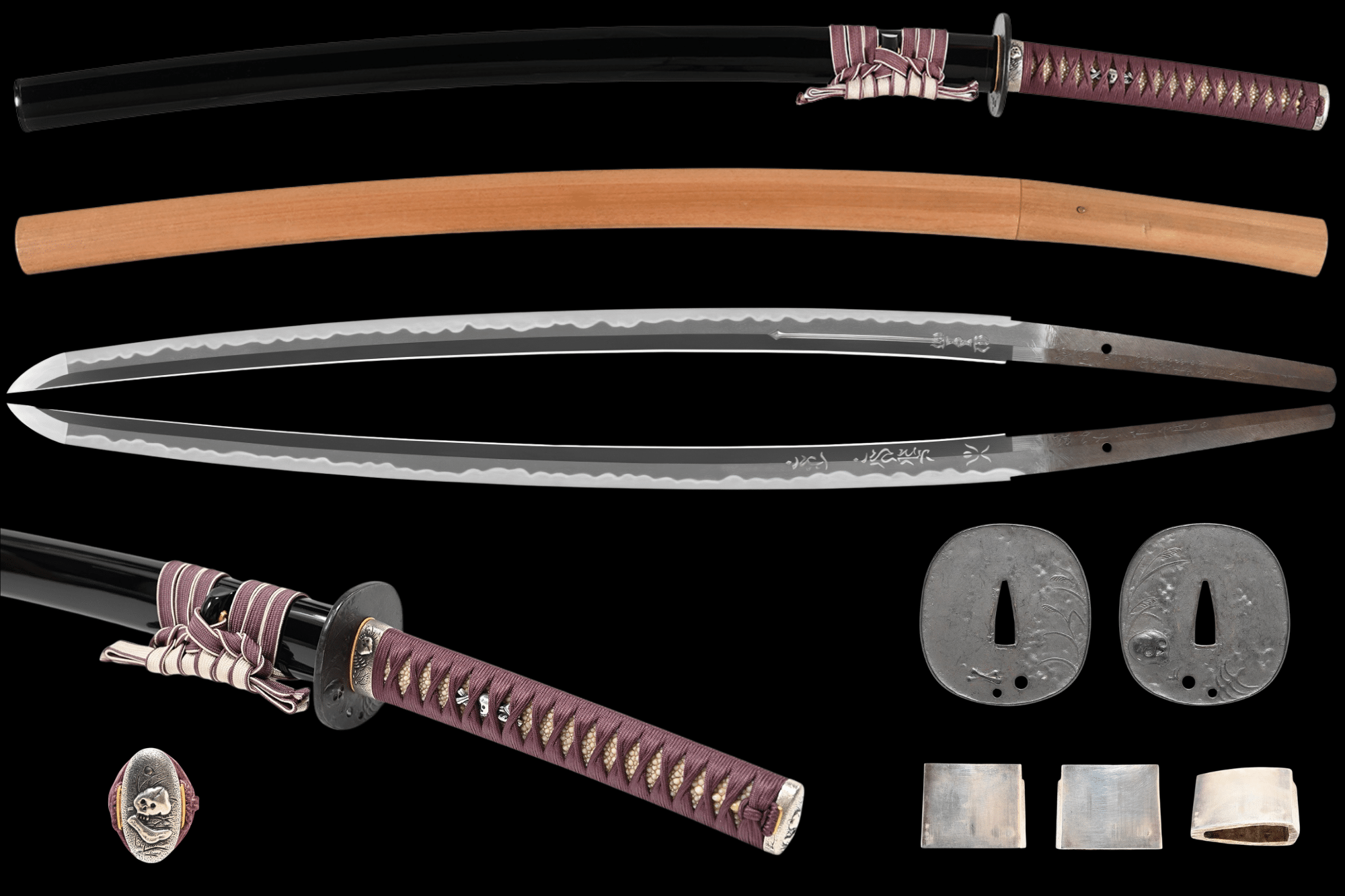
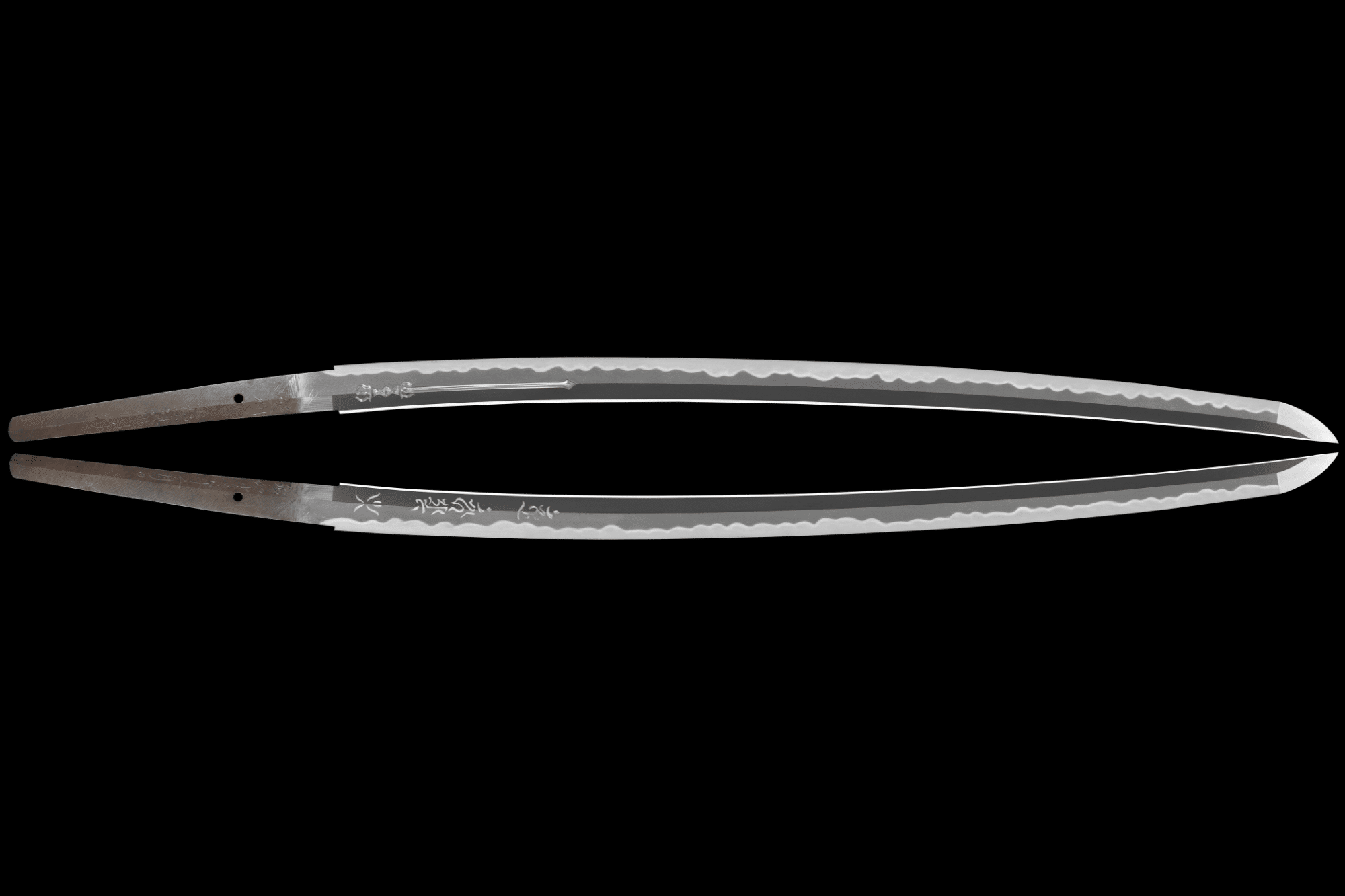
The blade displays powerful and dignified proportions, with a wide motohaba and healthy kasane, giving it an authoritative presence in hand. The hamon is clear and well-controlled, reflecting Shigetsugu’s mastery of classical techniques refined through his Gassan school background.
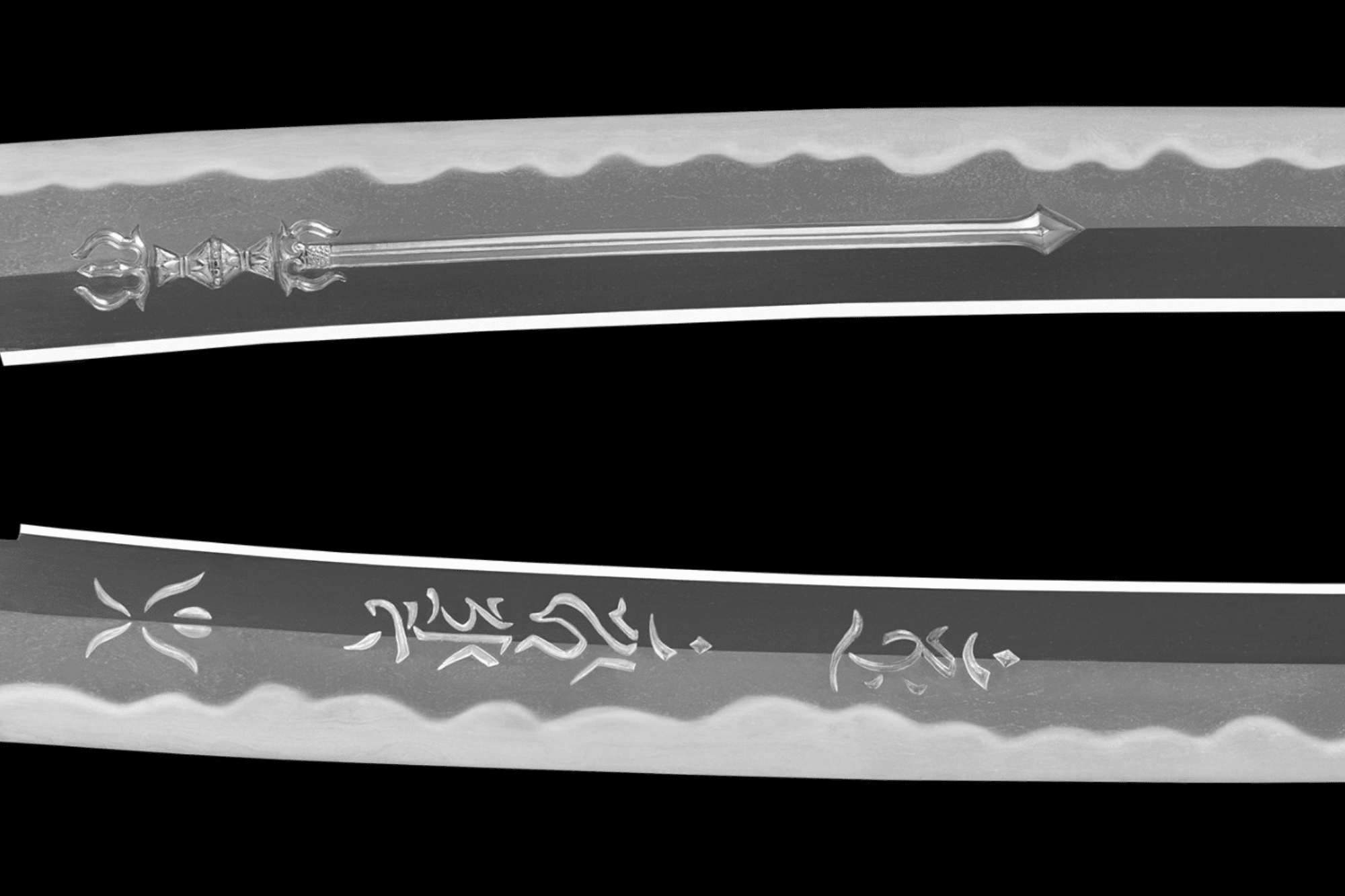
Of particular note is the horimono, executed to an exceptionally high standard. One side features a Ken (sacred Buddhist sword), symbolizing wisdom cutting through ignorance, while the reverse bears Bonji (Siddham Sanskrit) associated with Fudō Myōō, the Immovable Wisdom King. This combination is deeply rooted in Esoteric Buddhism and was traditionally chosen for blades intended as spiritual protectors. Such orthodox religious iconography is highly respected and underscores the seriousness and cultural depth of the work.
The blade is further distinguished by finely executed horimono, carved with clear intent and orthodox symbolism. One side features a Ken (sacred Buddhist sword), representing wisdom cutting through ignorance and illusion. The reverse bears Bonji (Siddham Sanskrit) associated with Fudō Myōō, the Immovable Wisdom King. This combination is deeply rooted in Esoteric Buddhism and was traditionally chosen for blades intended as spiritual protectors. Such carvings were reserved for informed patrons and accomplished smiths and add both cultural depth and collector significance to the sword.
Blade length (Nagasa): 68.0 cm (just under 2 shaku 2 sun 4 bu)
Sori (curvature): 1.8 cm
Motohaba (width at hamachi): 3.4 cm
Motokasane (thickness at hamachi): 7.2 mm
Sakihaba (width at kissaki): 2.35 cm
Sakikasane (thickness at kissaki): 5.5 mm
Mekugi-ana: 1
Period (Jidai): Shōwa era, circa 1938
Place of forging: Tokyo, Japan
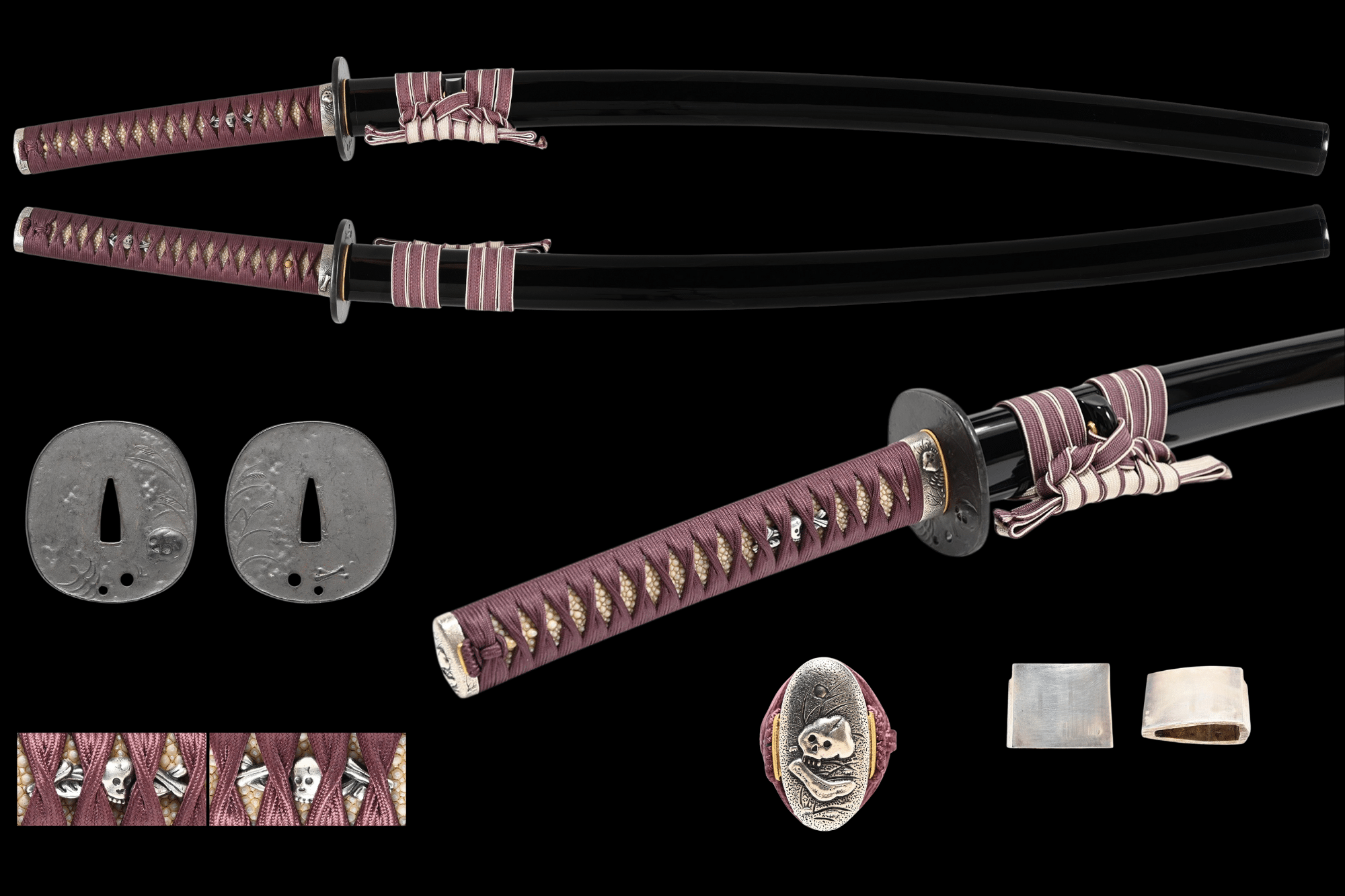
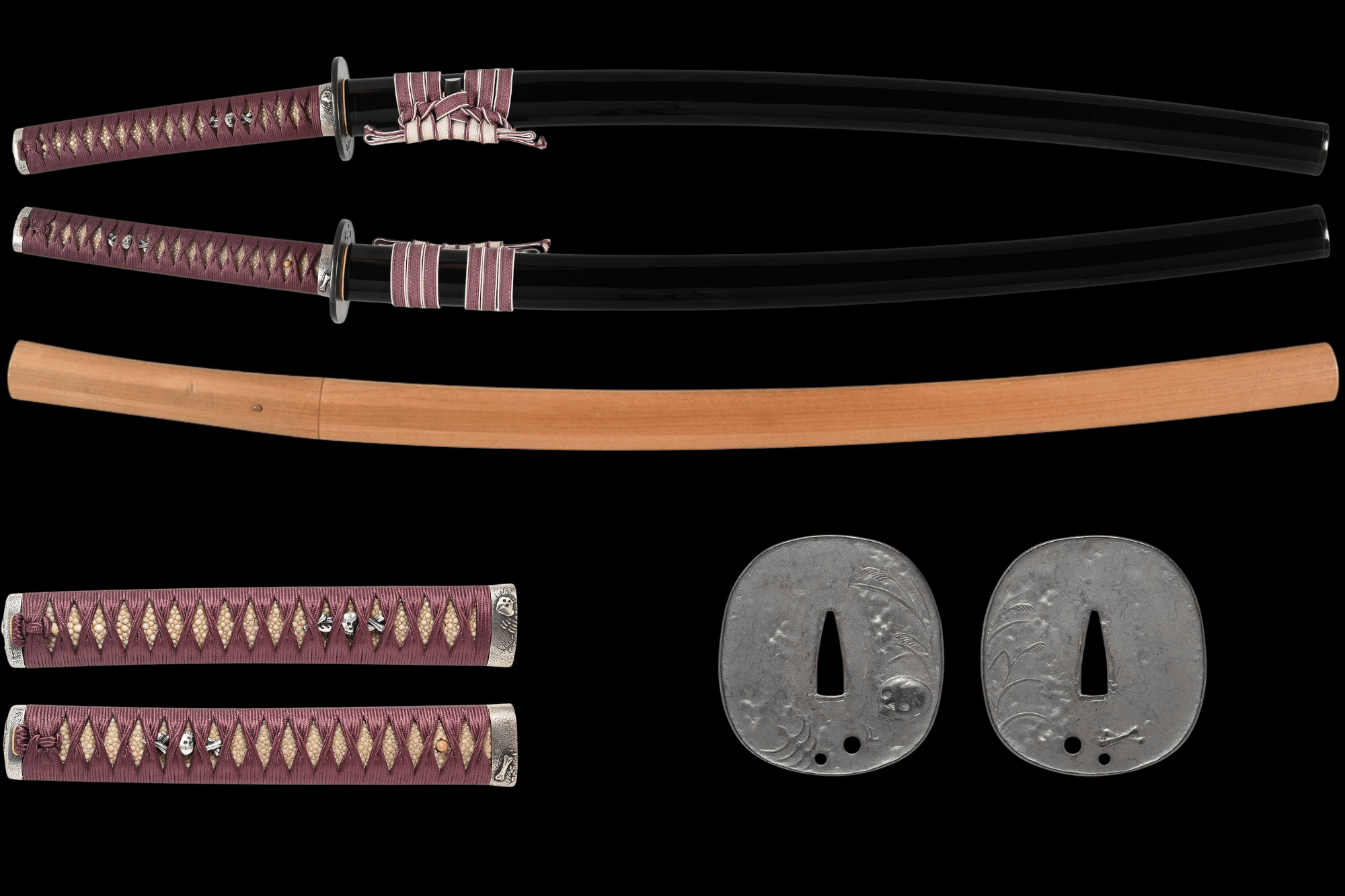
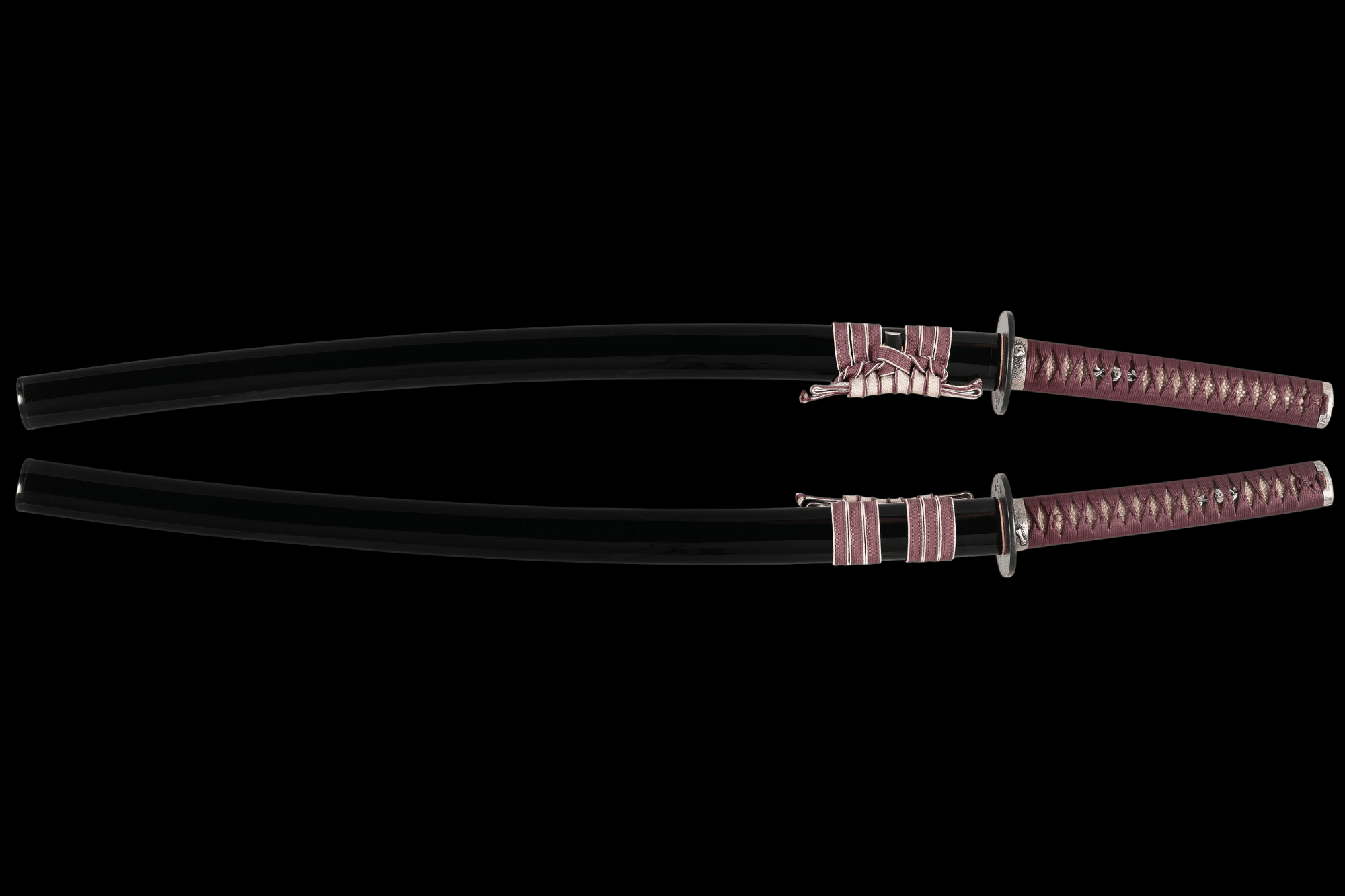
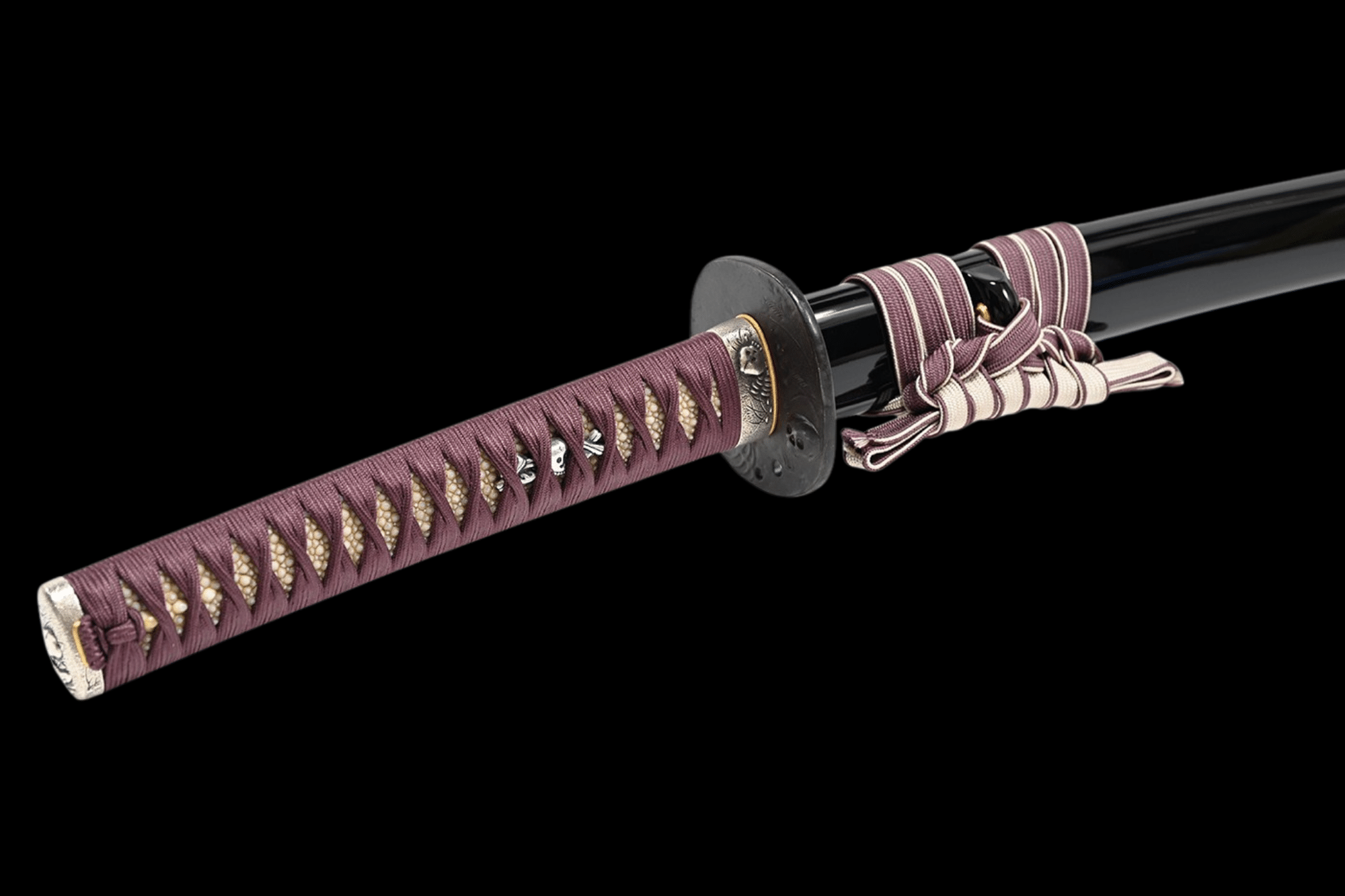
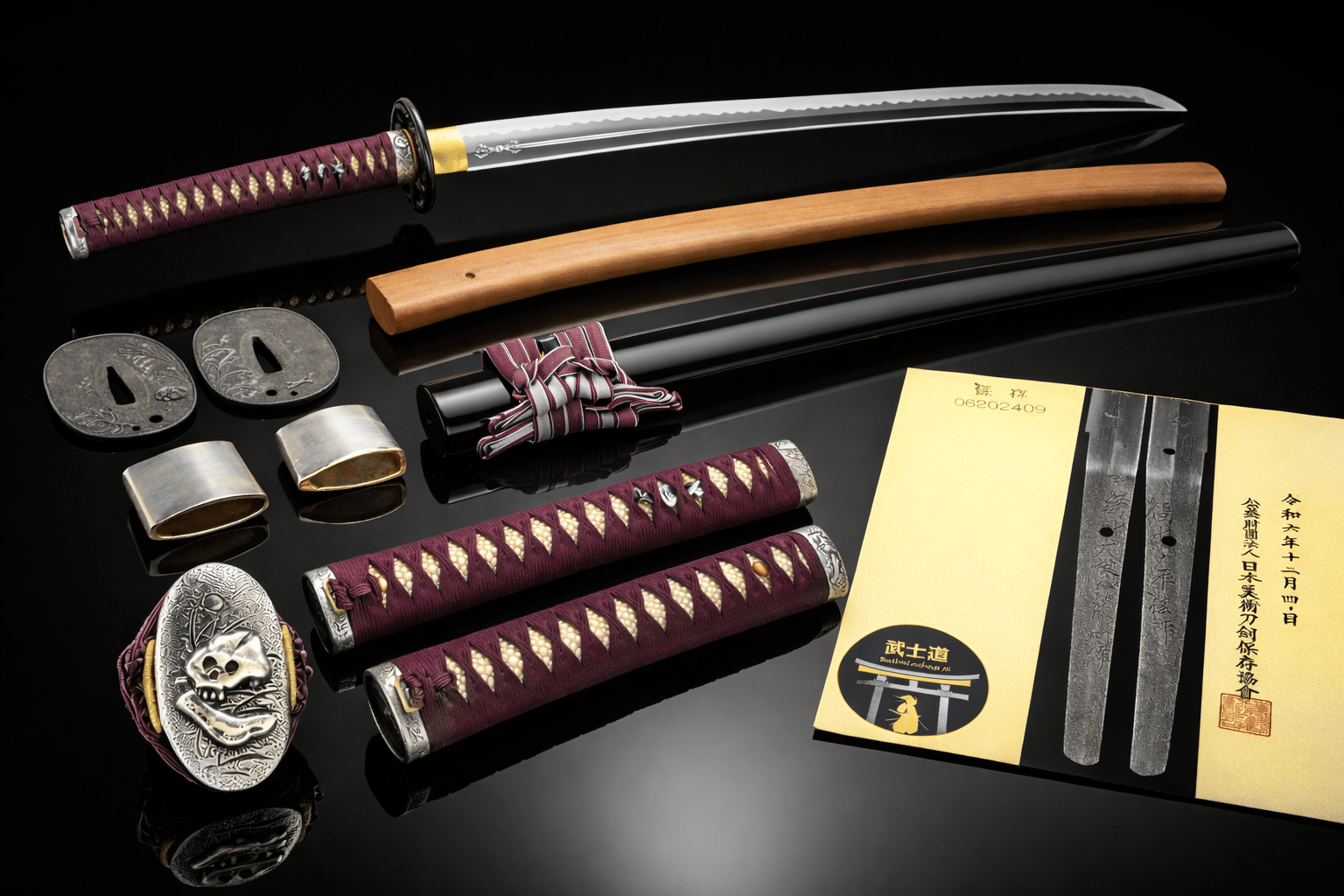
The sword is presented in a striking and elegant koshirae, centered around a deep black saya, which gives the piece a powerful and restrained presence. The tsuba complements the overall aesthetic, while the mountings (kashira and menuki) are executed in silver with a skull motif. This rare and bold symbolism reflects themes of impermanence and mortality, resonating strongly with both samurai philosophy and Buddhist thought. The koshirae is exceptionally well balanced and enhances the overall character of the blade, making it as compelling visually as it is historically.
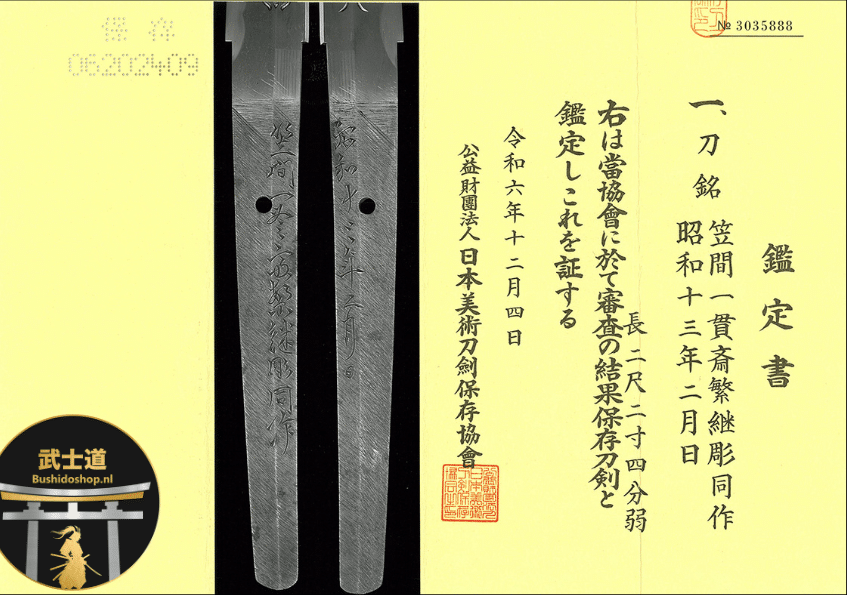
This katana is accompanied by an official NBTHK Hozon certificate, issued by the NBTHK (Nihon Bijutsu Tōken Hozon Kyōkai), Japan’s foremost authority on Japanese swords. The NBTHK was established in 1948 to protect and preserve swords as cultural art objects and operates under governmental cultural supervision.
After formal examination (shinsa) by multiple senior experts, this blade was certified as Hozon Tōken “A Sword Worthy of Preservation.”
This confirms:
The authenticity of the blade
Acceptance of the mei as genuine
Recognition of artistic and historical value
Classification as a true Japanese art sword.
For Shōwa period swords, NBTHK Hozon status is particularly meaningful, as only a limited number of traditionally forged katana meet the required standards.
Swords by Kasama Ikkansai Shigetsugu are increasingly sought after by advanced collectors. This example combines strong pre war workmanship, meaningful religious horimono, and modern NBTHK authentication. It represents an important historical link between Imperial era swordmaking and the preservation movement that followed the war.
This katana is therefore not only a powerful and beautiful blade, but also a documented cultural artifact with long term collector and investment appeal.