




Samurai Armor of Gondo Heizaemon Yoshimasa
Kurume Domain, Chikugo Province
Early Edo Period, circa 1680–1700
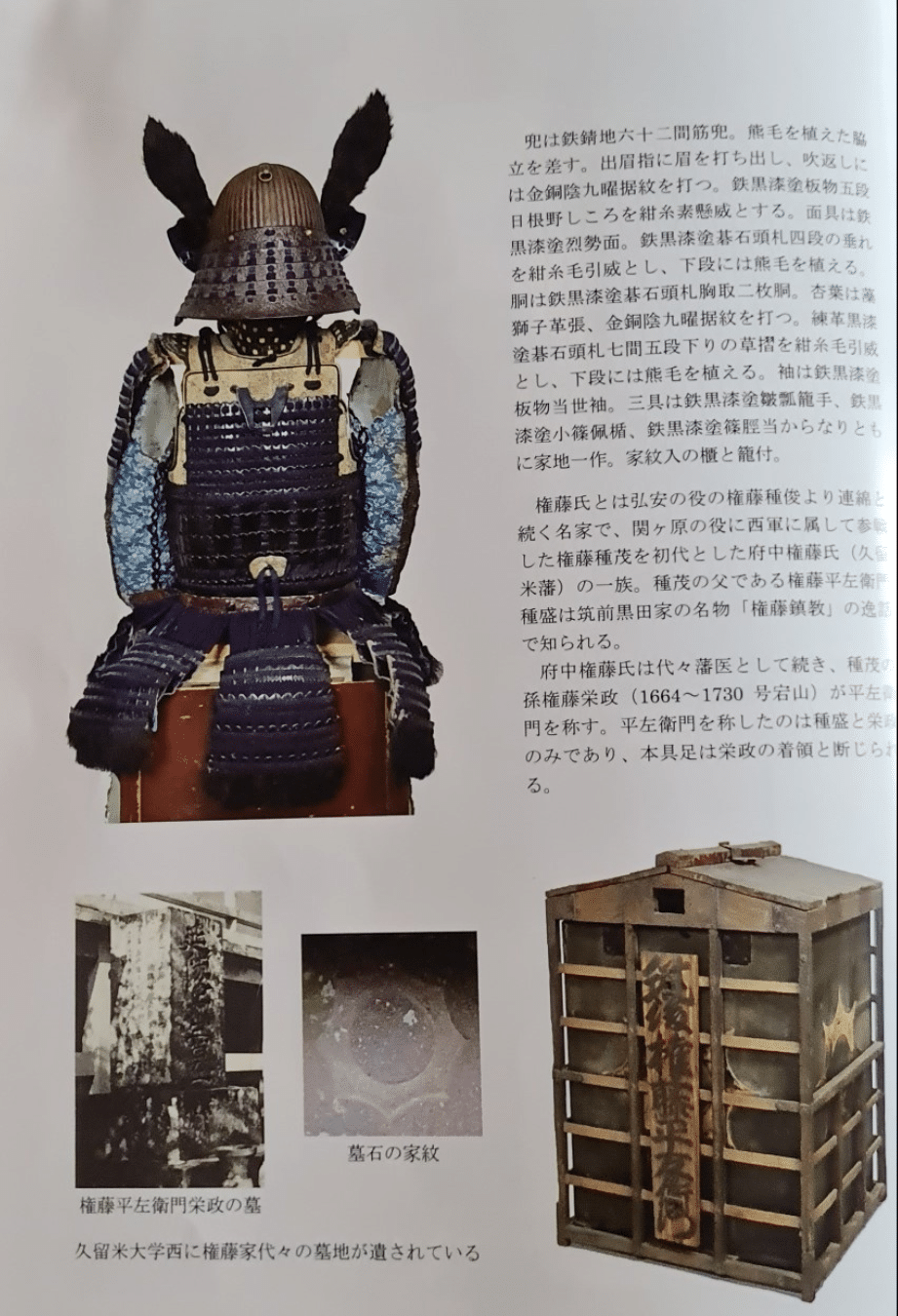
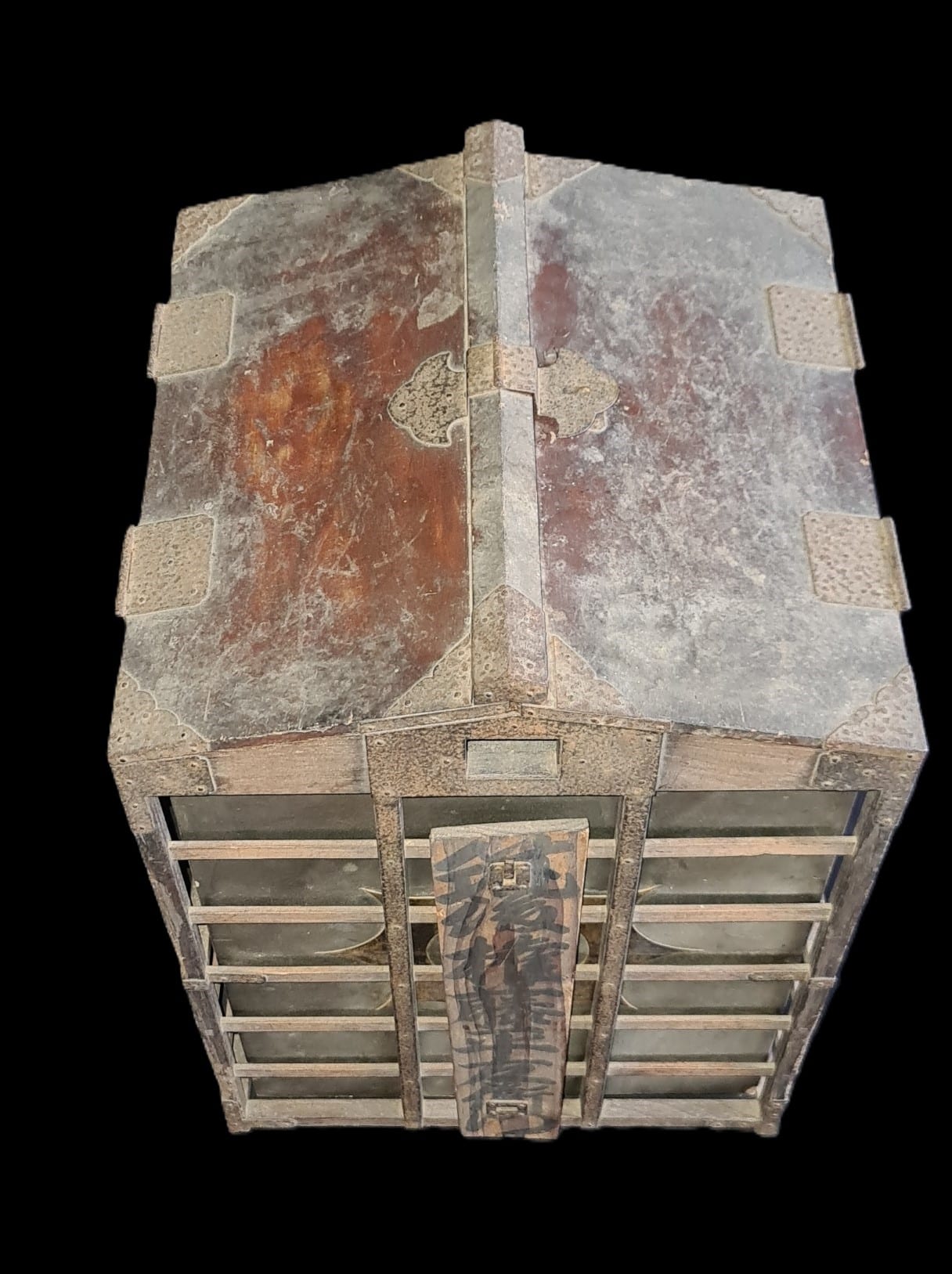
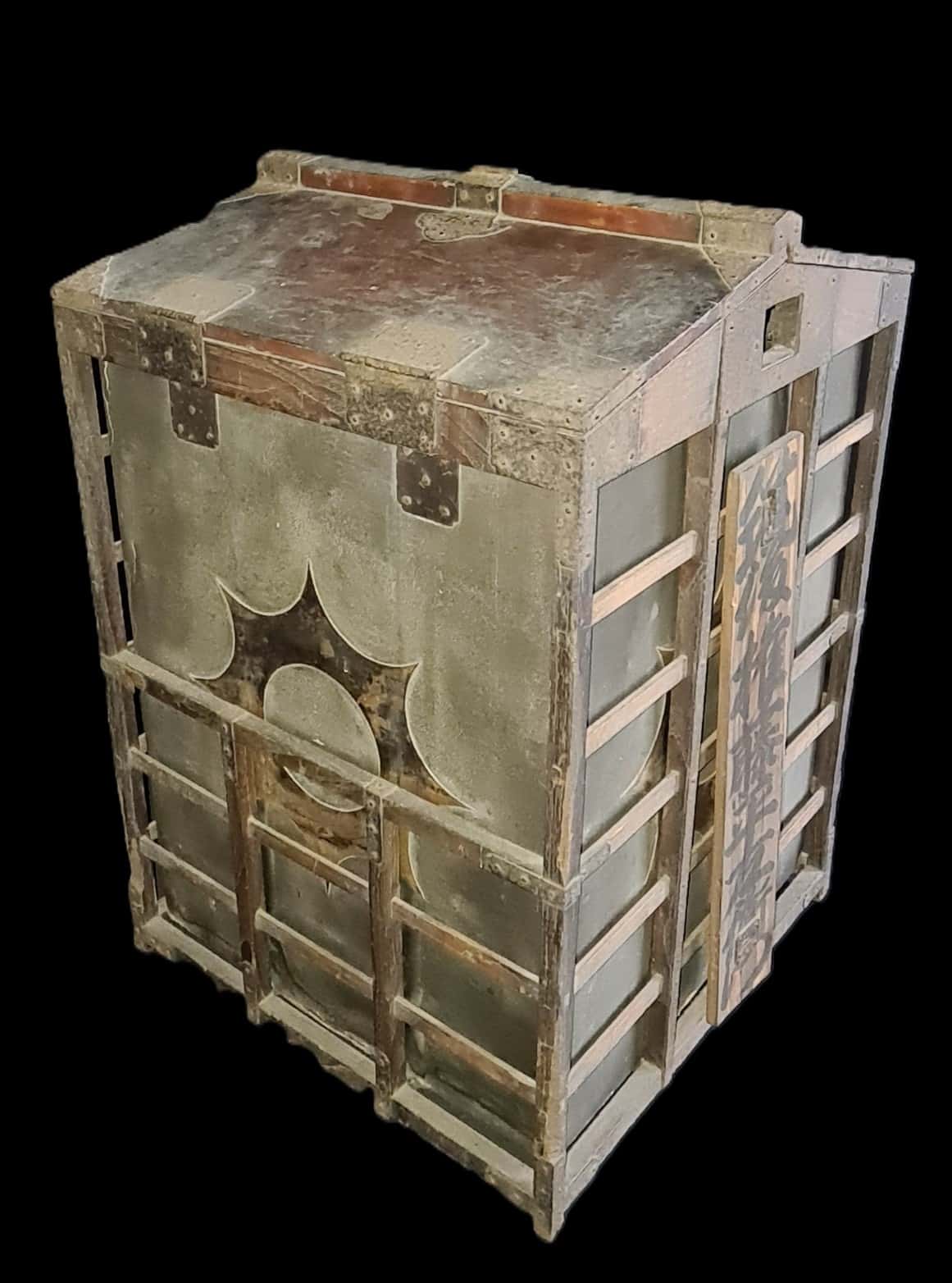
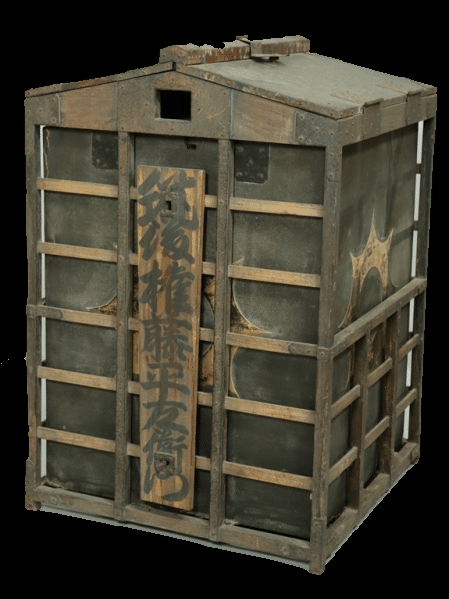
This remarkable suit of samurai armor belonged to Gondo Heizaemon Yoshimasa, a hereditary retainer of the Arima clan, daimyō of the Kurume domain in Chikugo Province, present-day Fukuoka Prefecture. Dating from the late seventeenth century, this armor stands as a rare and evocative survivor of the early Edo period, directly connected to a named samurai who served within the disciplined hierarchy of Tokugawa Japan.
Gondo Heizaemon Yoshimasa was born in 1664, during a time when the samurai class had transitioned from the chaos of the Sengoku wars to the ordered society of the Tokugawa shogunate. Although the Edo period is often described as an era of peace, the warrior class continued to embody martial readiness, loyalty, and discipline. Samurai served not only as warriors but also as administrators, magistrates, and guardians of regional stability. Raised within this tradition, Heizaemon represented the ideal of the loyal retainer, devoted to the service of his lord and domain.
The Gondo family held a respected position within the retainer structure of the Arima clan. As hereditary samurai, they were entrusted with responsibilities that combined military preparedness with administrative oversight. Their duties included the defense of domain territories, the enforcement of order, and the management of lands that sustained the domain’s prosperity. Within this structure, Heizaemon was remembered as a skilled swordsman and a disciplined warrior whose life embodied the martial ethos of the samurai class.
The armor itself was prepared during his early adulthood, around 1680–1700, when Heizaemon entered active service. It represents a refined example of tōsei gusoku, the “modern armor” style that emerged during the late Sengoku period and continued into the Edo era. Such armor balanced protection with mobility, reflecting the needs of warriors trained in sword combat while maintaining the imposing presence expected of a samurai retainer.
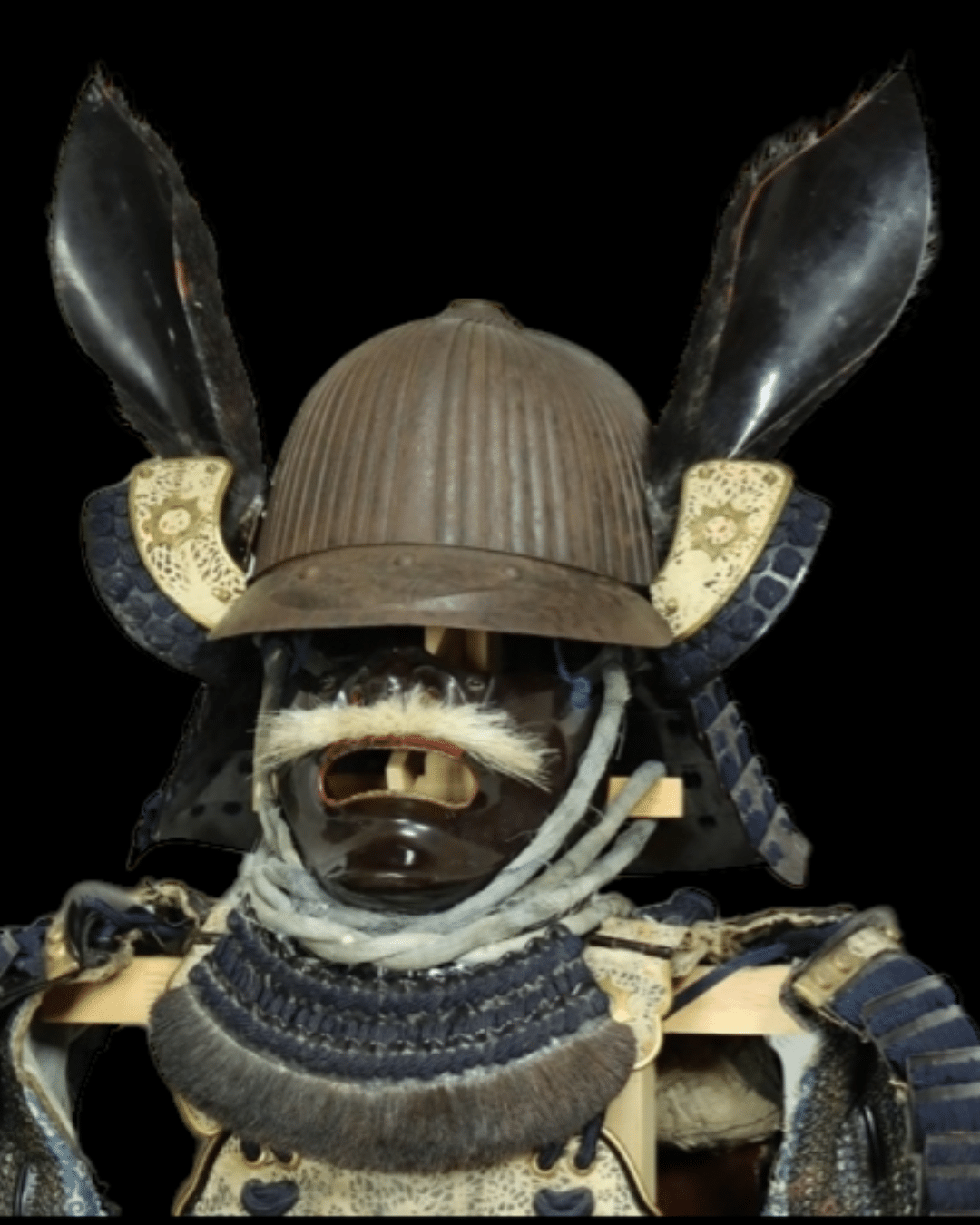
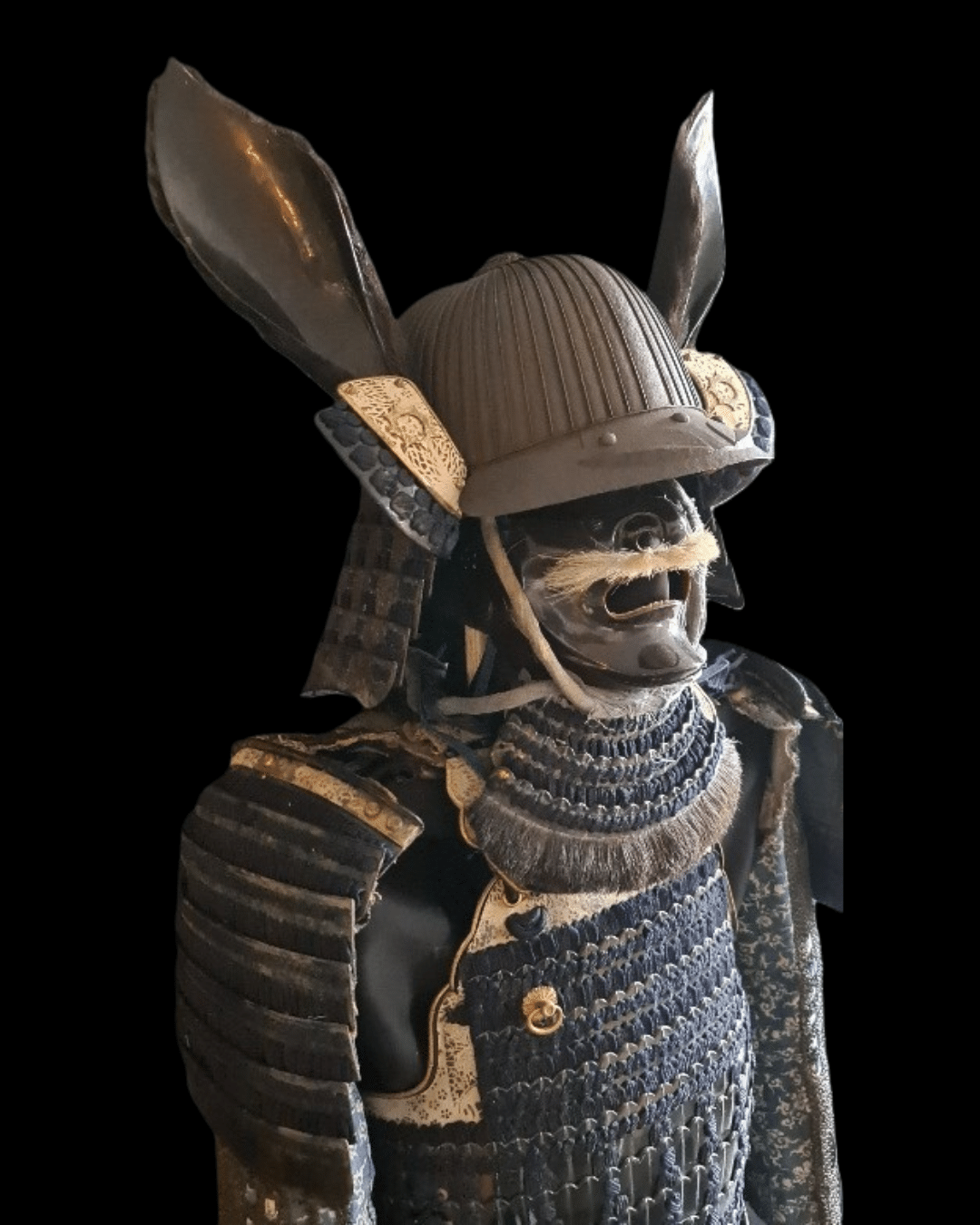
At the center of the armor is a powerful sujibachi kabuto, constructed from sixty-two iron plates skillfully riveted together to form a strong yet elegant helmet bowl. The pronounced ridges of the helmet emphasize both structural strength and visual authority. The kabuto is further enhanced with wakidate side crests, which served not only as decorative elements but also as symbols of identity and status, marking the wearer as a man of rank within the domain hierarchy.
Protecting the face is a striking ressei menpō, forged in iron and finished in deep black lacquer. The mask forms a fierce expression intended to intimidate opponents on the battlefield while simultaneously concealing the identity of the wearer. The lacquered surface protects the iron from corrosion while enhancing the dramatic presence of the armor when worn.
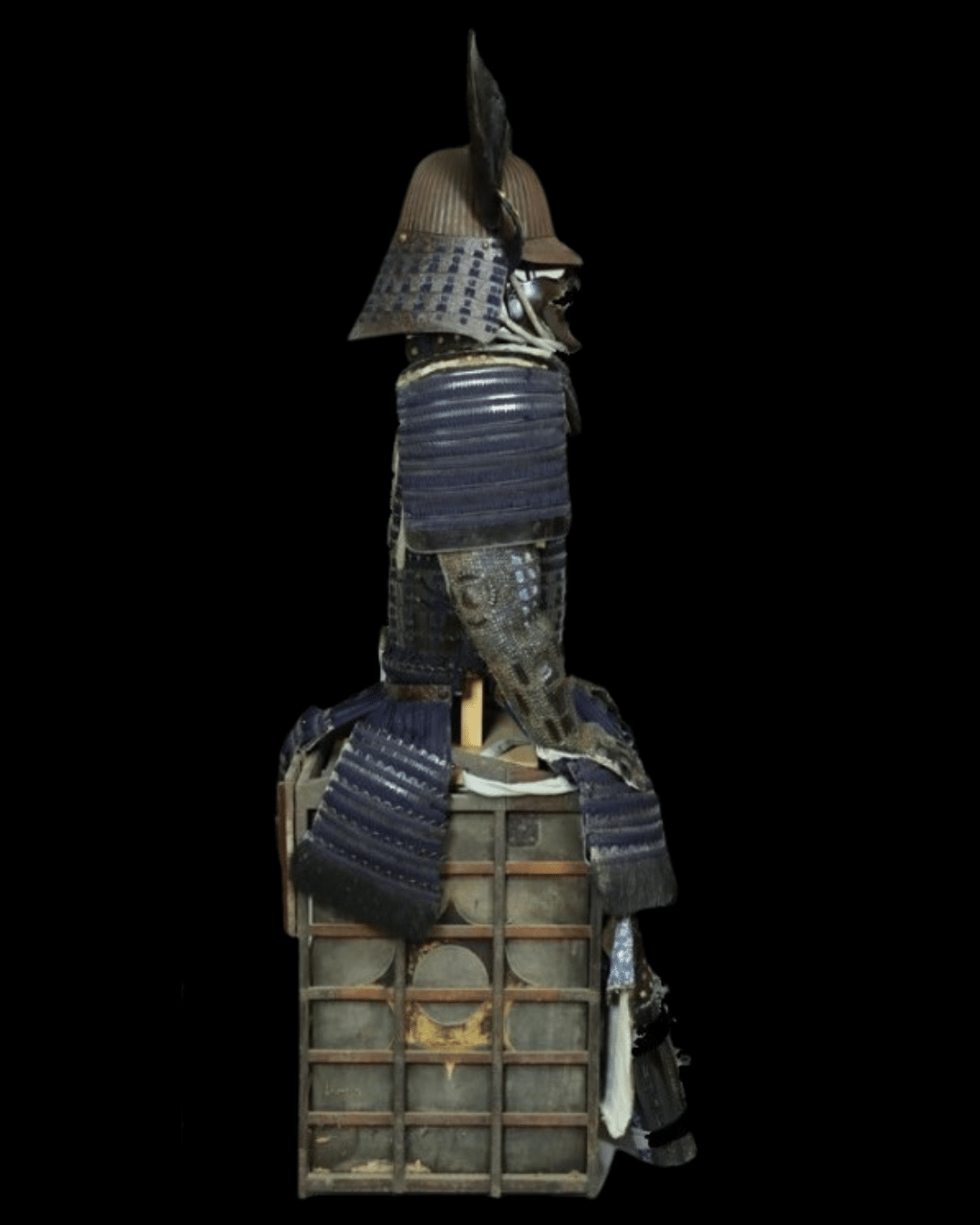
The cuirass is a goishigashira-zane two-piece dō, composed of layered iron plates finished in black lacquer. This construction provided a careful balance between flexibility and protection, allowing the wearer to move freely while maintaining strong defense of the torso. Such armor reflects the practical evolution of Japanese armor design, combining the durability developed during the warfare of the Sengoku era with the refined aesthetics of the Edo period.
Broad tōsei sode guard the shoulders, representing the continuation of plate armor designs that allowed for both protection and mobility. The arms are protected by shiwafukube kote, combining iron plates with flexible chain and textile elements that permitted the swift movement required for swordsmanship. The thighs are shielded by koshino haidate, articulated armor elements designed to protect the upper legs without hindering mobility, while the lower legs are secured by shino suneate, providing firm protection for the shins.
Together these components form a complete and harmonious suit of armor that was both functional and ceremonial, embodying the dignity and readiness expected of a samurai retainer in service to his lord.
Gondo Heizaemon Yoshimasa remained in service to the Kurume domain throughout his life and died in 1730, leaving behind the legacy of a loyal warrior of the Arima clan. The Arima family governed the Kurume domain throughout the Edo period and were known for their disciplined administration and loyalty to the Tokugawa shogunate. Situated in northern Kyushu, the domain held strategic importance and required capable retainers to ensure stability, defense, and governance.
Within this structure, the Gondo family served as trusted vassals responsible for maintaining the authority and security of the domain. This armor stands today as a direct witness to that history, preserving the memory of a samurai who lived according to the ideals of loyalty, discipline, and martial honor.
More than a protective suit, this armor represents the enduring identity of the samurai class during the height of Tokugawa Japan. Its craftsmanship reflects the refined aesthetics of the Edo period, while its historical association with Gondo Heizaemon Yoshimasa gives it a deeply personal connection to the warrior tradition of Kyushu.
As a named and historically connected suit of armor from the Kurume domain, it offers collectors and scholars a rare opportunity to encounter an authentic relic of the samurai world—an object that once stood ready in the service of a lord and now remains as a powerful testament to the culture, loyalty, and martial heritage of Japan’s warrior class.