

Japanese Naval Katana Minatogawa Shrine
Izumo-jū Kawashima Tadayoshi (First Generation)
NBTHK Hozon Tōken
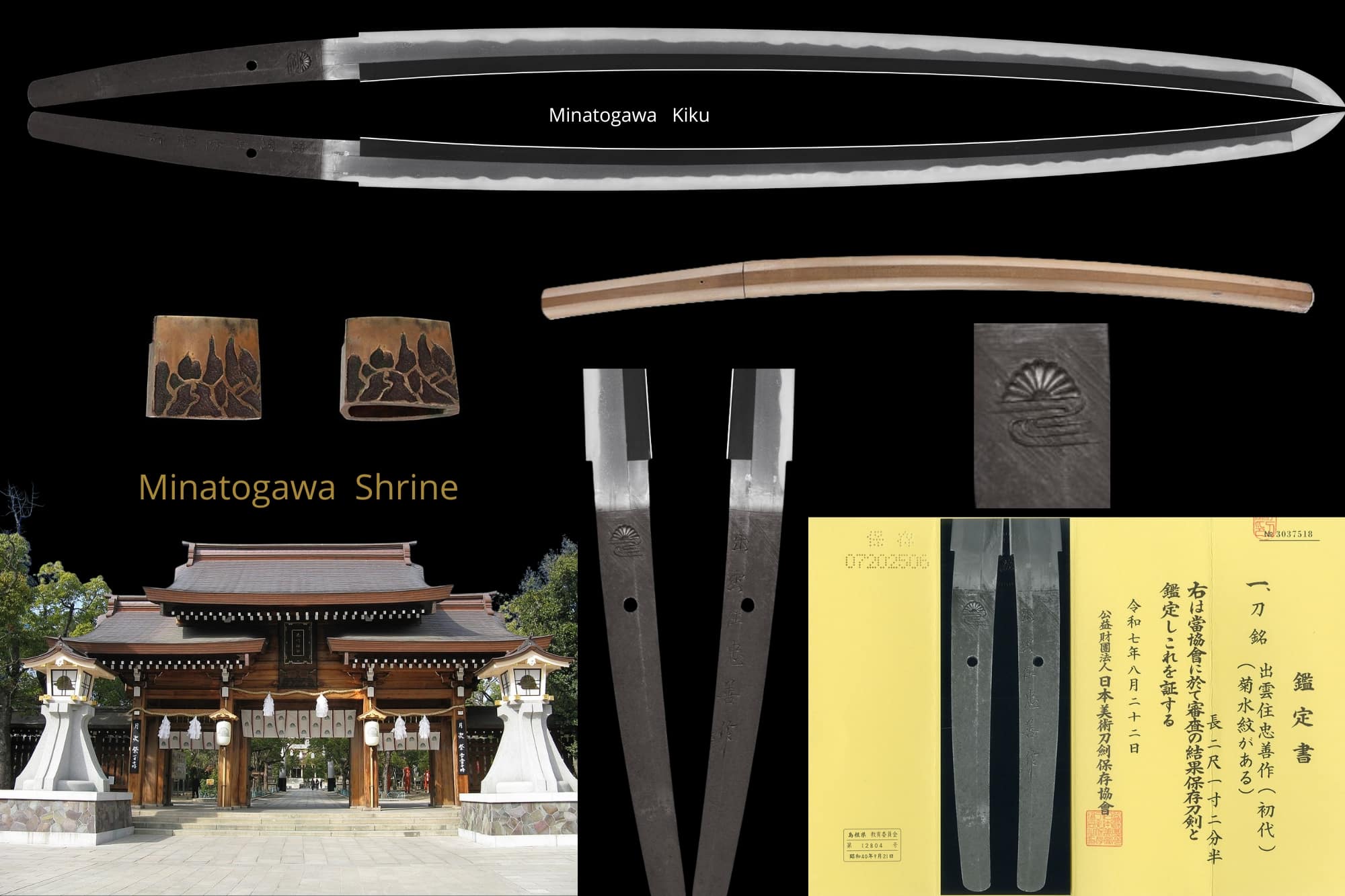
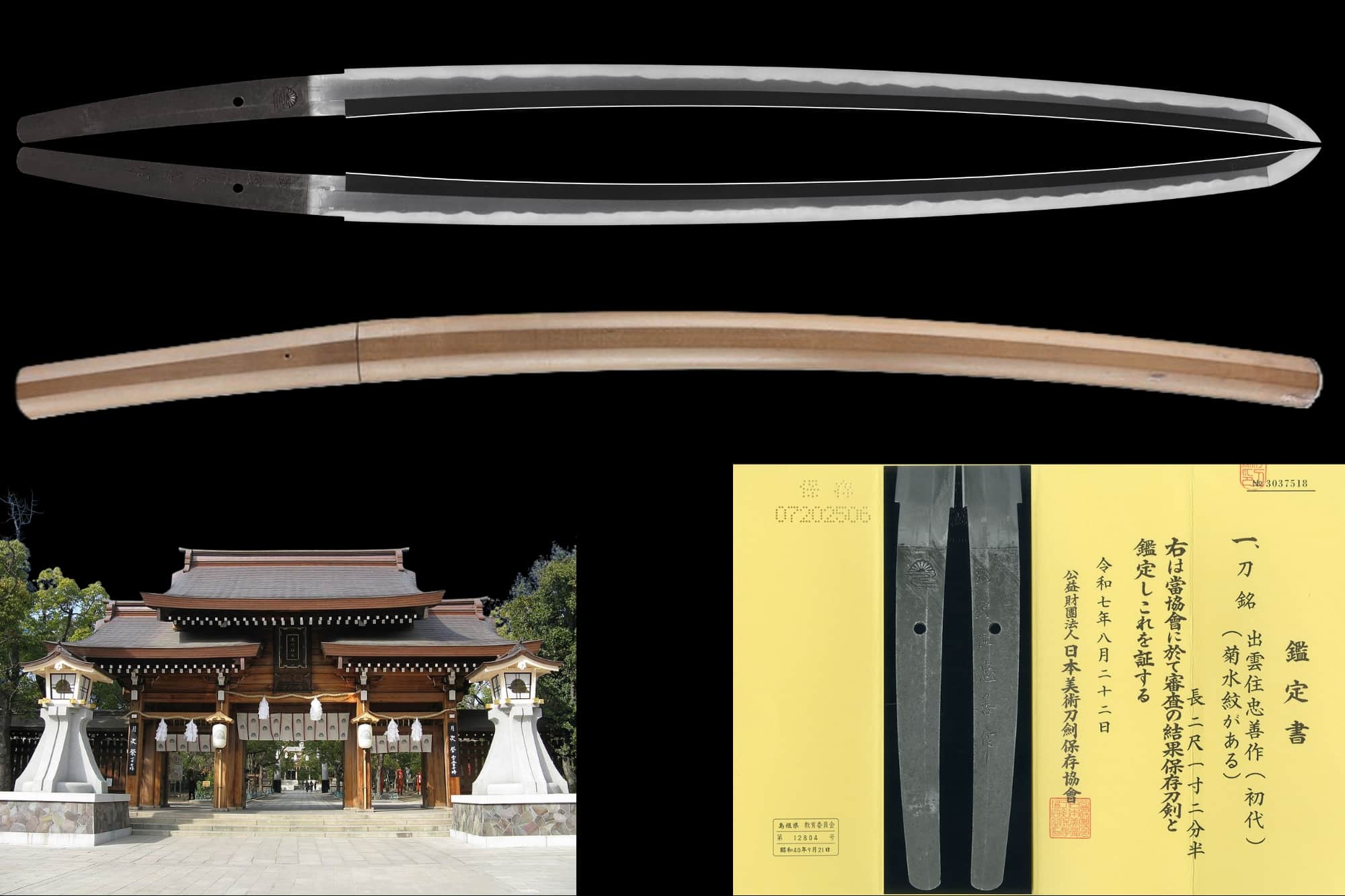
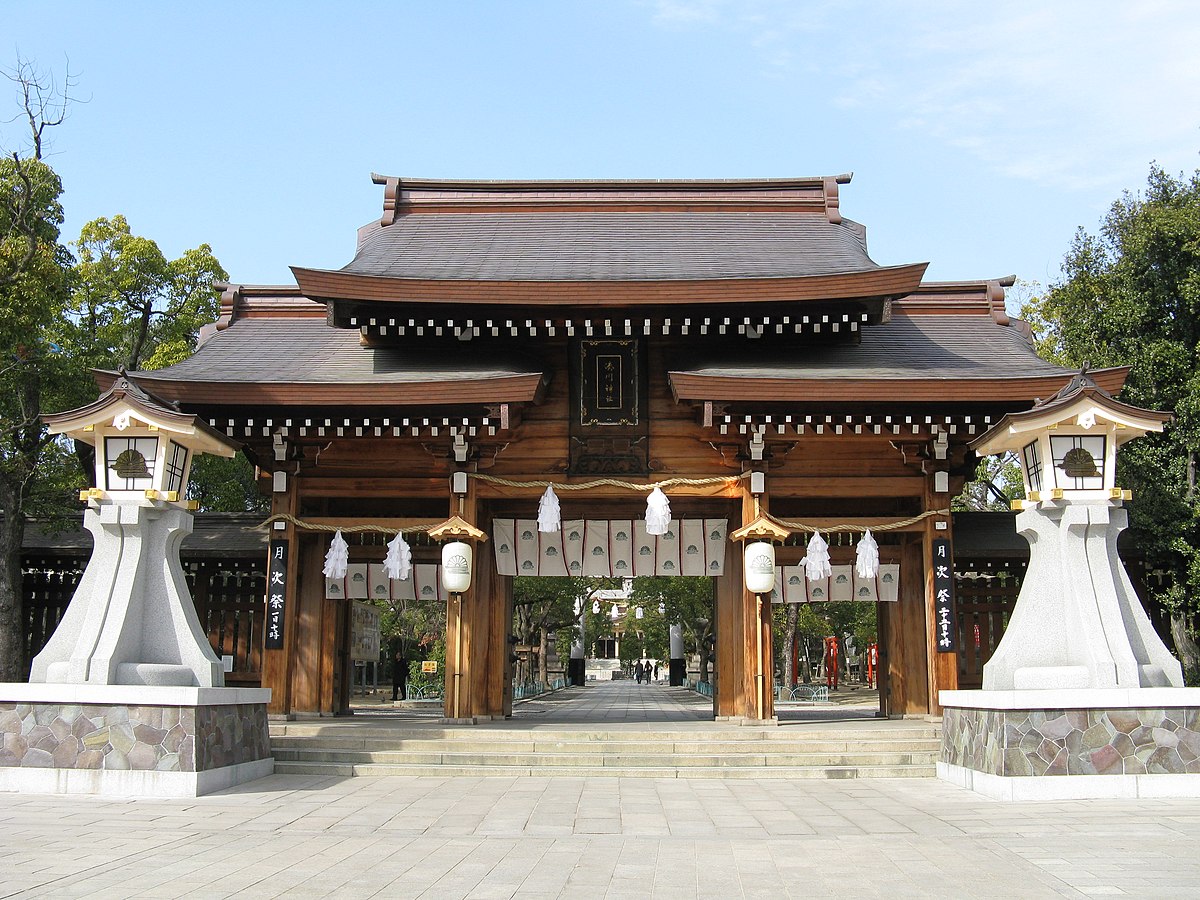
A rare and historically important Japanese naval katana forged by Izumo-jū Kawashima Tadayoshi, first generation, bearing the distinctive Minatogawa Shrine naval inscription on the tang. Blades associated with Minatogawa Shrine belong to a small and elite group of wartime gendaitō produced under the auspices of the Imperial Japanese Navy in Kobe during the Pacific War. Unlike mass-produced military swords, these blades were traditionally forged by carefully selected master swordsmiths and represent the continuation of the classical Japanese sword tradition during the wartime era.
This sword is understood to have been forged when Kawashima Tadayoshi was invited to Minatogawa Shrine to demonstrate his skill as a swordsmith. For a craftsman whose workshop was based in Izumo in Shimane Prefecture, being called to the Navy’s own shrine forge represented a significant honour and recognition of his ability. Within the context of Minatogawa Shrine production, such demonstration or invitation swords stand apart as exceptional works, linking the individual mastery of the smith to the naval sword program itself.
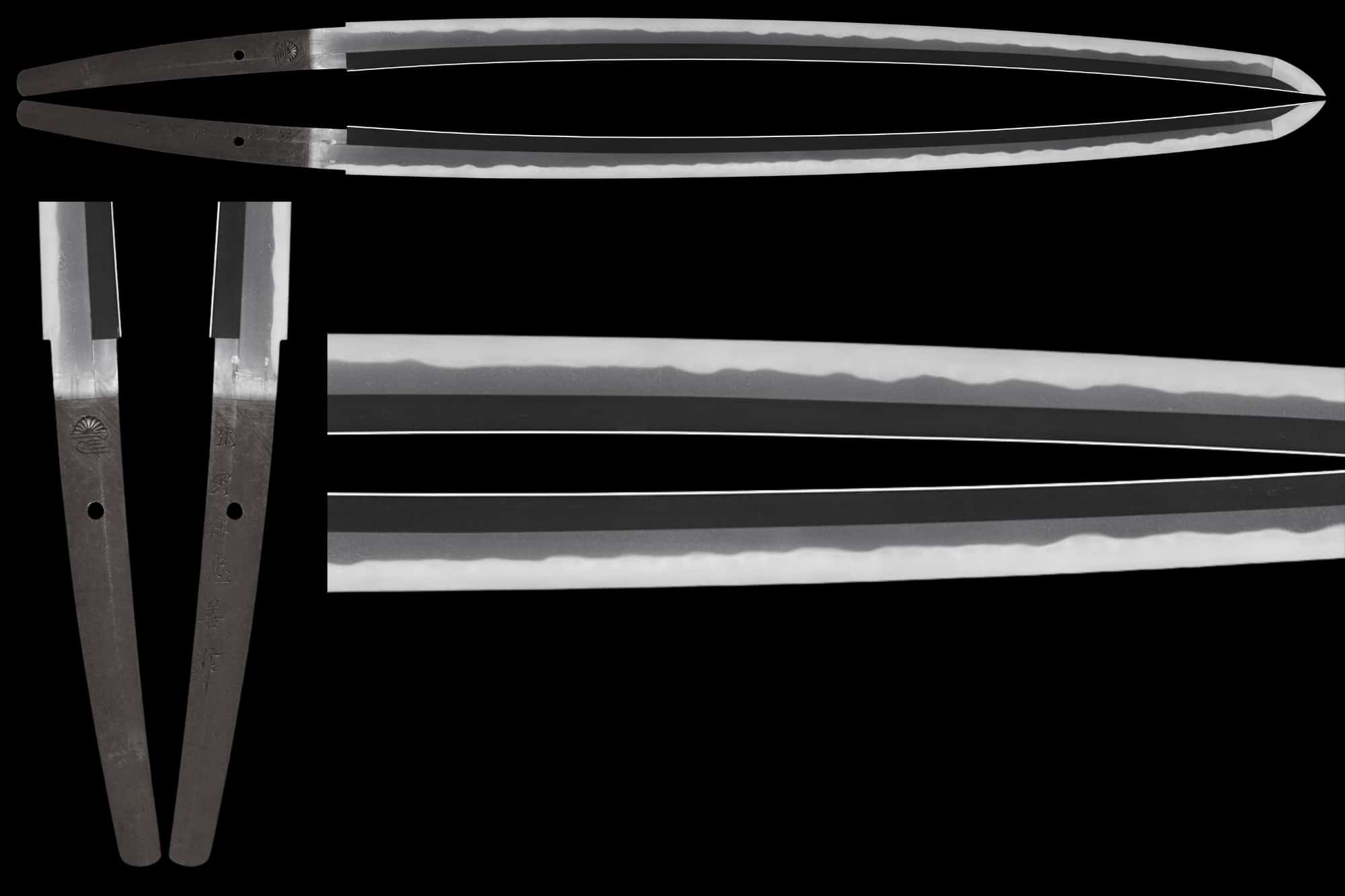
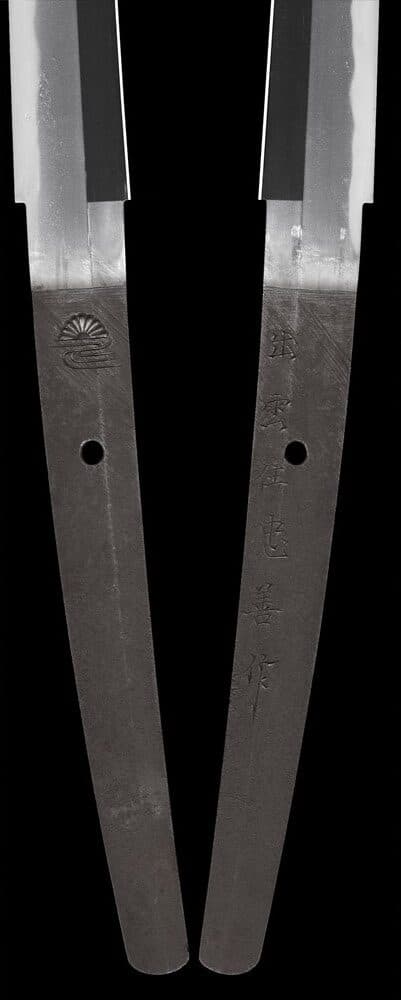
The tang carries the signature 出雲住忠善作, read as Izumo-jū Tadayoshi saku, meaning “Made by Tadayoshi, resident of Izumo.” On the back of the tang appears the Minatogawa Shrine naval mark confirming its connection to this prestigious wartime forge. Surviving Minatogawa swords are already scarce today, and examples connected to invited smiths are especially desirable among collectors of wartime gendaitō.
Kawashima Tadayoshi, whose real name was Kawashima Zenzaemon, was born in May 1892 in Shimane Prefecture. He worked actively before, during and after the Pacific War and is known for producing fully traditional hand-forged blades. After the war he continued his career as a swordsmith and entered his work in official sword exhibitions, receiving numerous prizes. Over time his skill and reputation led to his elevation to the prestigious status of Mukansa swordsmith, meaning that his work was considered to be beyond the level of ordinary competition and therefore accepted without judgement.
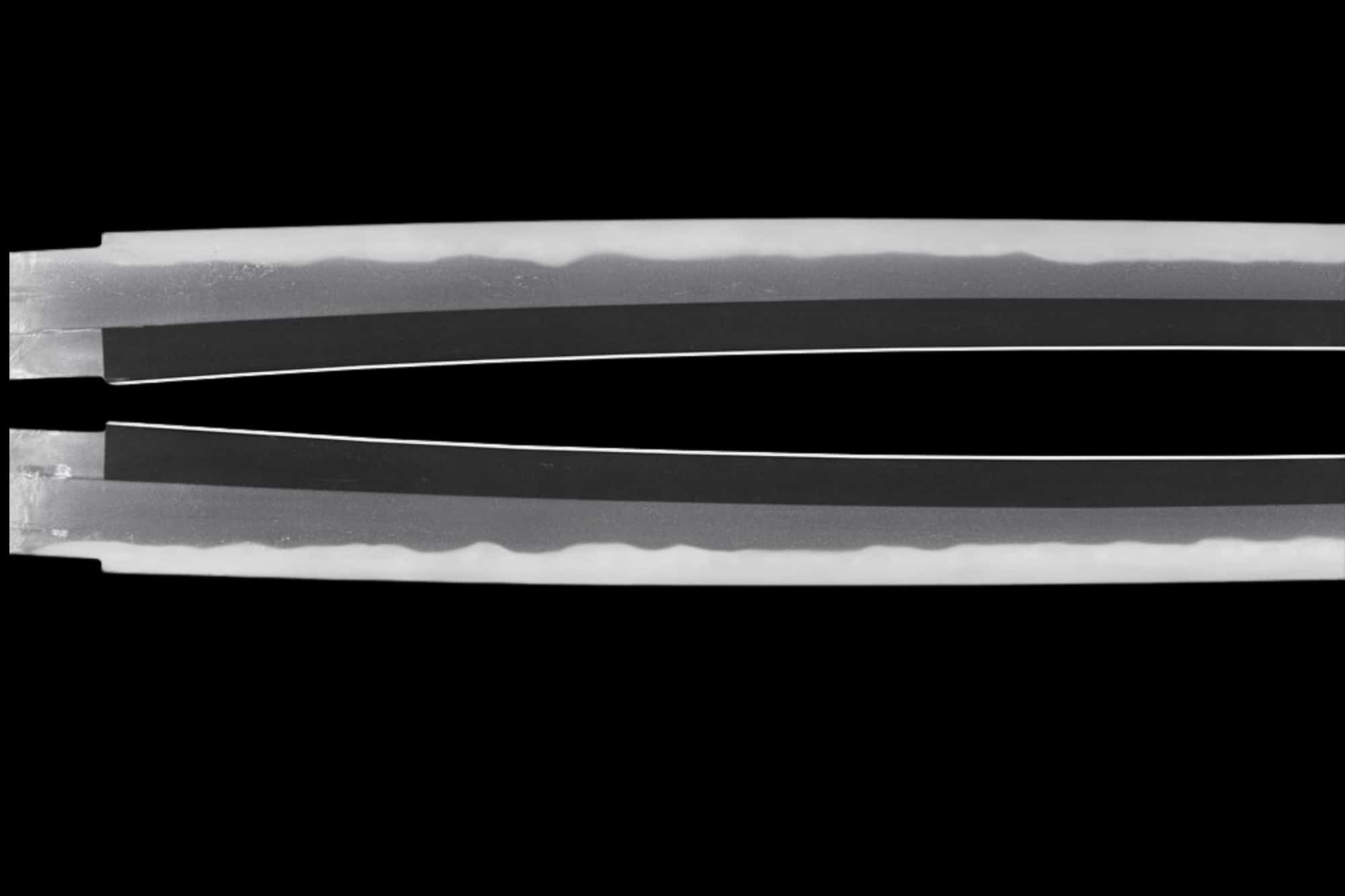
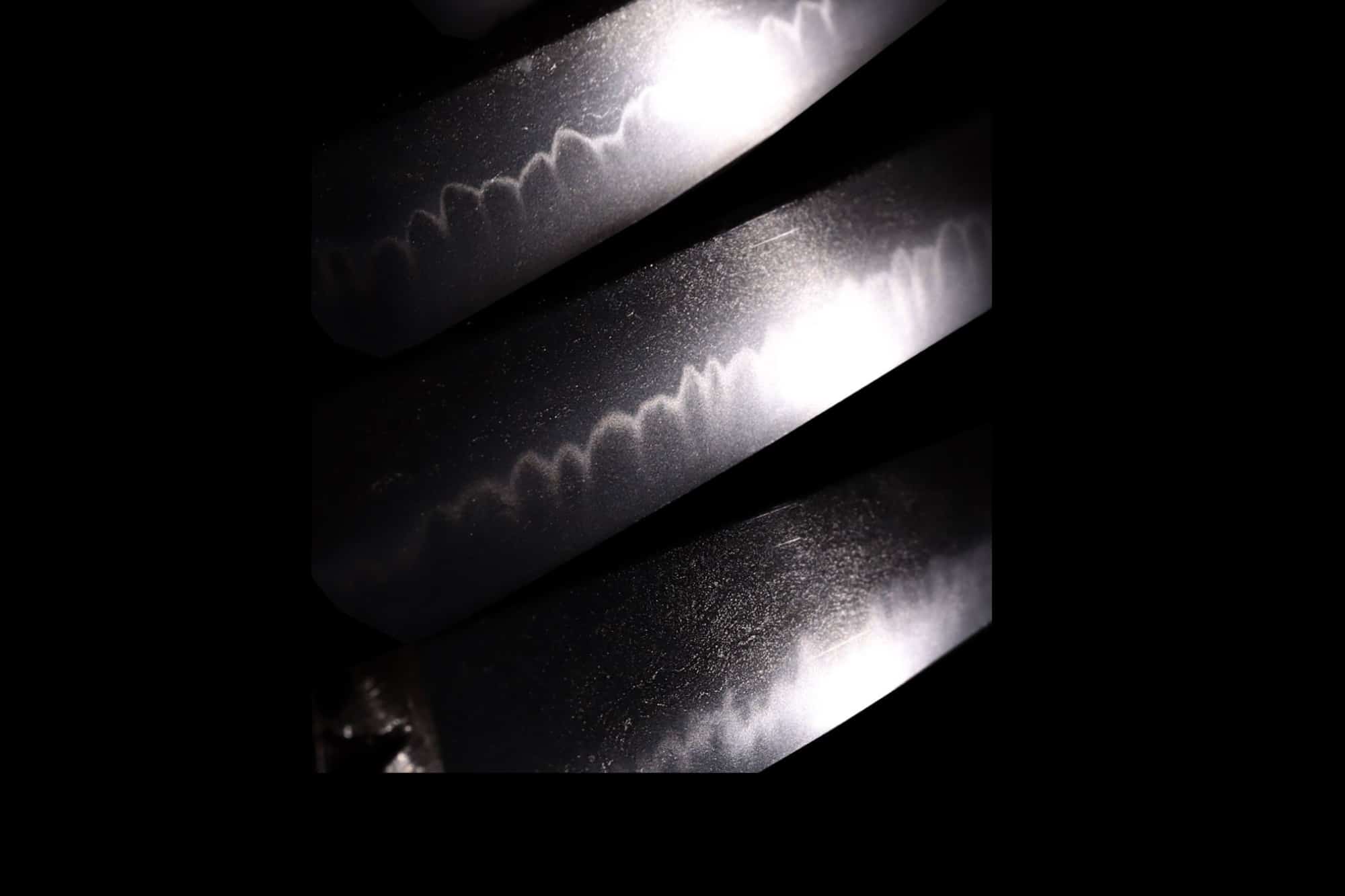
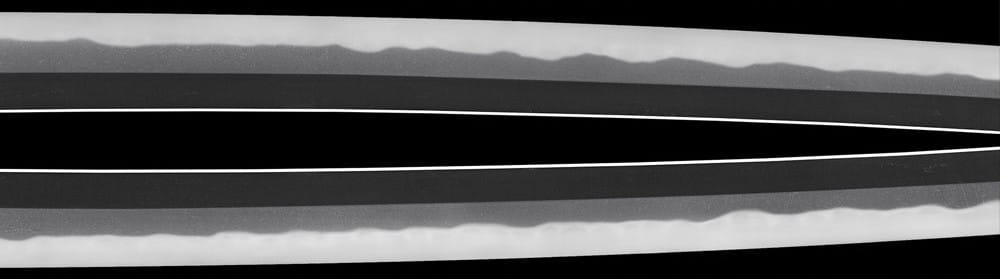
Blades by the first generation Kawashima Tadayoshi are admired for their refined forging and powerful cutting characteristics. The steel typically reveals a dense and elegant ko-itame hada forming a tight and well controlled jihada that reflects the classical traditions of Japanese swordmaking. His hamon are often bright and expressive, frequently formed in nie-based patterns with clear activity and strong ashi stepping into the ji. The overall sugata of his swords is both powerful and balanced, combining visual elegance with practical cutting geometry.
Within the corpus of his work, blades by Tadayoshi are ranked Jō-saku, indicating high quality workmanship, while their cutting ability has been described as Saijō Ō-waza, a designation derived from historical wazamono cutting rankings and indicating extremely high cutting performance. A Minatogawa Shrine sword forged by such a smith therefore represents not only artistic refinement but also functional excellence.
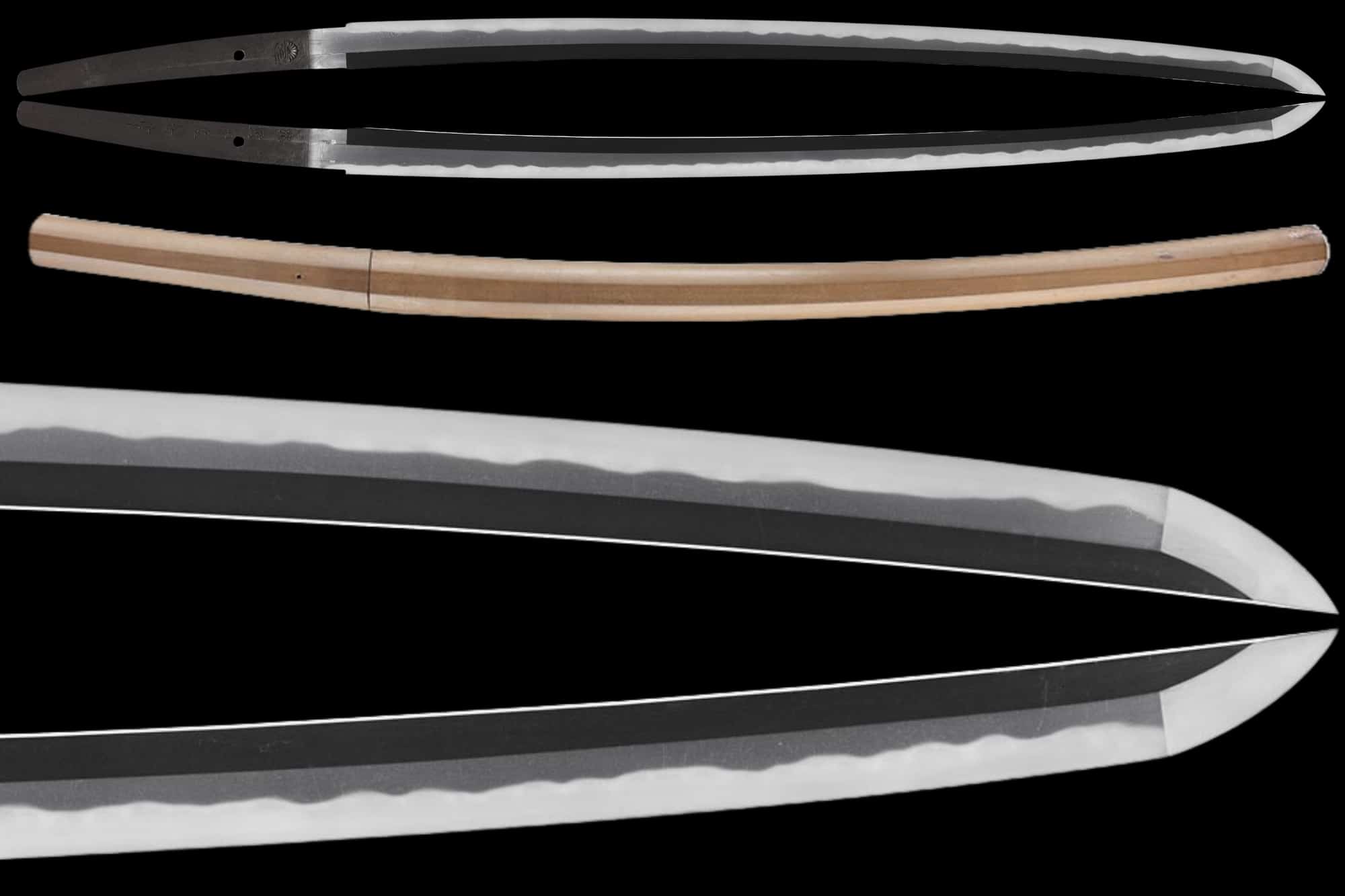
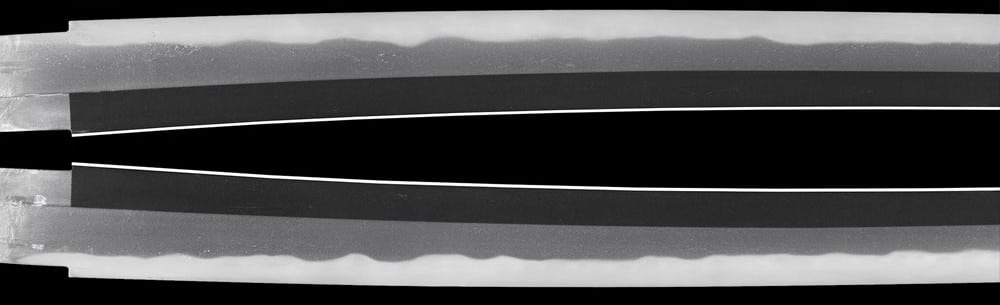
The blade itself presents a strong and elegant wartime sugata with a wide body, healthy thickness and graceful curvature. The overall shape gives the sword a powerful martial character typical of high quality gendaitō produced for military officers during the wartime period.
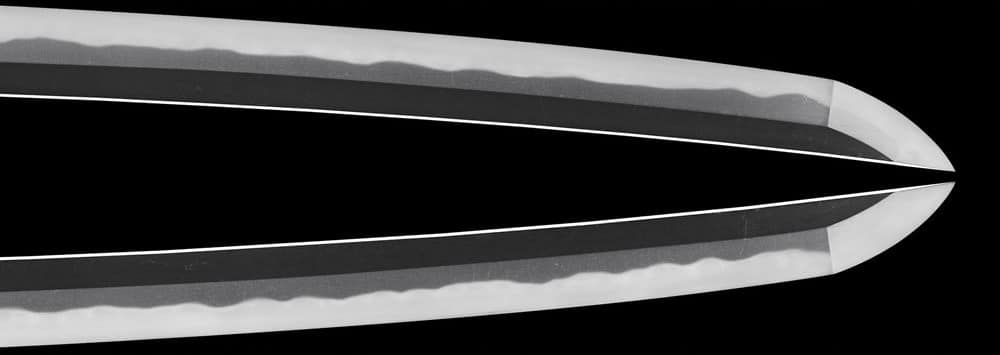
The jihada displays a finely forged ko-itame structure, tightly worked and refined, producing a classical steel surface with subtle activity. Along the edge runs a lively nie-based gunome-midare hamon extending from the hamachi to the yokote, accompanied by well developed ashi entering the ji. The hardened edge is bright and clear, reflecting the confident workmanship of an experienced master swordsmith. The boshi forms a gentle notare that turns back smoothly within the kissaki.
The tang remains ubu with one mekugi-ana and a clear signature, preserving the original form of the sword. The blade is mounted in plain shirasaya allowing the workmanship and condition to be appreciated in its purest form.
Signature
出雲住忠善作
Izumo-jū Tadayoshi saku
Minatogawa Shrine naval inscription on the mune confirming its wartime naval provenance.
Specifications
Nagasa 64.4 cm
Sori 1.4 cm
Motohaba 3.26 cm
Kasane 0.69 cm
Weight of bare blade 745 g
Habaki single copper habaki
Mounting shirasaya
Period Pacific War era circa 1941–1943
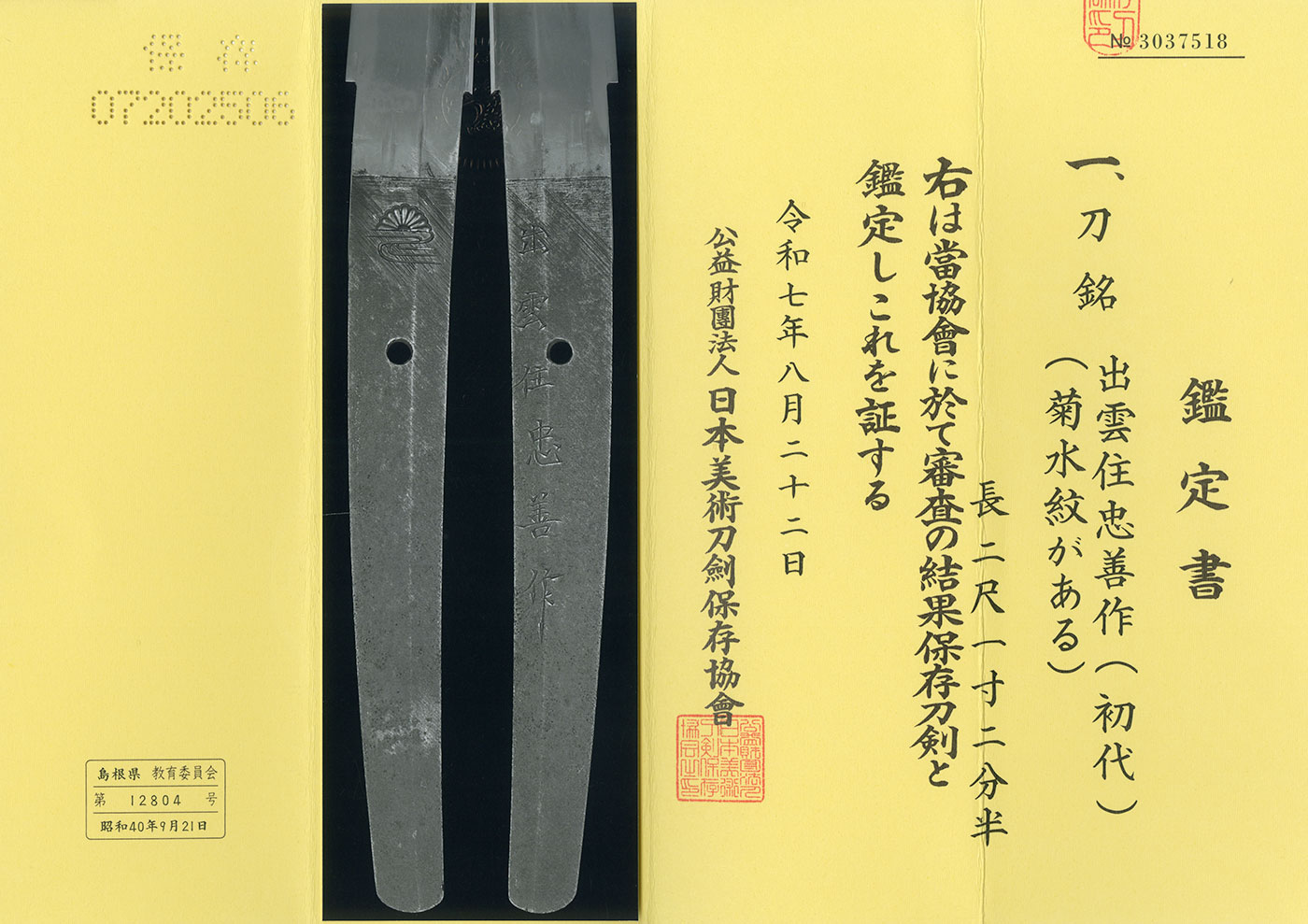
Certification
NBTHK Hozon Tōken
Officially recognized by the Nihon Bijutsu Tōken Hozon Kyōkai as a genuine Japanese sword worthy of preservation.
Conclusion
For collectors of wartime gendaitō and especially those focused on naval swords and the Minatogawa Shrine tradition, this blade represents an exceptional opportunity. It combines the craftsmanship of a later Mukansa master swordsmith with the historical legacy of the Imperial Japanese Navy’s Minatogawa Shrine forge.
Surviving Minatogawa swords are rare, and examples by distinguished smiths such as Kawashima Tadayoshi occupy a particularly important place within this field of collecting. This sword stands as a powerful and historically significant example of the Japanese naval sword tradition, uniting rarity, craftsmanship and wartime history in a single remarkable blade.
For an advanced collector of Yasukuni- and Minatogawa-related gendaitō, this is not just a fine wartime blade but a one-of-a-kind Minatogawa Shrine invitation sword by 1st generation Kawashima Tadayoshi uniting rarity, top-class craftsmanship, and powerful naval history in a single piece.
This is one unique Miniatogawa Shrine sword the only one in its existence.