
Japanese Katana Moritoshi
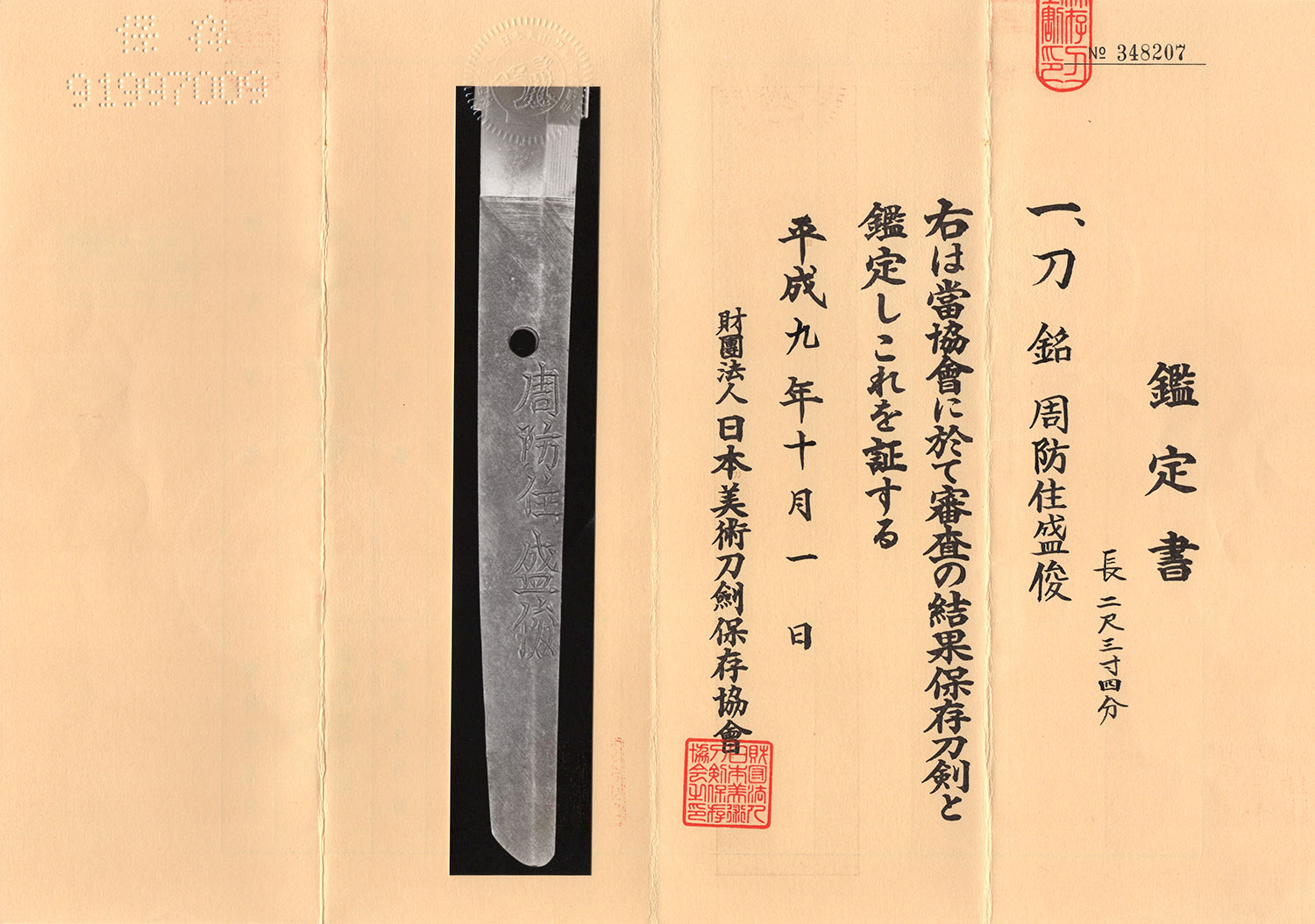
NBTHK Hozon Tōken
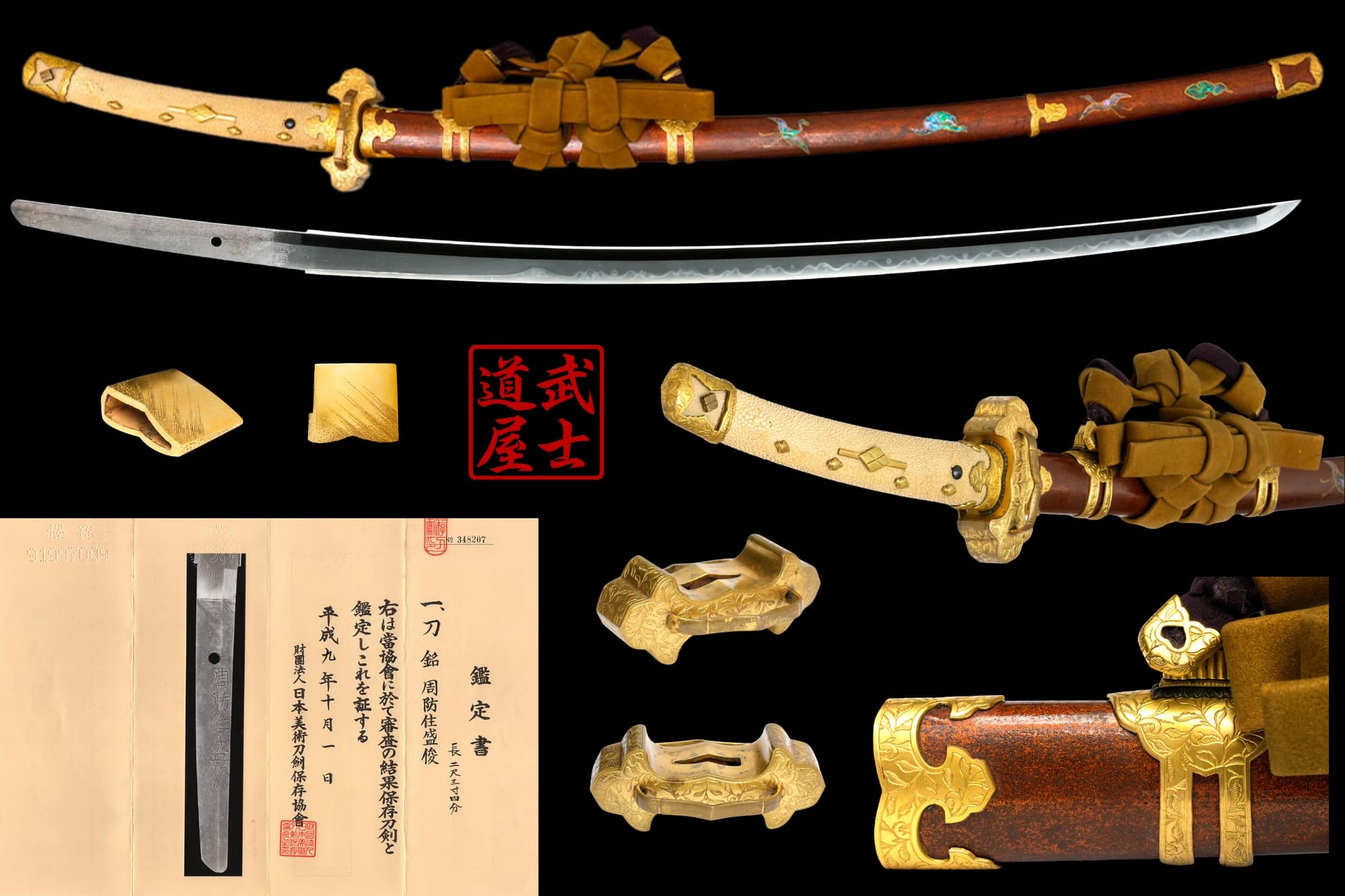
Efu-Tachi Imperial Guard Mounting with Crane and Cloud Motifs
This impressive late Edo period katana was forged by the swordsmith Moritoshi (守俊), whose real name was Iwamoto Seizaemon, also known under the artistic names Seiryū-shi and Seiryū-ken. Moritoshi was a senior disciple of the celebrated master Kato Chōunsai Tsunatoshi, one of the most respected swordsmiths of the Shin-Shintō period. His skill and reputation were such that Tsunatoshi himself entrusted the training of his own successor to Moritoshi, a rare sign of respect that illustrates the high regard in which he was held among the samurai elite.
Moritoshi served as an official swordsmith to the Yoshikawa clan of the Iwakuni Domain, under the powerful Chōshū Mori family, one of the most influential samurai houses of western Japan. Swords forged within this environment were expected to meet the highest standards of both craftsmanship and functionality, reflecting the martial traditions of the Chōshū samurai.
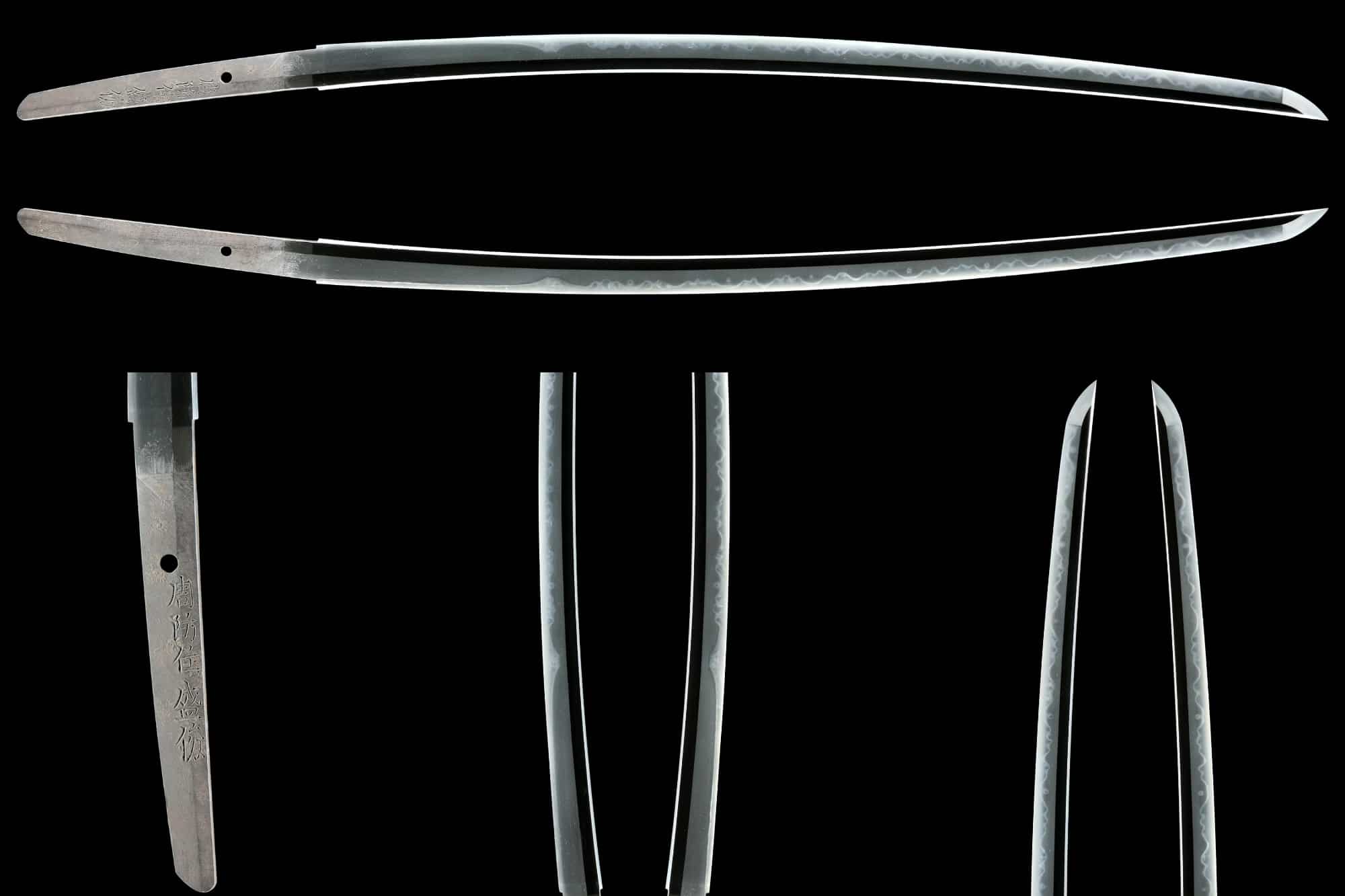
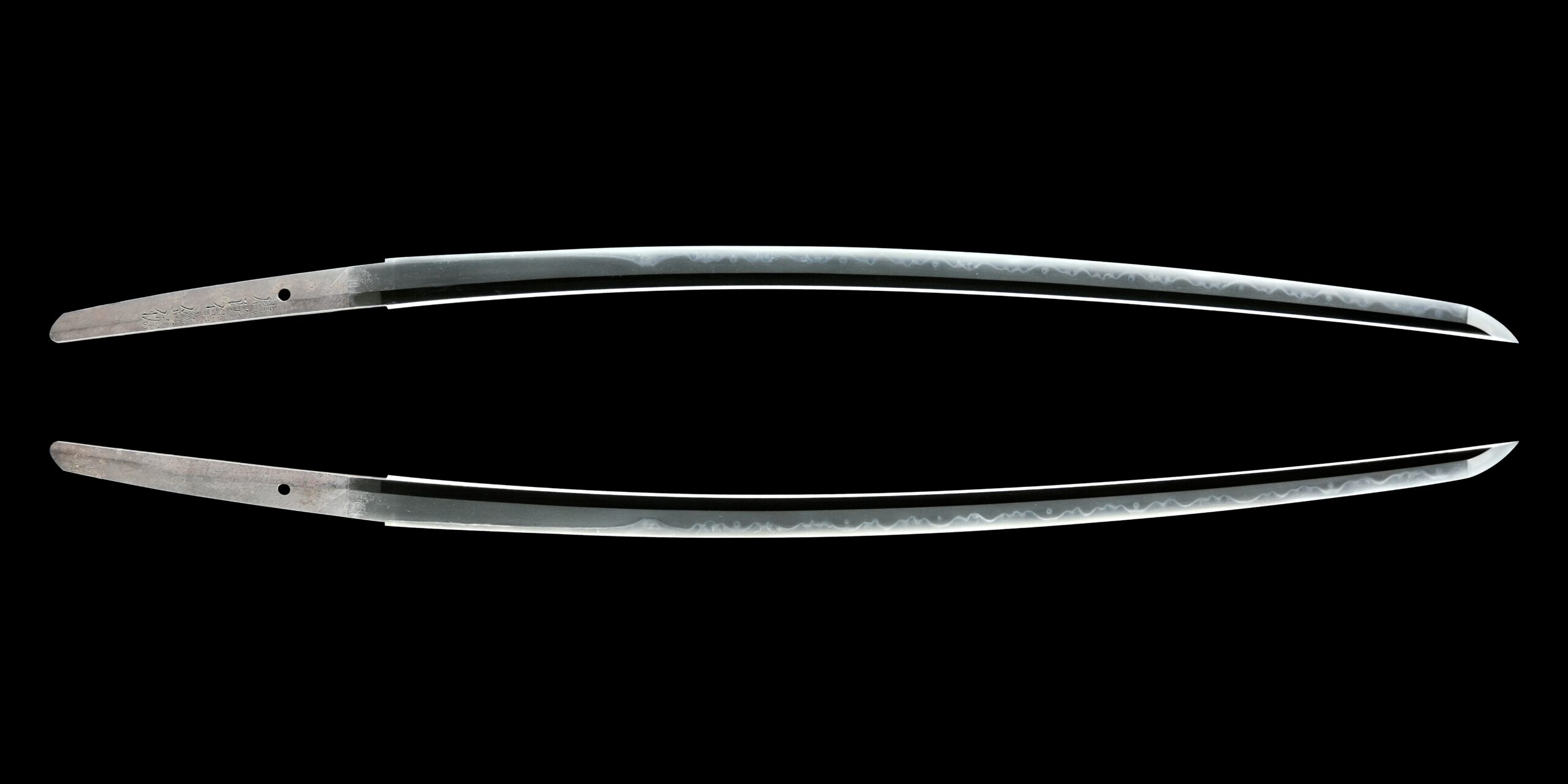
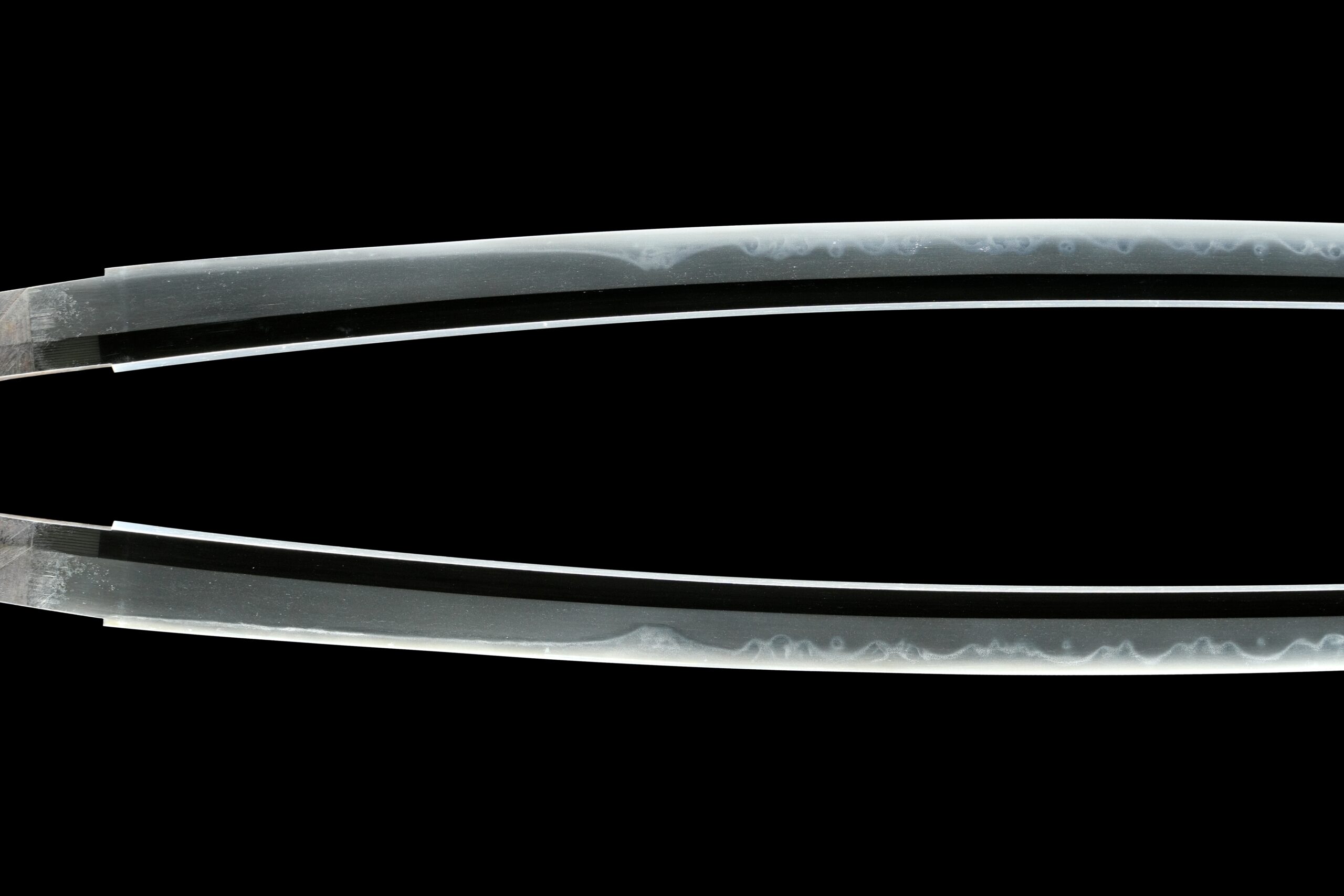
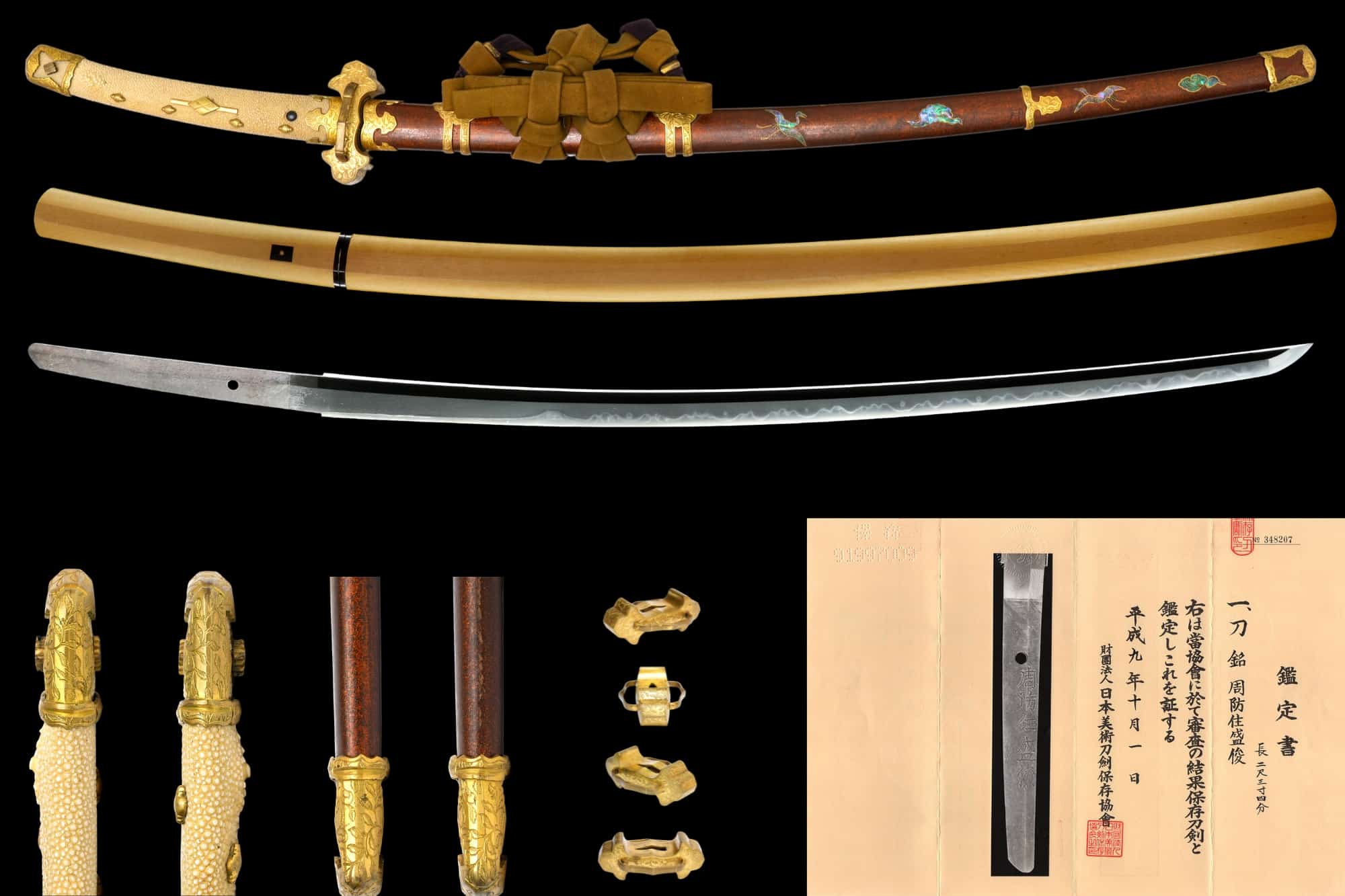
The blade displays a refined and elegant sugata with graceful curvature, characteristic of the finest Shin-Shintō work. The steel shows a tightly forged ko-itame hada, producing a luminous and finely textured surface that reflects careful forging and excellent material control. Running along the edge is a dynamic gunome-midare hamon whose undulating profile evokes the outline of Mount Fuji, a motif often admired in Japanese sword aesthetics. The hardened edge is bright with a deep nioi-kuchi, accompanied by lively ashi entering the ji, revealing the precise heat control of a seasoned master swordsmith.
In the hand the blade feels perfectly balanced, combining elegance with a powerful cutting geometry. The overall workmanship expresses the harmony of beauty, strength and technical mastery that defines the finest swords of the late Edo period.
The sword is officially certified NBTHK Hozon Tōken, confirming it as an authentic and preserved Japanese sword worthy of appreciation and study.
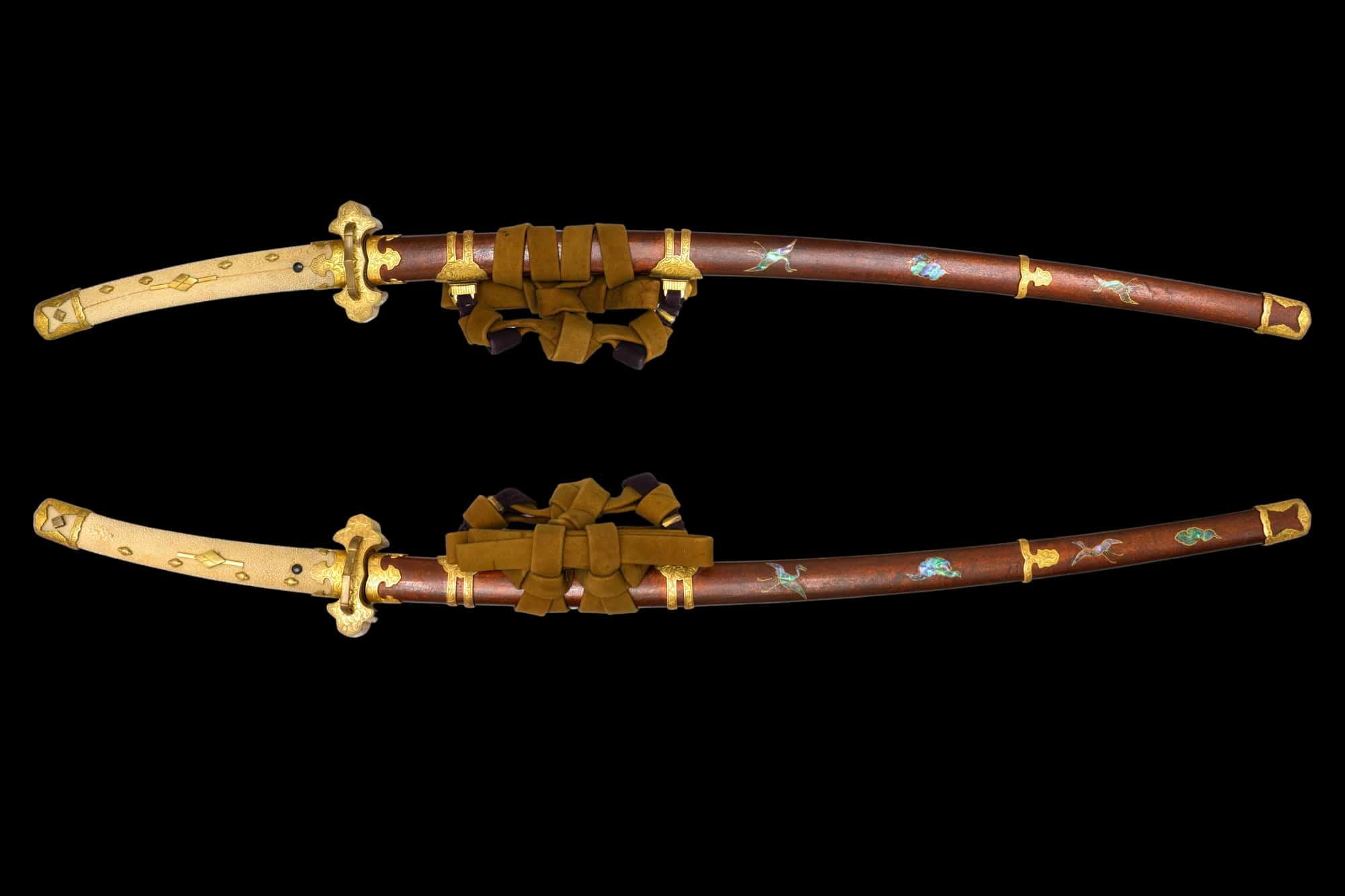
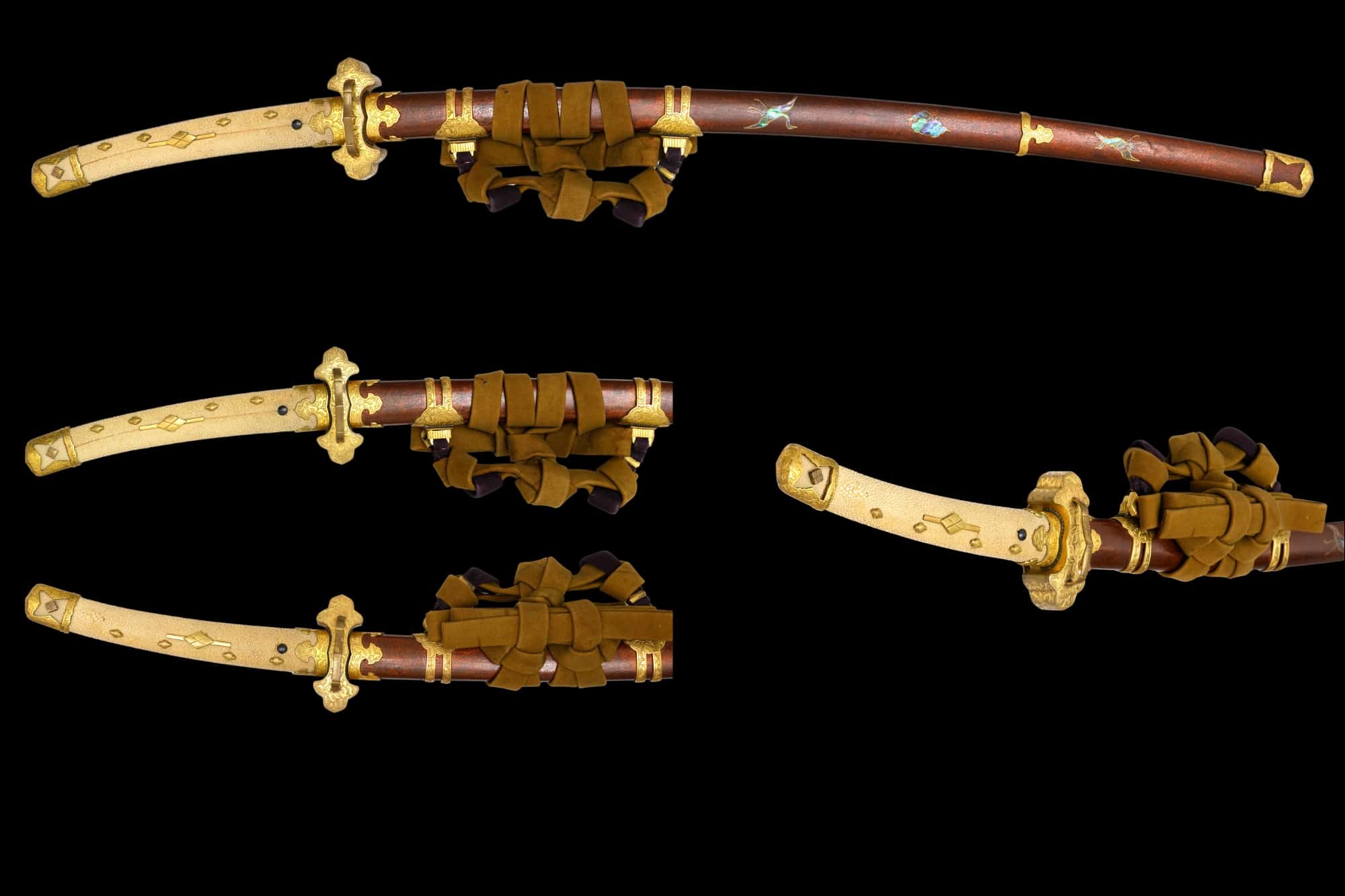
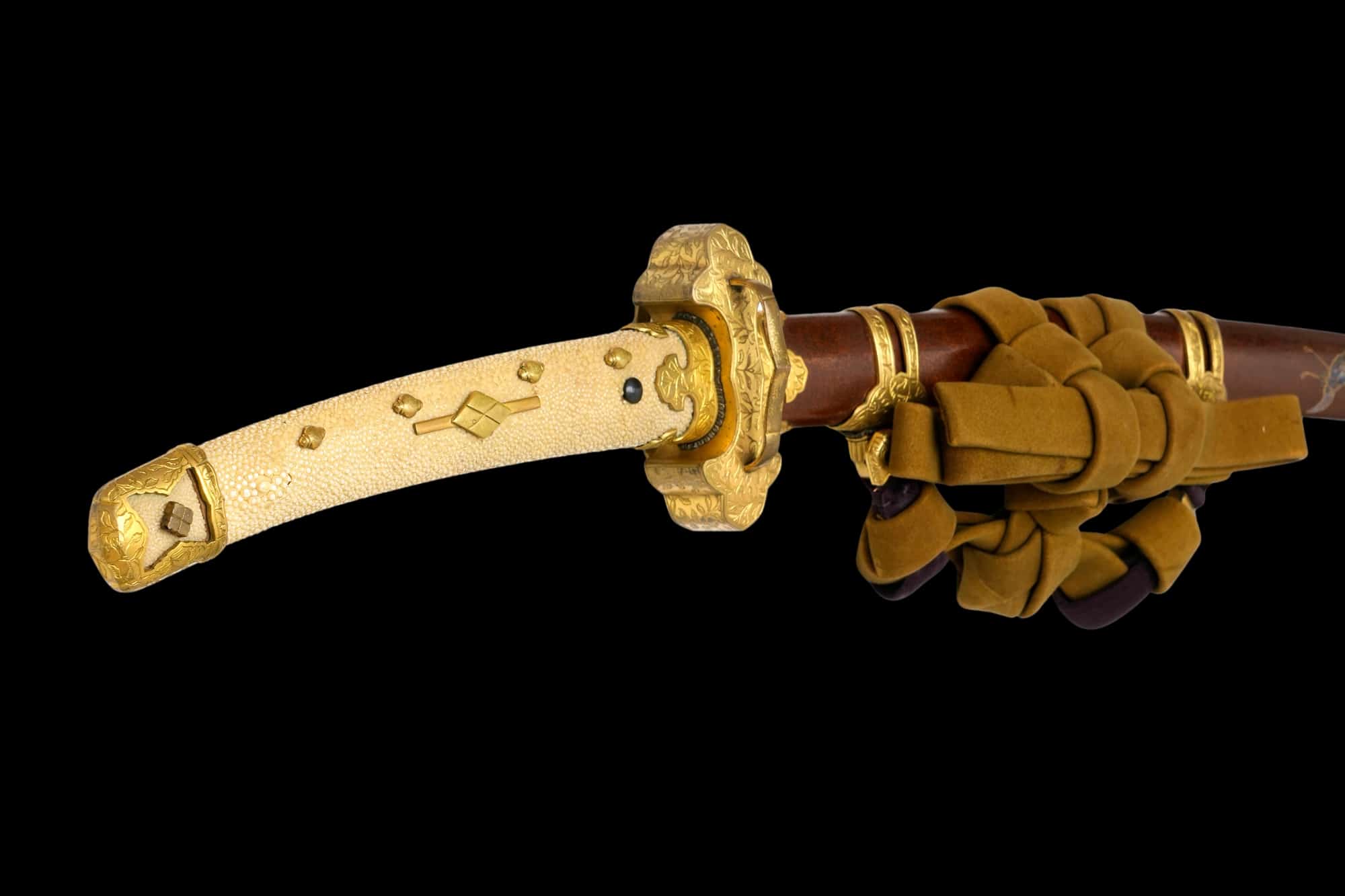
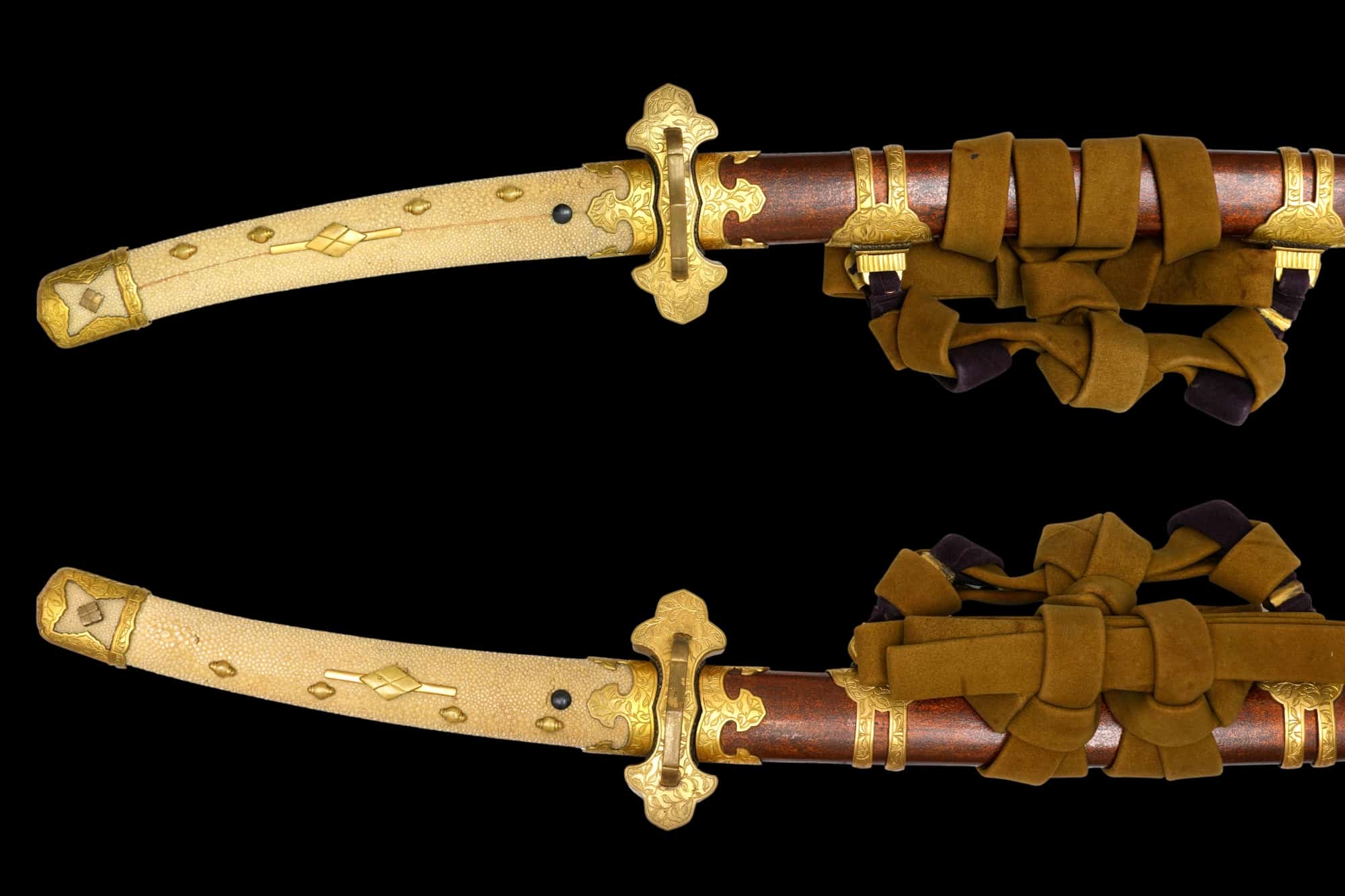
The mounting is particularly striking. The blade is housed in an elegant Efu-tachi koshirae, a ceremonial style historically associated with the Imperial Guards (Efu) and high ranking court officials who served in the protection of the Emperor during formal occasions. Such mountings were not merely decorative but carried deep symbolic meaning connected with loyalty, protection and imperial service.
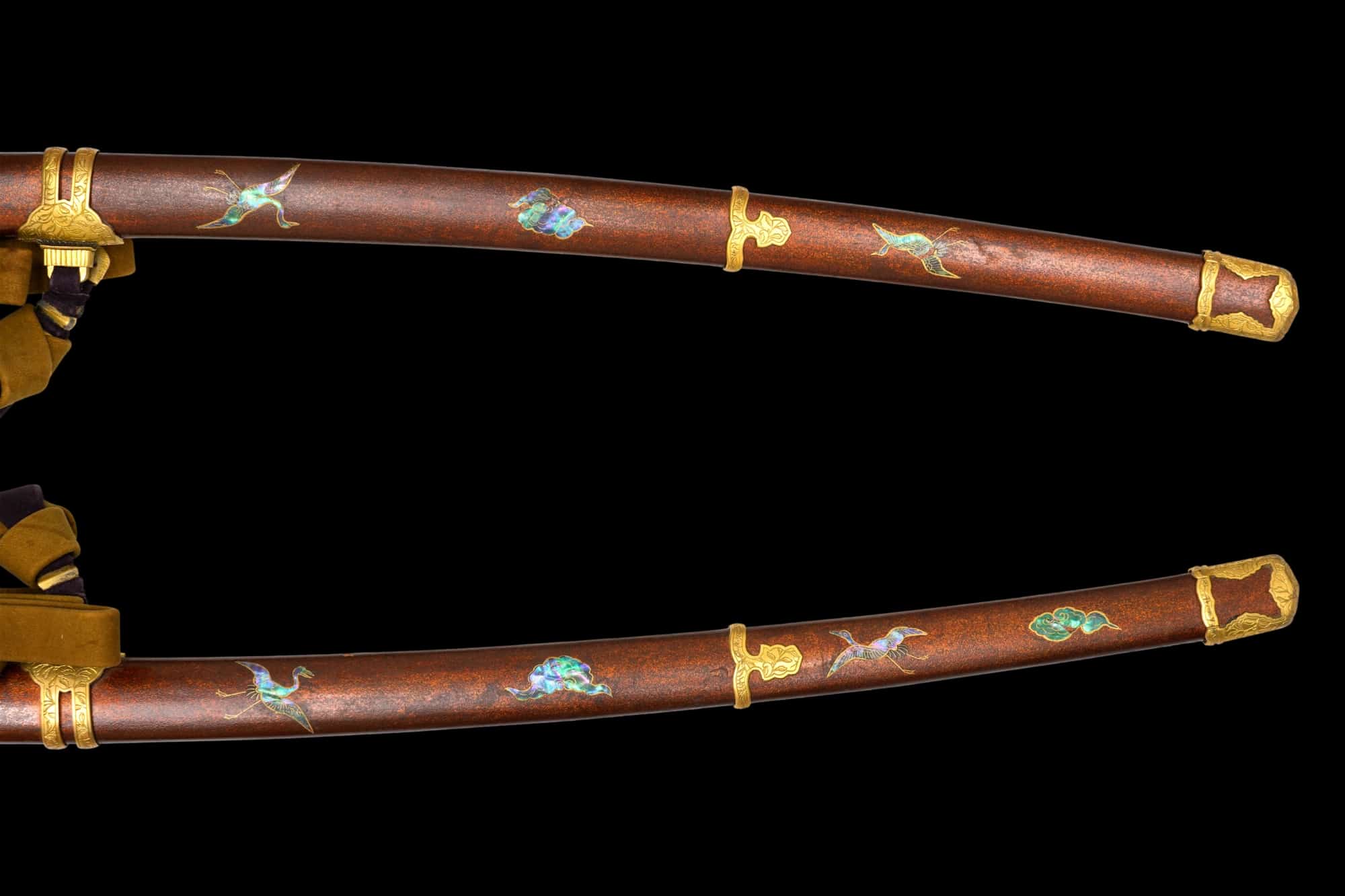
The fittings are richly decorated with crane and cloud motifs in gold and silver inlay. In Japanese symbolism the crane (tsuru) represents longevity, fidelity and enduring good fortune, traditionally believed to live for a thousand years. Clouds (kumo) signify divine presence and heavenly ascent, expressing purity and peace. Combined together these motifs evoke noble protection and spiritual elevation, themes particularly appropriate for a ceremonial sword associated with guardianship of the Imperial court.
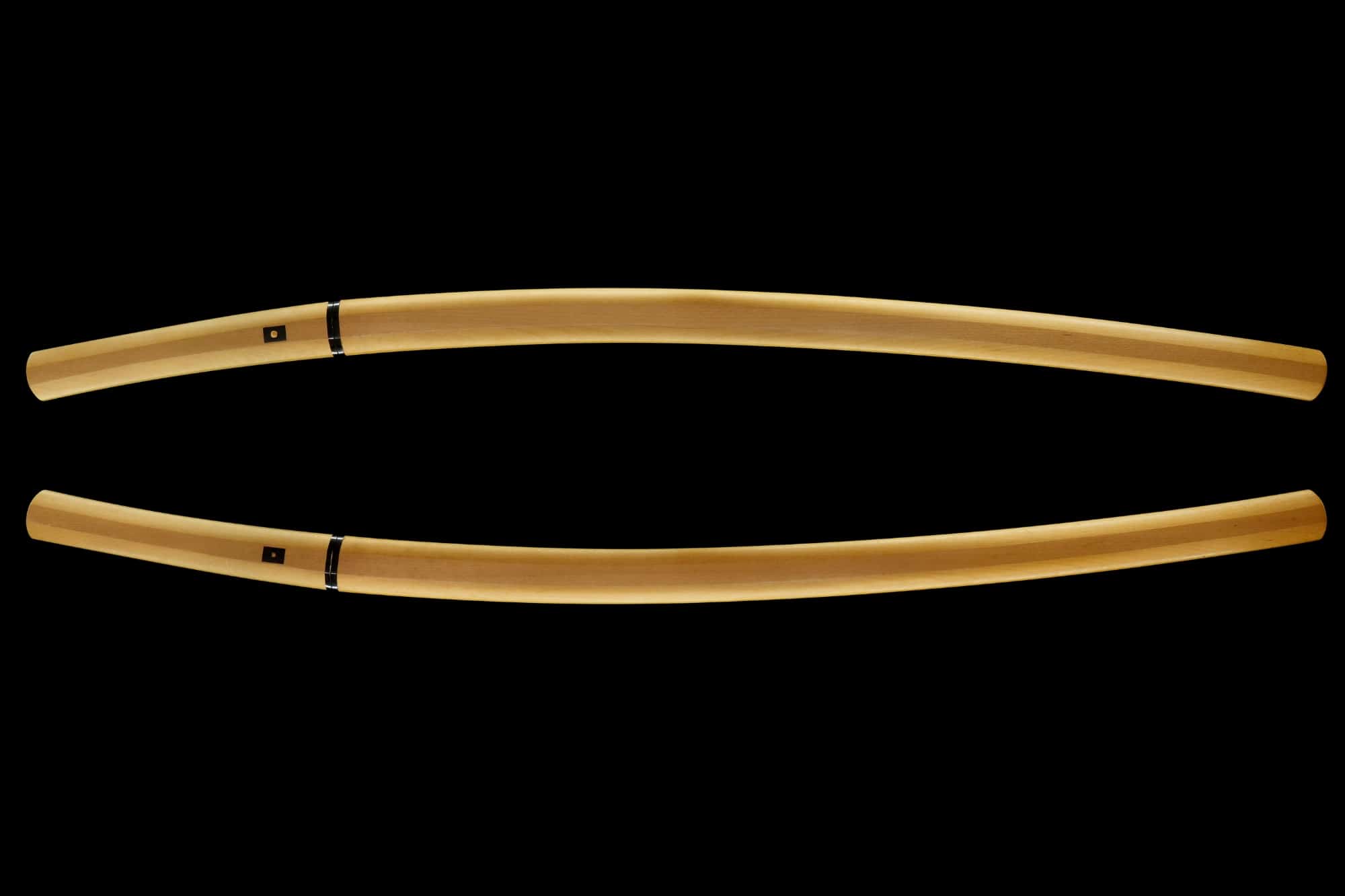
The hilt is adorned with a diamond-mon crest, while the blade is secured by a refined double gold-plated habaki that enhances the regal character of the mounting. The white lacquered saya with gold fittings adds further elegance, creating a striking and dignified presentation typical of high status ceremonial koshirae of the late Edo period. Despite minor age patina consistent with its age, the koshirae remains beautifully preserved and retains its refined presence.
Moritoshi’s work represents the final flowering of the Japanese sword tradition before the dramatic changes of the Meiji Restoration. During the Shin-Shintō era master swordsmiths sought to revive and perfect the classical styles of earlier periods, particularly those of the Bizen tradition, combining historical inspiration with the highest technical standards of their own time. The craftsmanship seen in this blade reflects that ambition and stands as a testament to the enduring spirit of the samurai in the final decades of the Edo period.
Swordsmith
Moritoshi (守俊)
Real name Iwamoto Seizaemon
Also known as Seiryū-shi / Seiryū-ken
Lineage
Senior disciple of Kato Chōunsai Tsunatoshi
Working in the Bizen tradition
Province and Domain
Iwakuni Domain under the Chōshū Mori samurai family
Period
Late Edo period, approximately Kaei era (1848–1860)
Certification
NBTHK Hozon Tōken
Nagasa 71.0 cm
Sori 2.1 cm
Motohaba 31.7 mm
Moto-kasane 6.8 mm
Sakihaba 24.2 mm
Saki-kasane 4.8 mm
Kissaki chū-kissaki with flowing yokote
Jihada well forged ko-itame with clear ji-nuke
Hamon gunome-midare with Mount Fuji profile, deep nioi-kuchi and lively ashi
Nakago ubu with one mekugi-ana
Weight blade 683 g
Weight with mounting 1,021 g
Mounting
Efu-tachi Imperial Guard ceremonial koshirae
Koshirae motif
Crane and cloud inlay symbolizing longevity, peace and divine protection
Fittings
Gold and silver inlay with diamond-mon crest on the hilt and double gold-plated habaki
Saya
White lacquered scabbard with gold fittings
Condition
Excellent polish with only minor age patina on the fittings, overall very well preserved
Provenance
Former private Japanese collection, recently released in Europe.
This katana represents a rare opportunity to acquire a work by Moritoshi, a respected disciple of the great Shin-Shintō master Tsunatoshi, preserved together with an elegant Imperial Guard style Efu-tachi koshirae. The combination of refined workmanship, historical samurai lineage and symbolic ceremonial mounting makes this sword a remarkable example of the artistic and cultural heritage of Japan’s final samurai age.
Offered by BushidoShop.nl, European specialists in high-grade Japanese swords, with full compliance to EU ownership and export regulations.